


Unlike male pattern baldness, it rarely causes complete baldness; instead, it results in reduced hair density as hair follicles shrink and produce finer strands.
Causes include inherited factors, hormonal changes, and aging, while stages range from mild widening of the part to more diffuse thinning across the top of the scalp. Diagnosis is usually based on a scalp exam and medical history, with blood tests or a scalp biopsy used when needed.
Treatment options such as topical minoxidil can help slow progression and support regrowth, but results take time and depend on how active the follicles remain.
Dr. Asi Peretz and Dr. Eric Peretz, founders of Trichogenics, note that careful diagnosis is the first step in understanding treatment options and setting realistic expectations. Trichogenics provides hair restoration care in Greece and Israel within regulated medical systems and structured follow-up protocols.
Key Takeaways
- Female pattern hair loss is a gradual type of loss of hair in women that often starts at the center part or crown and usually worsens over time without treatment.
- Early signs include a widening part, a more visible scalp, and reduced hair density, while sudden shedding or a bald patch may indicate another type of loss of hair.
- Diagnosis usually starts with a scalp exam and a review of medical history, and blood tests or a scalp biopsy may be used if symptoms suggest another issue.
- Treatments such as minoxidil can help stimulate hair growth, but results take time and depend on how active the hair follicles still are.
- Hair transplant surgery may help certain patients, but achieving safe outcomes depends on doctor-led planning and structured follow-up.
What Is Female Pattern Hair Loss?
This condition, also called female pattern baldness, is the most common type of hair shedding in women. It usually causes diffuse thinning rather than a sharply receding hairline. Many women first notice hair shedding when their part looks wider, their ponytail feels thinner, or shedding becomes more noticeable during washing. The condition can affect women at different ages, though it becomes more common after menopause.
How To Identify Early Signs
Early signs often include thin hair around the midline, reduced density near the crown, and slower recovery after normal shedding. A widening part without scalp inflammation is a common clue that this may be an androgen-related loss rather than sudden shedding due to illness or stress.
If symptoms progress slowly, the cause is more likely female pattern hair loss rather than a temporary issue. Early treatment can help slow this process and support regrowth while follicles are still active.
Hair Loss on Top of the Head in Females
This often begins when follicles in this area become more sensitive to hormones over time. The strands may become finer and shorter before shedding, making the scalp more visible. The frontal hairline often stays intact, which is one way this pattern differs from male pattern hair loss. Progression varies, but the longer follicles stay miniaturized, the harder it can be to recover thickness.
How Crown Thinning Starts
Crown thinning usually develops slowly, which is why many people miss the first changes. A family history can increase the likelihood of earlier thinning, but it is not the only factor.
Iron deficiency, thyroid issues, or recent illness can also make the pattern more noticeable. For that reason, doctors often look at the full picture rather than assuming a single cause.
How Female Hair Loss Progresses
Progression varies. Some people have years of slow change, while others go through periods of increased shedding followed by stabilization. The longer follicles remain miniaturized, the harder it is to regain thickness. This is why many specialists recommend early assessment when patients first notice thinning, rather than waiting until more advanced loss occurs.
Female Pattern Hair Loss Causes
This condition is usually linked to a combination of inherited sensitivity, age, hormonal effects, and other factors that can contribute to thinning over time.
Hair follicles in certain scalp areas become more sensitive to androgens, which can shorten the growth phase and produce finer strands.
A family history can increase the likelihood of earlier thinning, but hormone levels are not always abnormal. Many patients with this condition have normal blood tests and no obvious endocrine disorder.
When Blood Tests Are Needed
This hair condition is often diagnosed based on clinical examination alone. Blood tests may be useful when symptoms suggest another underlying issue, such as fatigue, irregular menstrual cycles, or signs of hormonal imbalance. A scalp biopsy may also be considered when the diagnosis is unclear. Testing is selective and not required for every patient.
How To Tell Female Pattern Hair Loss From Other Causes
This pattern usually causes gradual thinning across the top of the scalp rather than sudden shedding. The scalp typically looks normal, without inflammation or discomfort. Sudden shedding may suggest telogen effluvium, while a bald patch may indicate alopecia areata. Doctors evaluate duration, pattern, and triggers to confirm the exact type of hair reduction.
Female Hair Loss Stages
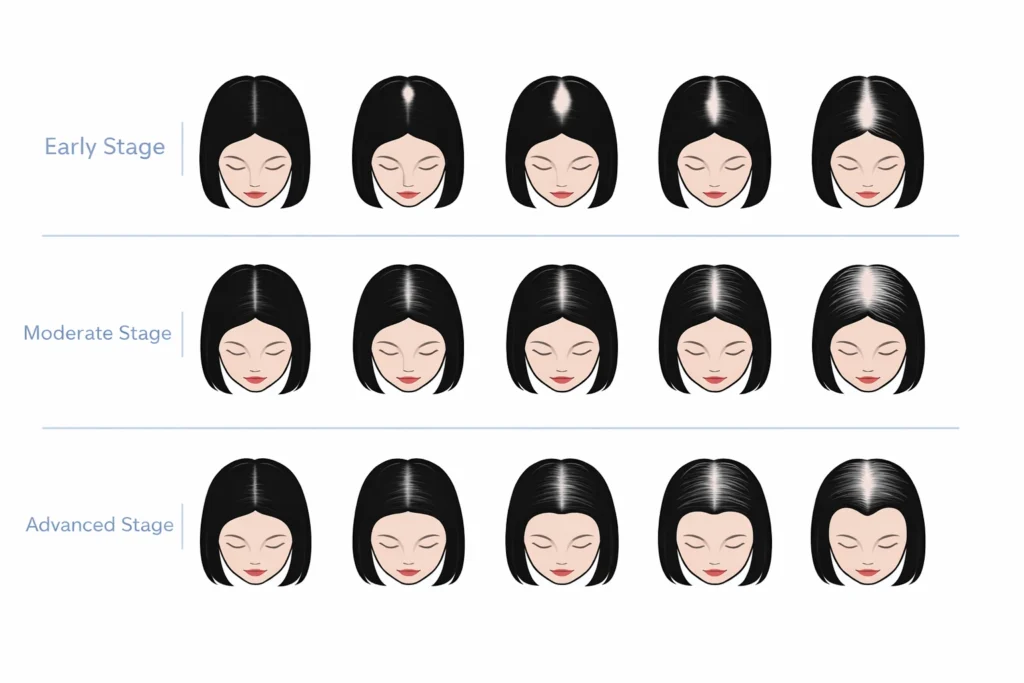
Doctors often describe thinning in stages to track severity and guide treatment. Recognizing the degree of loss of hair early can improve the chances of preserving existing density.
- Early stage: The part line starts to widen slightly, and hair may feel thinner overall. Changes are often subtle and easier to notice in bright light or photos.
- Moderate stage: The scalp becomes more visible through the hair, especially at the crown or center part. Hair volume may feel reduced, and styling may become harder.
- Advanced stage: Thinning becomes more diffuse across the scalp, with reduced overall coverage. The frontal hairline often remains, but density is clearly reduced.
Can Female Pattern Hair Loss Grow Back?
Yes, regrowth depends on how long the follicles have been affected and whether the underlying trigger is ongoing. In many patients, treatment can slow loss and stimulate hair growth, but results take time. Hair regrowth becomes more limited when follicles remain miniaturized for long periods. Early intervention can improve the chance of maintaining existing density.
Female Pattern Hair Loss Treatment
Treatment usually starts with confirming the diagnosis and ruling out other causes. A plan may include medication, scalp care, nutrition review, and monitoring. For many women, topical minoxidil is the first-line option because it can improve density and reduce shedding. Some patients may also benefit from selected oral medications, depending on age and risk factors.
How To Use Minoxidil Effectively
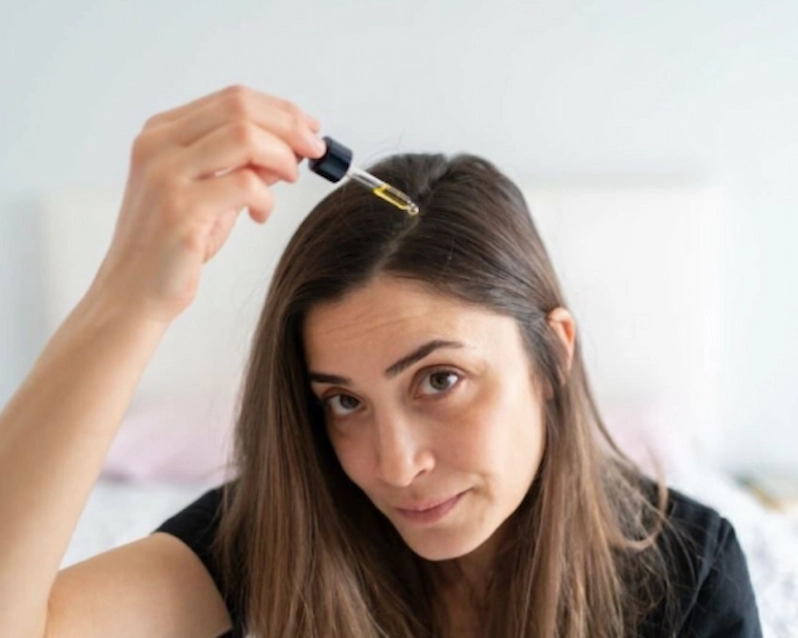
Minoxidil is available in liquid and foam forms and is usually applied to the scalp once or twice daily. Some patients also ask about supportive options such as coconut oil for scalp care, though these do not replace evidence-based treatment.
Consistency matters because irregular use can reduce effectiveness. Medicated cleansers such as Nizoral shampoo for scalp support may also be discussed in some cases, depending on scalp health.
Some patients may notice mild scalp irritation or early shedding when starting treatment, which is often temporary. Most doctors recommend waiting several months to judge results rather than stopping early.
Treatment Timeline And Expectations
Hair regrowth takes time, and early results may not be immediately visible. Some patients notice increased shedding in the first months as weaker hairs are replaced, which can be a temporary side effect of treatment. Early improvement in shedding may appear between months three and six, while fuller changes often take six to twelve months. Setting clear expectations helps patients stay consistent.
Hair Transplant And Advanced Care
Hair transplant surgery is not right for every woman with thinning hair. Suitability depends on donor density, shedding stability, scalp health, and goals.
In modern hair restoration, common techniques include FUE (Follicular Unit Extraction) and DHI (Direct Hair Implantation), and some surgeons use Choi pen implantation to help control angle and depth during placement. Doctor-led procedures and structured follow-up are key parts of safe care.
Learning more about modern transplant techniques can help patients understand how different approaches are selected.
When To See A Hair Specialist
Scheduling a specialist evaluation is helpful when thinning lasts more than a few months, shedding increases suddenly, or the scalp becomes itchy, painful, or inflamed.A consultation may include a review of symptoms and family history, a scalp examination, dermoscopy, and consideration of blood tests or a scalp biopsy.
This process helps separate this scalp condition from temporary shedding or autoimmune causes. A clear diagnosis helps patients choose the safest next step.


