

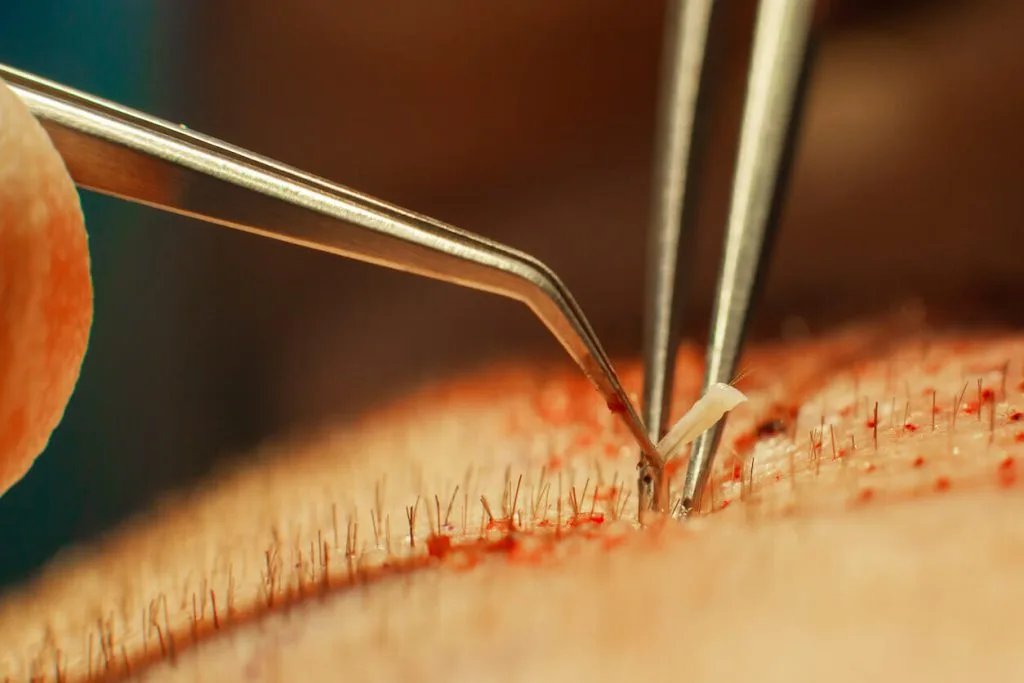
Hair used in a transplant comes from your own scalp or body, most often from areas that are genetically resistant to hair loss.
When people ask, “Where does the hair come from for hair transplants”?, the answer is the donor area, usually at the back and sides of the head. These areas contain hair follicles that continue to grow even under conditions such as male pattern baldness.
At Trichogenics, founded by Asi Peretz and Eric Peretz, this principle guides the planning and execution of hair restoration. The goal is to move stable hair follicles into a bald area to support long-term hair growth.
Key Takeaways
- Hair used in a hair transplant procedure comes from the donor area, usually the back and sides of the scalp, where hair follicles are resistant to hair loss.
- Surgeons move follicular units into the recipient area, following natural angles to support consistent hair growth.
- The number of grafts depends on donor area density, the size of the bald area, and long-term planning.
- Alternative sources, such as beard or chest hair, may be used when the scalp donor supply is limited.
- Transplanted hair is generally permanent, but future hair loss can still affect untreated areas of the scalp.
Where They Take Hair From for a Hair Transplant
Donor hair comes from areas of the scalp that are less affected by hair loss, usually the back and sides, where follicles remain stable over time. These areas are good for hair transplantation because the hair follicles resist hair loss and continue to grow.
Surgeons extract follicular units from this donor area and prepare them for placement in the recipient site. Each unit contains one to four hair follicles, which are preserved to support hair growth after the hair transplant surgery.
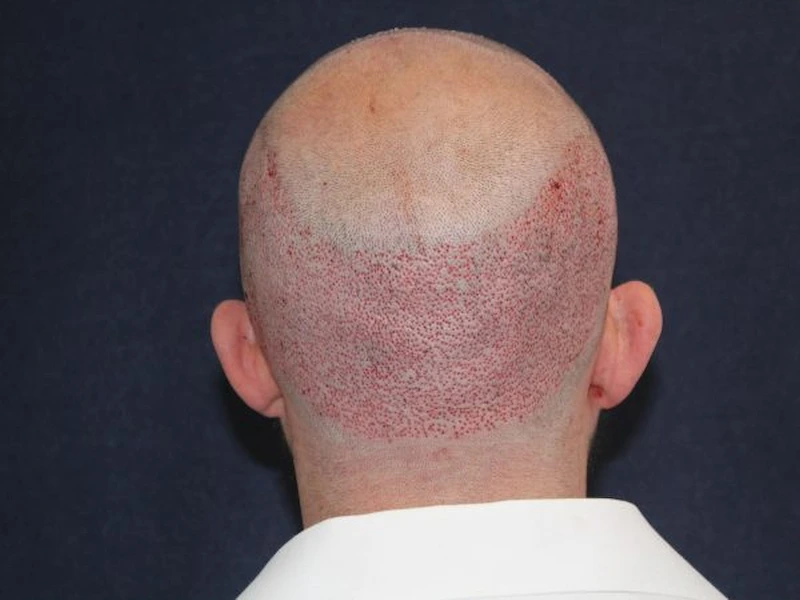
Donor Area vs Recipient Area Explained
The donor area is where healthy hair is taken from during the procedure. The recipient area is where grafts are placed to restore hair in thinning or bald areas. This distinction explains how the hair transplant procedure redistributes existing hair rather than creating new hair.
Why the Back of the Scalp Is Used
The back of the scalp is used because it contains hair resistant to hair loss. These follicles are less affected by hormones linked to male pattern baldness. When moved, they keep their original growth behavior.
This allows hair in the recipient area to grow in a stable way. This concept supports long-term results in hair restoration.
How Donor Hair Is Selected and Used
Surgeons evaluate the donor area to determine how many follicular units can be used. They assess density, thickness, and scalp condition. This helps define the number of grafts available.
Grafts are placed in the recipient site according to a planned design. Placement follows natural direction and angle to support consistent hair growth.
Hair Characteristics That Make It Ideal
Ideal donor hair has good density and strong hair follicles. Thick, healthy hair can provide better coverage in bald areas and improve overall appearance. Hair texture and color also affect visual results.
These factors help determine how well the transplanted hair blends with existing hair. They are part of the planning process.
How Hair Is Harvested
Harvesting hair involves removing follicular units from the donor area with precision, and understanding potential outcomes, such as hair transplant scars, can help set realistic expectations. This step protects each graft and supports survival. Proper handling of hair follicles improves results.
The process also helps maintain the appearance of the donor area after extraction.
Step-by-Step Hair Transplant Procedure
The procedure follows a structured sequence to ensure precise placement, as explained in this detailed guide to the hair transplant process. Each step focuses on preserving hair follicles and preparing the recipient area.
- Harvesting hair from the donor area
- Preparing follicular units
- Creating recipient site openings
- Placing grafts in the recipient area
This process supports natural hair growth and consistent results.
FUE vs FUT Explained
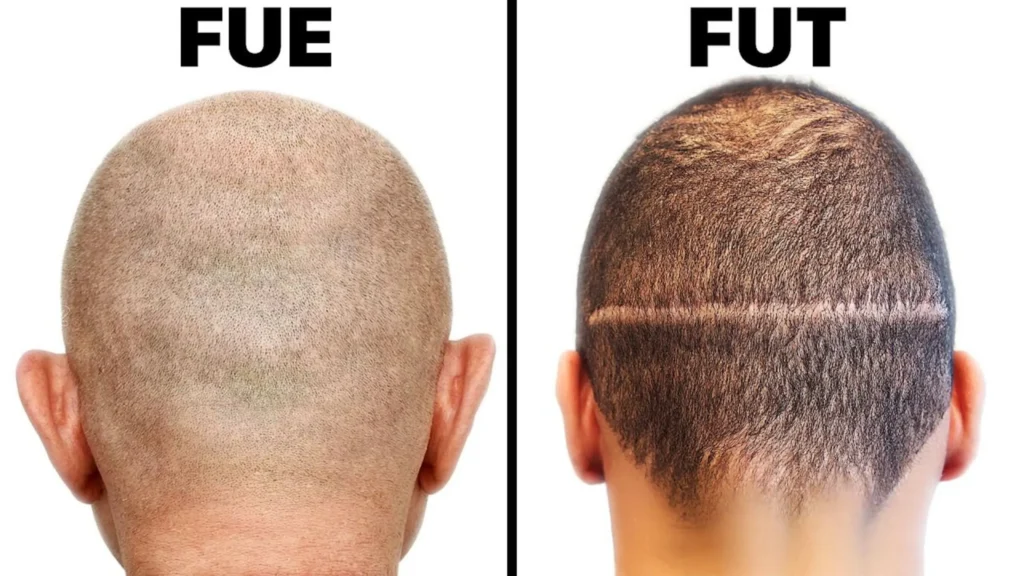
Two common methods for extracting donor hair are FUE (Follicular Unit Extraction) and FUT (Follicular Unit Transplantation), as outlined in this FUT vs FUE hair transplant guide. In FUE, follicular units are removed individually, leaving small, less visible marks and allowing for more precise harvesting of hair follicles.
In FUT, a strip of scalp is removed and divided into grafts, allowing for more grafts in a single session. At Trichogenics, only the FUE method is performed, as it focuses on individual graft extraction and controlled placement in the recipient area.
Does Donor Hair Grow Back?
Donor hair does not grow back in the same extraction spot. The hair follicles are moved to the recipient area. However, surrounding hair continues to grow and covers the donor area.
Careful harvesting prevents visible thinning and maintains a natural look.
Hair Transplant Recovery Timeline
Recovery follows a predictable pattern after hair transplant surgery, and proper post-hair transplant care plays a key role in the healing process. Understanding this helps set expectations for hair growth.
- First 7 – 10 days: healing of the donor area and the recipient area
- 1 – 3 months: temporary shedding
- 6 – 12 months: gradual hair growth
Results improve over time as hair follicles adapt, especially when patients follow proper post-hair transplant care.
Can Hair Come From Other Areas?
In some cases, hair can come from outside the scalp. This includes beard hair and chest hair. These options are used when the donor area is limited.
These hairs may differ in texture and growth, which can affect how they blend in the recipient area.
Donor Hair Limitations and Low Supply
The donor area has a limited number of hair follicles. Not all bald areas can be fully restored. Patients with advanced hair loss may have fewer grafts available.
When donor supply is low, surgeons focus on key areas. This helps create a balanced result with available grafts. Some patients may need more than one procedure.
How Surgeons Plan Graft Usage
Surgeons base their decisions on the number of grafts available and the pattern of hair loss. They distribute grafts across the recipient area to avoid overuse of the donor area and support long-term planning.
They also evaluate donor density, scalp condition, and progression of hair loss. These factors guide how the procedure is performed.
How Many Grafts Are Needed
The number of grafts depends on the size of the bald area and desired density. Smaller areas may require around 1,000 to 2,000 grafts, while moderate cases often need 2,000 to 3,500 grafts. Larger areas of hair loss may require 4,000 grafts or more, depending on the available donor area and hair characteristics.
The donor area limits the number of grafts available, so planning must balance coverage with preservation of healthy hair. Estimating graft numbers helps set realistic expectations and supports long-term hair restoration.
Is Transplanted Hair Permanent?
A hair transplant is usually permanent because it comes from resistant areas of the scalp. These hair follicles continue to grow in the new location. However, other areas of the scalp may still lose hair over time. This can affect overall appearance.
If you are considering a hair transplant, a medical evaluation can help determine the best approach for your case. Scheduling a consultation allows a specialist to assess your donor area, hair loss pattern, and expected results. This step helps you understand your options and plan a treatment based on your needs.

