

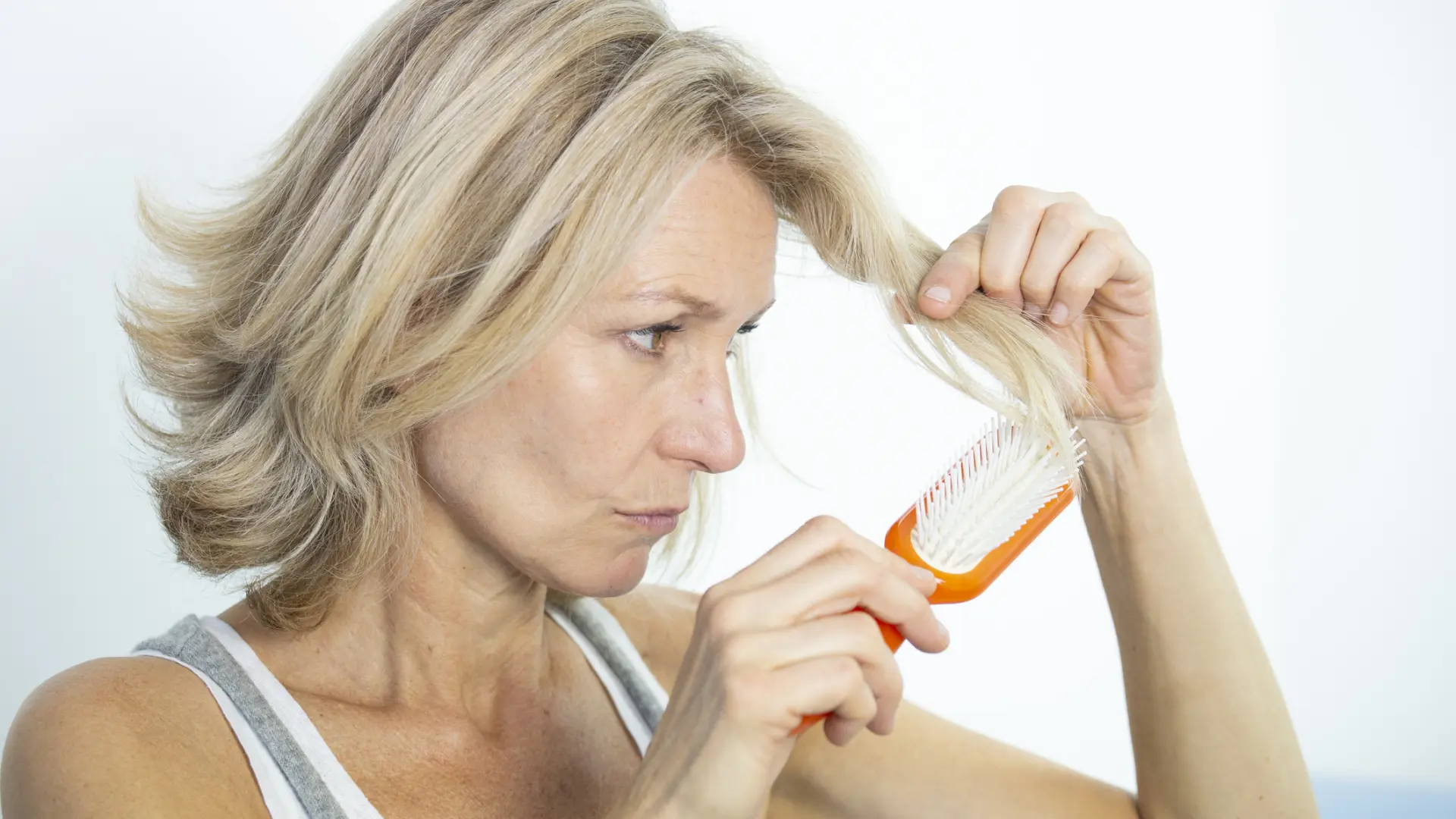
Menopause can lead to noticeable hair changes, and many patients ask, “Does menopause cause hair loss?” when they first see thinning. The short answer is yes: as hormone levels shift and estrogen drops, these changes affect the hair growth cycle and follicle function.
This change can result in gradual thinning rather than complete baldness, often similar to female pattern hair loss. At Trichogenics, founded by Dr. Asi Peretz and Dr. Eric Peretz, these patterns are studied within clinical hair restoration practice.
Key Takeaways
- Menopause can cause hair loss due to hormonal changes: as estrogen levels drop and the hair growth cycle shortens, hair gradually thins.
- Hair loss during menopause often presents as diffuse thinning and changes in hair texture, and it may overlap with telogen effluvium or androgenetic alopecia.
- A proper diagnosis helps identify the exact type of hair loss and rule out other causes such as thyroid issues or deficiencies.
- Treatment options may include medical therapies, lifestyle support, or hair restoration techniques like FUE and DHI, with results developing over time.
- Hair regrowth is possible in some cases, but long-term follicle changes may limit full recovery, making early evaluation important.
Hormonal Changes and Why Hair Thins
Hair thinning during menopause is linked to hormonal imbalance. As estrogen levels drop, androgens have a stronger effect and can shrink hair follicles. This leads to thinner strands, reduced density, and changes in hair texture.
The hair growth cycle also shortens, causing more hair to enter the shedding phase. This can resemble telogen effluvium and may overlap with androgenetic alopecia.
Many women also experience symptoms such as hot flashes during this stage. These changes reflect broader hormonal shifts that affect multiple systems, including hair health. Tracking these symptoms can help provide context during evaluation.
What Happens at the Follicle Level
Hair loss during menopause affects how follicles function. As estrogen levels drop, follicles receive less support to maintain growth. This shortens the growth phase and reduces overall hair density.
Follicles may shrink and produce weaker hair fibers. Reduced blood flow can limit nutrient delivery and affect scalp health. These changes contribute to gradual thinning and reduced hair health.
When Does Hair Loss Start During Menopause
Hair loss often begins during perimenopause, when hormone levels start to fluctuate. Many women notice increased shedding before menopause is fully established. This stage may include symptoms such as hot flashes and irregular cycles.
Thinning can continue after menopause as hormone levels stabilize at lower levels. The progression is usually gradual, which can delay recognition. Monitoring early changes helps guide timely treatment.
How to Recognize Menopause Hair Loss
Menopause and Thinning Hair Patterns
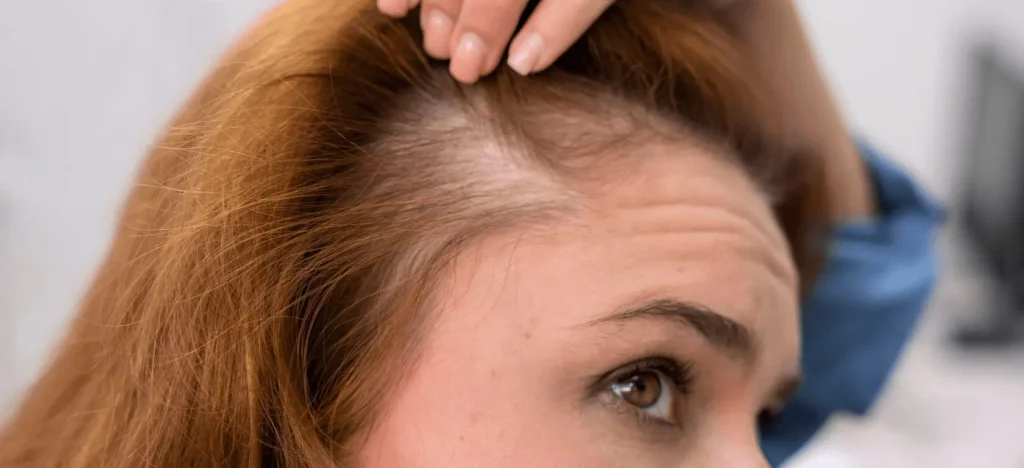
Hair loss during menopause usually appears as diffuse thinning. The part line may widen, and volume may decrease. This type of hair loss rarely creates completely bald areas.
Many women experience changes in hair texture, with strands becoming finer. Recognizing these signs helps distinguish this condition from other types of hair loss.
Hair Loss at Menopause vs Normal Shedding
Normal shedding is part of the hair growth cycle, and most people lose hair daily without visible thinning because it regrows. Hair loss at menopause becomes noticeable when shedding increases and regrowth slows, leading to reduced density.
If thinning continues or the part line widens, evaluation by a board-certified dermatologist is recommended to identify the type of hair loss and guide treatment.
Risk Factors for Hair Loss During Menopause
Genetics, Stress, and Health Conditions
Genetics plays a major role in hair loss during menopause. Conditions like androgenetic alopecia are more likely when there is a family history. Not all women experience the same level of thinning.
Stress, illness, and deficiencies can also trigger telogen effluvium. These factors can worsen existing hair loss. Supporting scalp health and nutrition helps maintain overall hair health.
How Hair Loss During Menopause Is Diagnosed
Medical Evaluation and Tests
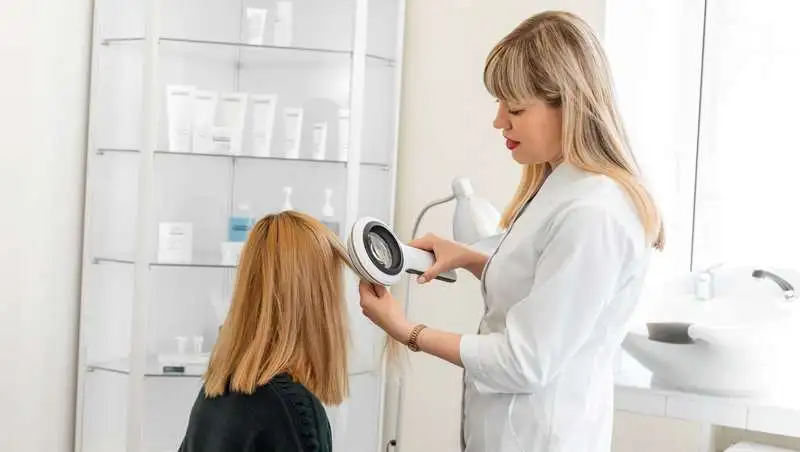
Diagnosis includes scalp examination and blood tests to assess hormone levels. Tests may also check iron and thyroid function. This helps identify underlying causes.
Doctors may evaluate the hair growth cycle to determine the type of hair loss. Accurate diagnosis ensures proper treatment selection.
Evaluation is typically guided by clinical standards used by a board-certified dermatologist, focusing on medical history, scalp examination, and confirmed lab findings.
Menopause Hair Loss vs Other Conditions
Not all hair loss during midlife is caused by menopause. Conditions like telogen effluvium and androgenetic alopecia may appear similar. Each type requires a different approach.
- Menopause-related hair loss: gradual thinning
- Telogen effluvium: sudden shedding
- Androgenetic alopecia: patterned thinning
A proper diagnosis helps guide treatment decisions.
Best Treatments for Hair Loss During Menopause
Medical Treatment Options
Treatment depends on the type of hair loss and its severity. Medical options often include therapies that support hair regrowth, improve scalp health, and stabilize follicle activity. These approaches aim to slow progression and maintain existing hair.
Common treatment options include:
- Topical treatments are used in early stages to support follicle function and improve scalp health.
- Oral medications are considered when hormone levels drive persistent hair thinning.
- Nutritional support is recommended when deficiencies affect hair growth.
- Non-surgical therapies help maintain density in early to moderate stages.
- Hair restoration procedures such as FUE (Follicular Unit Extraction) and DHI (Direct Hair Implantation) are used in advanced cases when follicles no longer respond to treatment.
Doctor-led procedures, proper patient selection, and structured follow-up are important in clinical care. The choice of treatment depends on diagnosis, progression, and individual response.
Hair Loss During Menopause: Will It Grow Back?
Can Hair Loss From Menopause Grow Back
Menopause hair loss can be partially reversible, depending on the condition of the hair follicles. If follicles remain active, treatment may support hair regrowth and improve density over time. This is more likely in early stages or when hair loss is linked to temporary causes.
If follicles have weakened or begun to shrink over time, regrowth may be limited. In these cases, treatment can still help slow further thinning and improve hair quality, but full recovery is less likely.
What to Expect Over Time
Hair loss during menopause often progresses slowly. Some women experience stabilization, while others continue to see gradual thinning. Monitoring changes helps guide treatment decisions and helps determine whether the condition is temporary or progressive.
Early intervention may help prevent hair loss from worsening. Clinical evaluation is important to assess hormone levels, scalp health, and the type of hair loss. Outcomes vary depending on diagnosis, timing of treatment, and individual response.
If you are noticing ongoing thinning or changes in your hair, a clinical evaluation can help identify the cause and guide the right approach. You can schedule a consultation to review your case and discuss treatment options based on your diagnosis.

