

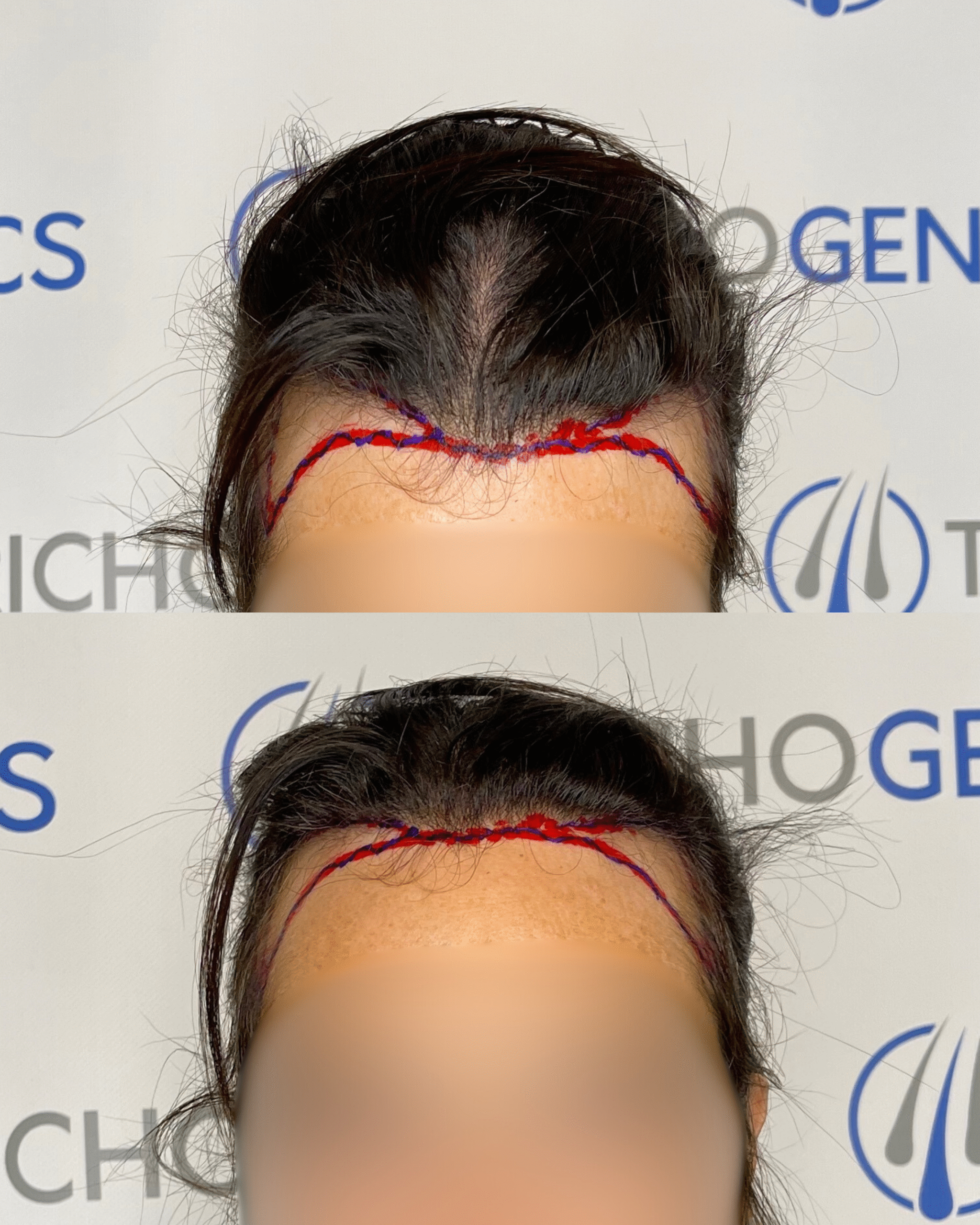
A forehead reduction hair transplant lowers a high hairline and creates better balance in the face. At Trichogenics, founded by Dr. Asi and Eric Peretz in Greece and Israel, each plan focuses on natural growth, safety, and clean design. Our goal is to move the hairline forward in a way that fits your facial proportions and looks real.
Key Takeaways
- A forehead reduction procedure or hairline-lowering procedure can lower a high hairline and improve facial features when planned with proper graft placement and scalp movement.
- Candidates for forehead reduction include individuals with a prominent forehead, good donor density, and realistic expectations regarding growth and recovery.
- Combining surgical lowering with hair grafts can create fuller framing, smoother hairline design, and more natural long-term balance.
- Choosing a regulated medical center in Greece or Israel offers safer outcomes than unregulated clinics abroad, especially those in Turkey.
What Is a Forehead Reduction Hair Transplant?
A forehead reduction hair transplant lowers the hairline by placing grafts one by one. This cosmetic procedure helps people with a long forehead or high hairline feel more balanced. It blends into the patient’s natural hair, framing the face in a softer way.
Understanding forehead-lowering surgery
Forehead lowering surgery moves the scalp forward and removes excess forehead skin. It gives fast results and is helpful when scalp movement is strong. This option may also be paired with a brow lift.
How forehead-lowering hair transplant works
This treatment uses hair grafts taken from the donor area. The surgeon builds a lower hairline and follows natural growth patterns. Some cases use general anesthesia, and results improve slowly over time.
Forehead hairline surgery vs hairline reduction surgery
Forehead hairline surgery shapes the hairline. Hairline reduction surgery lowers its position. Many patients search for forehead reduction vs hairline-lowering surgery when comparing their options. Both options work when planned well.
@trichogenics Dr Asi Peretz explains the limitations of hairline lowering. #trichogenics #hairloss #hairtransplant #hairtransformation #hairtransplantsurgery #hairtransplantgreece #hairlosssolutions #hairtransplantturkey #fyp
♬ click (camera shutter sound single shot)(1111055) - LEOPARD
Who Is a Candidate and Which Treatment to Choose?
Candidates include people with a high forehead, a receding hairline, or male-pattern baldness, with good donor hair. The goal is to choose the safest method that fits facial proportions and long-term stability.
Who qualifies for hairline reduction surgery?
A person is often a good fit if they have:
- A large or long forehead
- A stable donor area
- Scalp flexibility
- Clear expectations
Forehead reduction vs hair transplant
Forehead reduction lowers the scalp for immediate change. Hair transplant surgery builds a new line over time using grafts. Some people choose both for stronger density and shape.
What is the difference between FUE and forehead reduction?
The FUE procedure places grafts into tiny openings for gradual growth. Forehead-lowering surgery lowers the line directly. Both can be combined when needed.
Can you get both procedures?
Yes. Many patients mix hairline-lowering or forehead surgery with grafting to improve density and shape. This creates fuller coverage and more natural framing.
Surgical Process, Grafts, and Hairline Design
The amount of hair grafts depends on forehead height, donor quality, and density goals. The surgeon plans the design to avoid straight lines or heavy edges.
How many grafts are needed?
Most cases need 1,500–3,000 grafts, depending on forehead height. A taller forehead may require additional grafts to maintain even density.
Key graft factors:
- Forehead size
- Donor density
- Desired shape
- Risk of future receding hairline
Hairline-lowering surgery steps
Steps often include:
- Marking the new hairline
- Local or general anesthesia
- Lowering the scalp or placing grafts
- Closure and aftercare
When lowering forehead surgery is recommended
Lowering forehead surgery is helpful when excess forehead skin is present or when a fast result is desired. It works well for people with limited donor hair.
Hair density, angles, and incision planning
The first rows of hair stay soft for a natural edge. Density increases behind them to strengthen coverage. Incisions are placed to avoid visible scar markings.
Recovery, Results, and Growth Timeline
Most patients return to normal activities within a week. Early swelling is normal. Hair grows slowly and improves month by month.
Recovery, swelling, and scar healing
Scabs fall within days, and a visible scar may appear at first. With proper care, scars fade, and healing improves. The doctor explains washing, rest, and follow-up.
Density development and growth stages
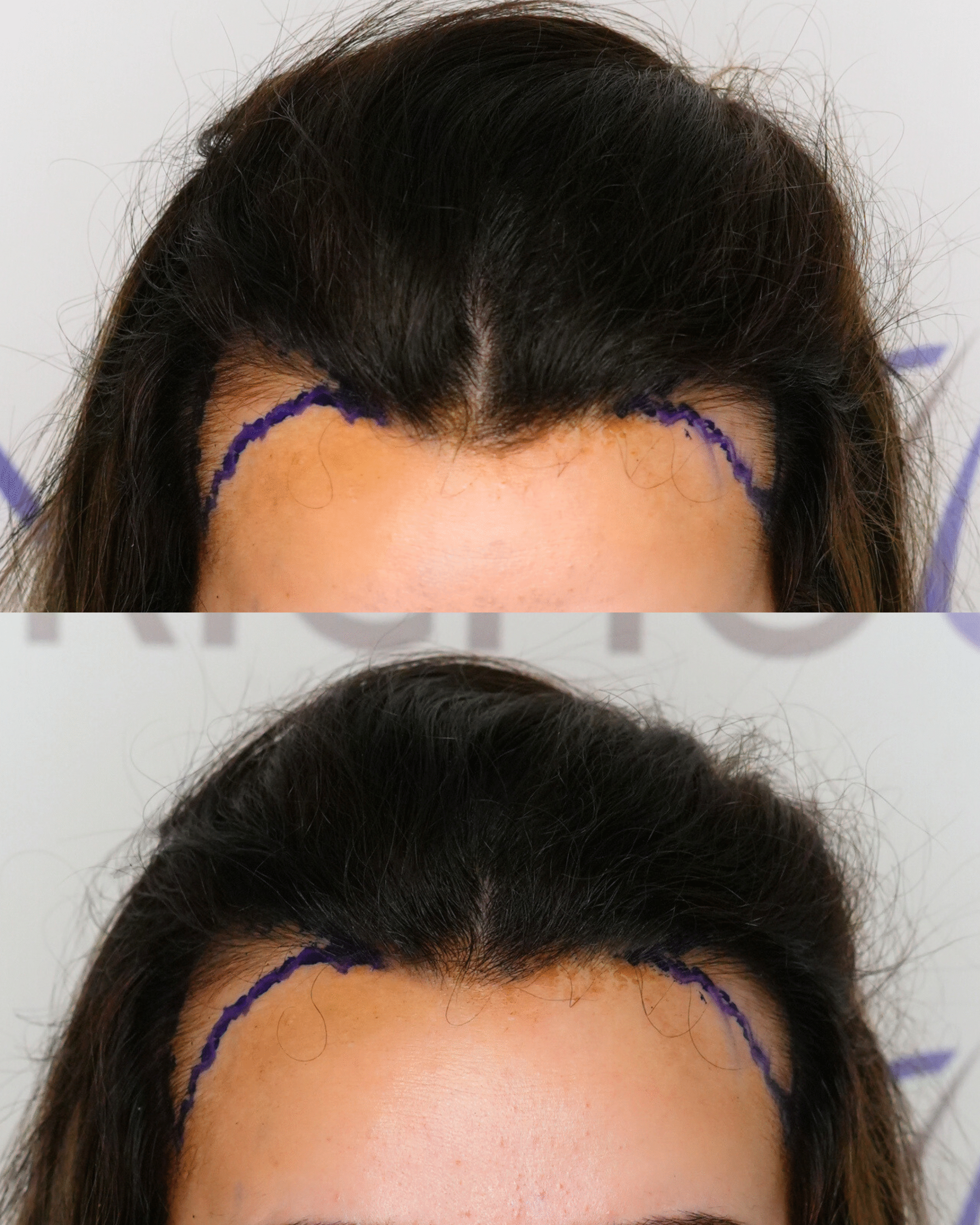
New growth starts around month three or four. By six months, density improves. Full results appear by twelve months.
Risks, Complications, and Safety
Any hair transplant procedure carries risks, such as swelling, numbness, or uneven density. Complications are more common in low-quality clinics, especially in Turkey, where regulation is weak. Treatment in Greece or Israel is safer due to medical oversight and objective surgical standards.
Common risks and how they are managed
Risks may include:
- Temporary swelling
- Early shedding
- Mild numbness
- Uneven density at first
With proper follow-up, most problems are temporary.
Forehead reduction surgery gone wrong
Bad results come from poor design, low graft quality, or a hairline placed too low. Trichogenics avoids this through planning, doctor-led care, and realistic goals.
Cost, Location, and Consultation
The cost of forehead reduction surgery vs. hair transplant depends on graft count and technique. Quality matters more than cheap offers overseas. Safe medical care gives better long-term results.
Treatment planning in Greece and Israel
Trichogenics operates in Greece and Israel under strict medical safety rules. Care includes proper use of anesthesia and close follow-up. This is more secure than traveling to Turkey, where many clinics lack regulation.
Schedule a consultation with Trichogenics
You can schedule a consultation to review design, density, and expected recovery time. Photos and measurements guide planning. This step helps choose the right approach for your goals.
Why Choose Trichogenics?
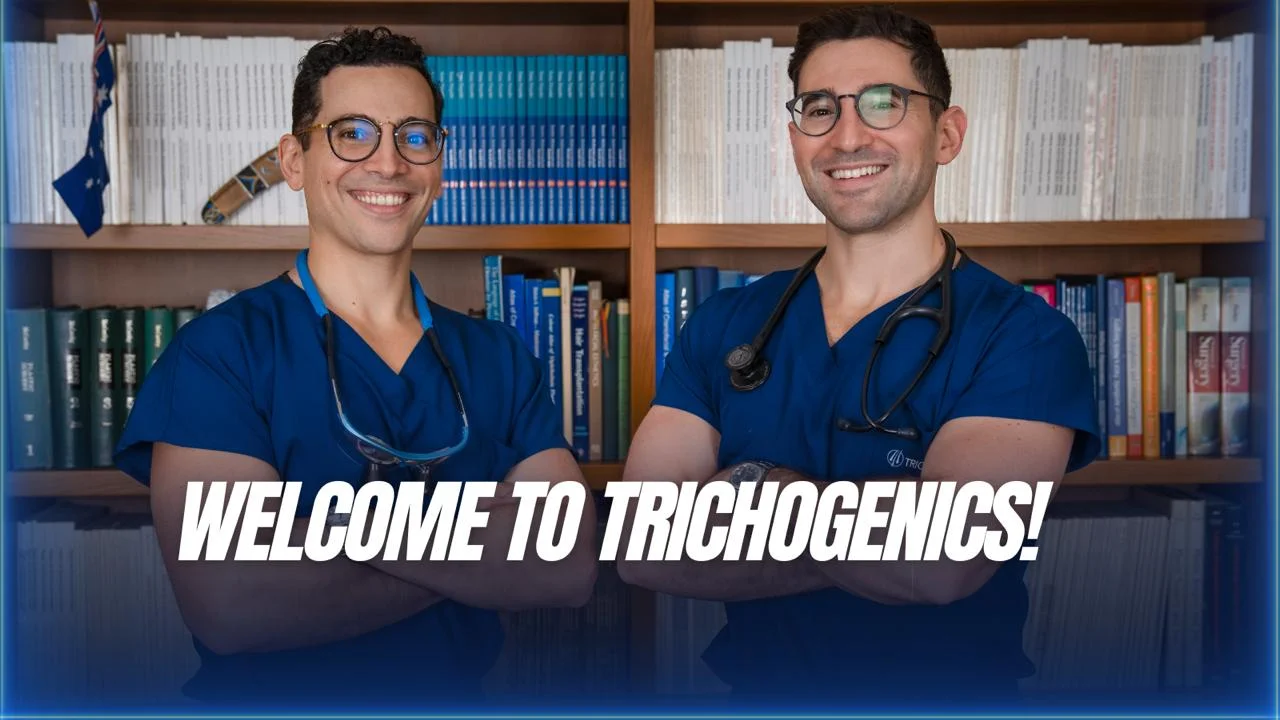
All procedures are performed only by doctors.
The uniqueness of Trichogenics lies in its strict medical process—only certified doctors perform every transplant. No technicians or unqualified assistants are involved. Choosing a clinic with proven experience in hair transplants can make all the difference.
Meet Dr. Asi and Dr. Eric Peretz
The two doctors leading Trichogenics Dr. Asi Peretz and Dr. Eric Peretz are recognized leaders in the field. Their extensive experience, attention to detail, and focus on natural results make Trichogenics the best choice.
Contact Trichogenics today to schedule a personal consultation and get a clear, doctor-led plan for your hair restoration.


