

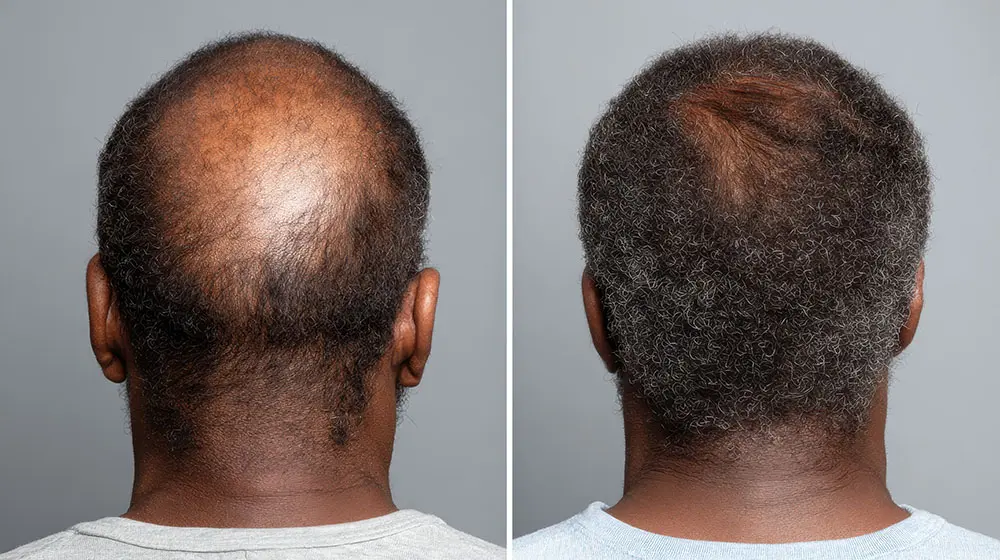
A hair transplant is safe and effective for men of African descent. It works best when planned for tightly curled hair follicles. A hair transplant for black men needs careful control of the extraction angle.
It also needs good donor management and hairline design. These steps help match natural hair growth patterns.
Modern methods such as FUE and DHI allow surgeons to protect curved follicles and place grafts with precision. Success depends on proper candidacy, physician involvement, and realistic density planning.
The sections below explain technique selection, cost, results, and safety considerations in more detail.
Key Takeaways
- Hair transplant planning for men of African descent must account for curved follicles, curl pattern, and scarring risk to protect graft survival and natural density.
- FUE and DHI techniques allow precise extraction and implantation when performed by licensed physicians trained in Afro-textured hair anatomy.
- Costs vary by country and level of physician involvement, with doctor-performed procedures in Greece or Israel typically ranging from USD 3,500 to 7,000 for 2,500–3,000 grafts.
- Successful outcomes depend on stable hair loss, careful donor site management, realistic density expectations, and structured medical follow-up similar to a typical hair transplant recovery timeline.
Is Hair Transplant Different for Black Men?
Hair structure plays a direct role in surgical planning. In many Black patients, the visible curl above the scalp reflects a curved follicle beneath the skin.
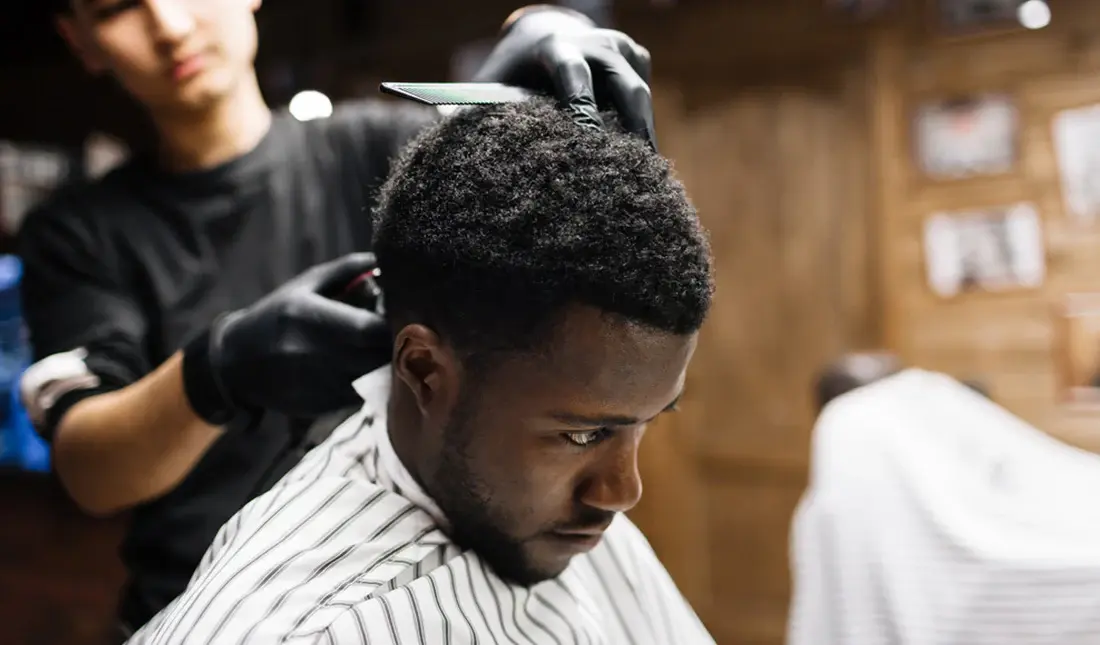
During follicular unit extraction FUE, the surgeon must adjust punch angle to follow that curve and avoid transection. Failure to align with the follicle path increases graft damage and reduces viable transplanted hair.
Scarring risk also requires attention. Some individuals are more prone to hypertrophic scars or keloids, especially on the scalp or neck.
A careful evaluation of personal scar history helps the medical team assess risk before a hair transplant procedure. Techniques that minimize scarring and avoid excessive tension reduce long-term complications.
Patients who already have scar tissue may sometimes require specialized approaches such as hair transplant on scar procedures.
Donor planning differs as well. Afro-textured hair often creates better visual density with fewer grafts because curl increases coverage.
However, overharvesting the donor site can create patchiness if not spaced correctly. A structured extraction pattern protects existing hair and preserves long-term donor capacity.
Best Hair Transplant for Black Men
The best hair transplant for black men depends on hair type, scarring history, and hair loss pattern. FUE is widely used because it avoids linear scars associated with FUT strip surgery.
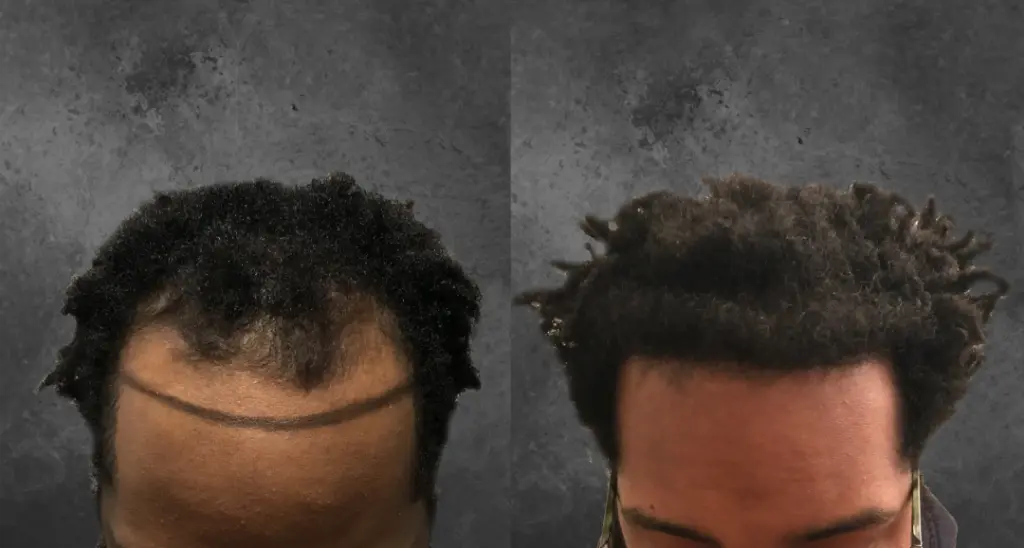
Patients comparing procedures often review the differences explained in FUT vs FUE hair transplant before choosing a technique.
In tightly coiled hair, precise angle control is critical to prevent follicle transection. Surgeons trained in Afro-textured hair anatomy adjust depth and punch size accordingly.
Common modern approaches include:
- FUE technique with manual or motorized punches
- Sapphire FUE using sharper blades for recipient sites
- DHI using a Choi pen implantation method
The Choi pen allows direct implantation without creating premade incisions. This method can improve control over growth pattern and density placement.
When performed in licensed operating rooms by experienced hair transplant surgeons, it supports consistent graft survival.
Dr. Asi Peretz has discussed in professional settings how extraction angle and recipient site direction directly influence final density and natural appearance.
Precision during a fue hair transplant reduces trauma to surrounding tissue and improves the healing process.
Black Male Hair Transplant Cost
Cost varies by country, surgeon involvement, and graft number. A black male hair transplant cost for a 2,500 graft FUE procedure in Greece typically ranges between USD 3,500 and 6,000 when performed entirely by a licensed physician.
This fee usually includes anesthesia, surgical planning, graft implantation, and structured post-operative follow-up.
In contrast, high-volume clinics in Turkey may advertise packages between USD 1,800 and 2,800. In many of these centers, technicians perform significant portions of the extraction and implantation process.
Multiple patients may be treated per day in the same facility, and physician supervision may be limited. Differences in regulation, daily surgical volume, and direct physician involvement explain price variation.
When patients ask, “How much is 3,000 hair grafts?”, the answer depends on clinical context. For example, 3,000 grafts in a physician-performed FUE hair transplant in Israel may cost USD 4,000 to 7,000 depending on case complexity.
Pricing reflects surgical time, graft handling, anesthesia, and structured follow-up.
Factors that change final price include:
- Number of grafts required
- Surgeon involvement throughout the procedure
- Clinic regulation standards in Greece, Israel, or Turkey
- Post-operative monitoring and follow-up care
Lower cost does not automatically mean lower quality, but regulatory oversight and surgeon participation directly affect patient safety.
Candidacy and Hair Loss Causes
Male pattern baldness remains the most common cause of hair loss in men of African descent. This condition follows a predictable pattern of recession and thinning at the crown.
@trichogenics Dr Asi Peretz explains why we bald. #trichogenics #hairloss #hairtransplant #hairtransformation #hairtransplantsurgery #hairtransplantgreece #hairlosssolutions #hairtransplantturkey #balding #baldingsolution #fyp
♬ original sound - Trichogenics
A hair transplant patient with stable male pattern baldness and adequate donor density may benefit from surgical restoration. Patients with significant crown thinning may eventually require a crown hair transplant depending on the progression pattern.
Traction alopecia is another frequent cause. Tight braiding, cornrows, and chemical treatments can damage follicles over time.
In early stages, hair may regrow if traction stops. In chronic cases, scarring can prevent regrowth and require african american hair restoration through surgical implantation.
African American hair implants are considered when non-surgical treatments fail. Surgeons evaluate:
- Donor density
- Scar history
- Stability of hair loss
- Overall scalp health
Hair implants for Black males must preserve the donor site to avoid visible thinning. A detailed consultation ensures the hair transplant surgery aligns with long-term goals.
Black People Hair Transplant Results
Black hair transplant before and after outcomes depend on graft survival, density planning, and natural hairline design.
Afro-textured hair often provides greater visual fullness with fewer grafts due to curl expansion. A carefully designed frontal hairline respects natural facial proportions and age.
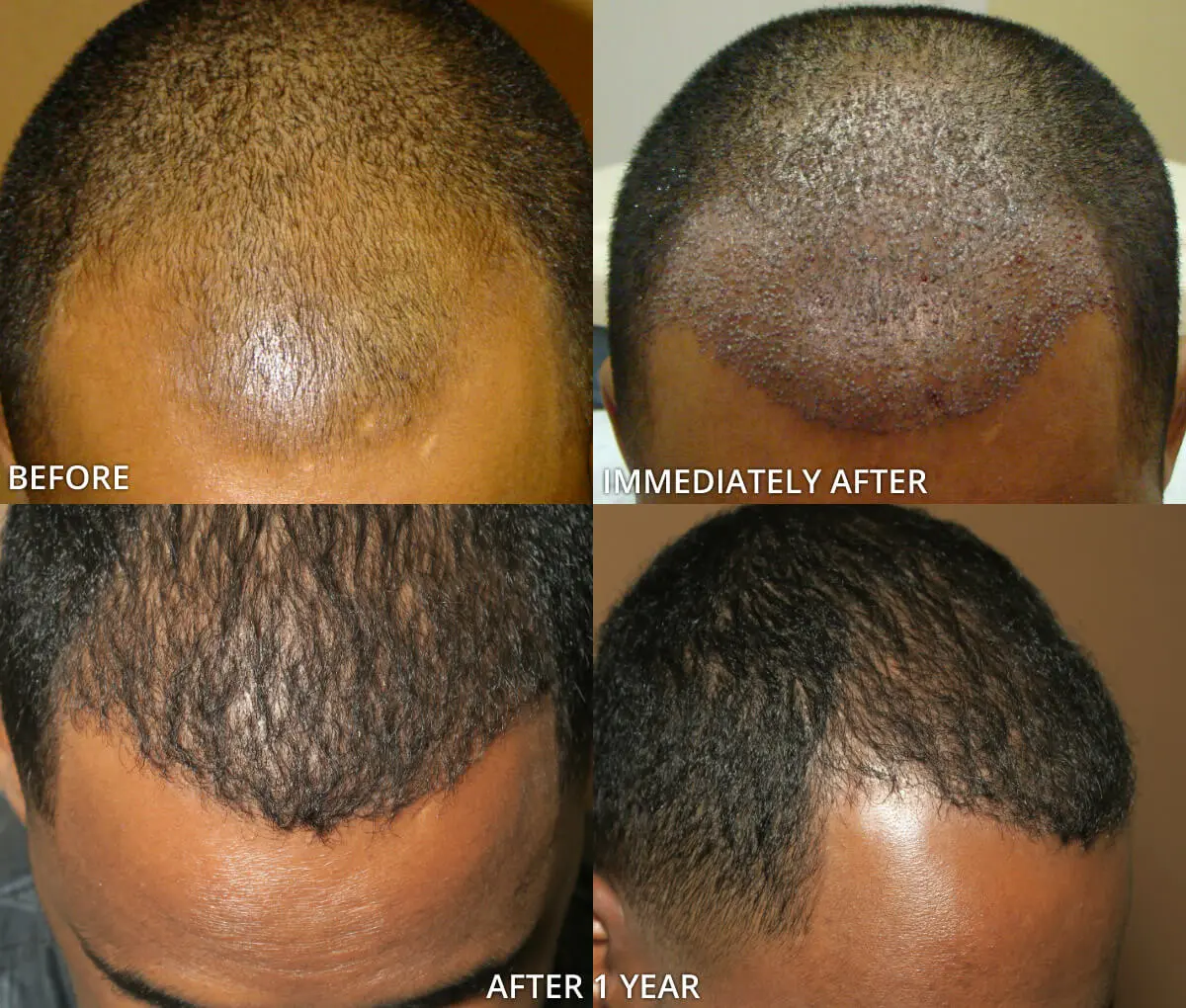
Growth follows a predictable timeline:
- Month 1 – temporary shedding of transplanted hair
- Months 3–4 – early regrowth begins
- Months 6–8 – visible density increases
- Month 12 – final maturation and thickening
These stages are part of normal hair transplant phases during recovery and regrowth.
Is hair transplant 100% successful? No surgical procedure guarantees 100 percent survival. In physician-led FUE cases, graft survival rates often range between 85 and 95 percent under proper conditions.
Smoking, uncontrolled diabetes, and poor aftercare can reduce success rates.
Safety, Aftercare, and Choosing a Clinic
The healing process requires structured follow-up. Swelling, redness, and mild discomfort are common during the first week.
Warning signs include increasing pain, spreading redness, or discharge from recipient sites. Prompt communication with the medical team supports safe recovery.
Doctor-performed care reduces risk. In Greece and Israel, hair transplant surgery occurs in licensed medical facilities under physician supervision.
Clinics typically treat one patient per day, allowing focused surgical time. In some Turkish centers, multiple procedures may be scheduled daily, which can limit individualized monitoring.
Patients researching african american hair transplant options should ask clear questions at consultation:
- Who performs extraction and implantation?
- How many patients are treated per day?
- What follow-up schedule is included?
- Is the clinic licensed under national medical regulation?
A structured, physician-led approach protects the donor site, supports consistent growth pattern placement, and reduces complication risk.
When choosing between countries, regulation standards, surgeon involvement, and follow-up structure matter as much as cost.
Why Choose Trichogenics?

All procedures are performed only by doctors
The uniqueness of Trichogenics lies in its strict medical process; only certified doctors perform every transplant. No technicians or unqualified assistants are involved. Choosing a clinic with proven experience in hair transplants can make all the difference.
Meet Dr. Asi and Dr. Eric Peretz
The two doctors leading Trichogenics Drs.Asi and Eric Peretz are recognized leaders in the field. Their extensive experience, attention to detail, and focus on natural results make Trichogenics the best choice.
Contact Trichogenics today to schedule a personal consultation and get a clear, doctor-led plan for your hair restoration.


