

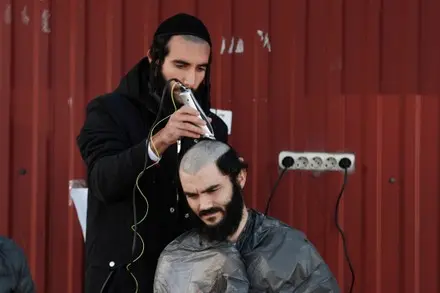
Jews have curls because some Jewish men follow a biblical command that restricts cutting the hair at the sides of the head.
This practice comes from Leviticus 19, which instructs men not to round the corners of their heads. Over time, rabbinic interpretation defined this area as the sideburn region. Hair is left to grow naturally there. It may form curls called payot.
The jewish hair cut tradition applies mainly within Orthodox communities and is practiced in different ways depending on custom. The curls are not required to be styled a certain way, but they appear as a result of leaving that area uncut.
Key Takeaways
- The jewish hair cut refers to the practice of leaving the side hair uncut, based on Leviticus 19 and later interpretation by Talmudic scholars.
- Payot, the side curls worn by some Jewish men, result from this rule and vary across Orthodox Jewish hairstyles and Hasidic Jews traditions.
- The Upsherin haircutting ceremony at age three marks a young boy’s first haircut while preserving the payot as a sign of religious identity.
- In hair restoration planning, physician-led procedures such as FUE and DHI must account for payot preservation, especially in regulated medical settings like Israel and Greece.
Do Jewish People Cut Their Hair?
Many ask, do Jewish people cut their hair? Yes, they do. The rule does not forbid all hair cutting. It limits shaving specific side areas of the head.
Jewish men can cut the rest of their hair normally. The restriction applies only to certain zones near the temples. Different communities interpret the rule in different ways.
Some Orthodox men’s groups follow strict standards. Others apply only a basic separation between beard and side hair. Secular Jewish men may not follow these rules at all.
For a broader explanation of texture and cultural background, see Jewish hair.
Leviticus 19 and Haircut Rules
Leviticus 19 says not to round the corners of the head. Talmudic scholars studied this verse in detail. They defined where the corners are located. They also discussed which tools are allowed.
Most interpretations allow trimming with scissors. They forbid shaving the area fully with a razor. The rule does not apply to the entire scalp.
Hair cutting may also stop during certain times. During mourning, it may serve as a sign of mourning. These limits apply only for set periods.
How Short Can Jews Cut Their Hair?
The answer depends on tradition. Some rabbis say a small visible length must remain. Others focus on the tool used.
Hasidic Jews often grow long side curls. Other communities keep them short. The rule does not ban clean or modern styles.
When temple recession develops in this area, some men later explore options similar to those described widow´s peak hair transplant.
When Cutting Hair Is Allowed
Hair cutting is allowed most of the year. Limits exist during specific times:
- The Omer period
- The Three Weeks
- Personal mourning
These pauses are temporary. They remind people of spiritual themes.
What Is the Jewish Haircut Called?
The Jewish haircut name is payot, also spelled pe’ot. The word means corners. It refers to the side hair left uncut. It does not describe the full haircut.
Many ask why do Jews have curls. The curls appear because the hair grows naturally. Some hair types form tight curls. Others stay straight.
Payot (Pe’ot): The Traditional Name
Payot comes from Hebrew. It refers to the corners of the head. Talmudic scholars defined the area between the forehead and the ear.
The rule applies to Jewish men. It does not apply to women in traditional law.
Why Do Jews Have Curls?
The curls are not a separate law. They are the result of not cutting the side hair. In some groups, the curls grow long and visible.
Hasidic Jews often show long curls. Other Orthodox Jewish hairstyles keep the hair shorter but still distinct.
Curl patterns vary genetically. Not all Jewish men have the same texture. The diversity of texture is explained further in the curly hair transplant.
Orthodox and Hasidic Hairstyles
Orthodox Jewish hairstyles vary by group. Some men wear long spirals. Others tuck the hair behind the ear. Some keep short side locks.
Common styles include:
- Long curls in some Hasidic groups
- Short but visible payot
- Side hair tucked neatly
These styles reflect belief and identity.
Why Do Jewish Boys Wait Until Age Three?
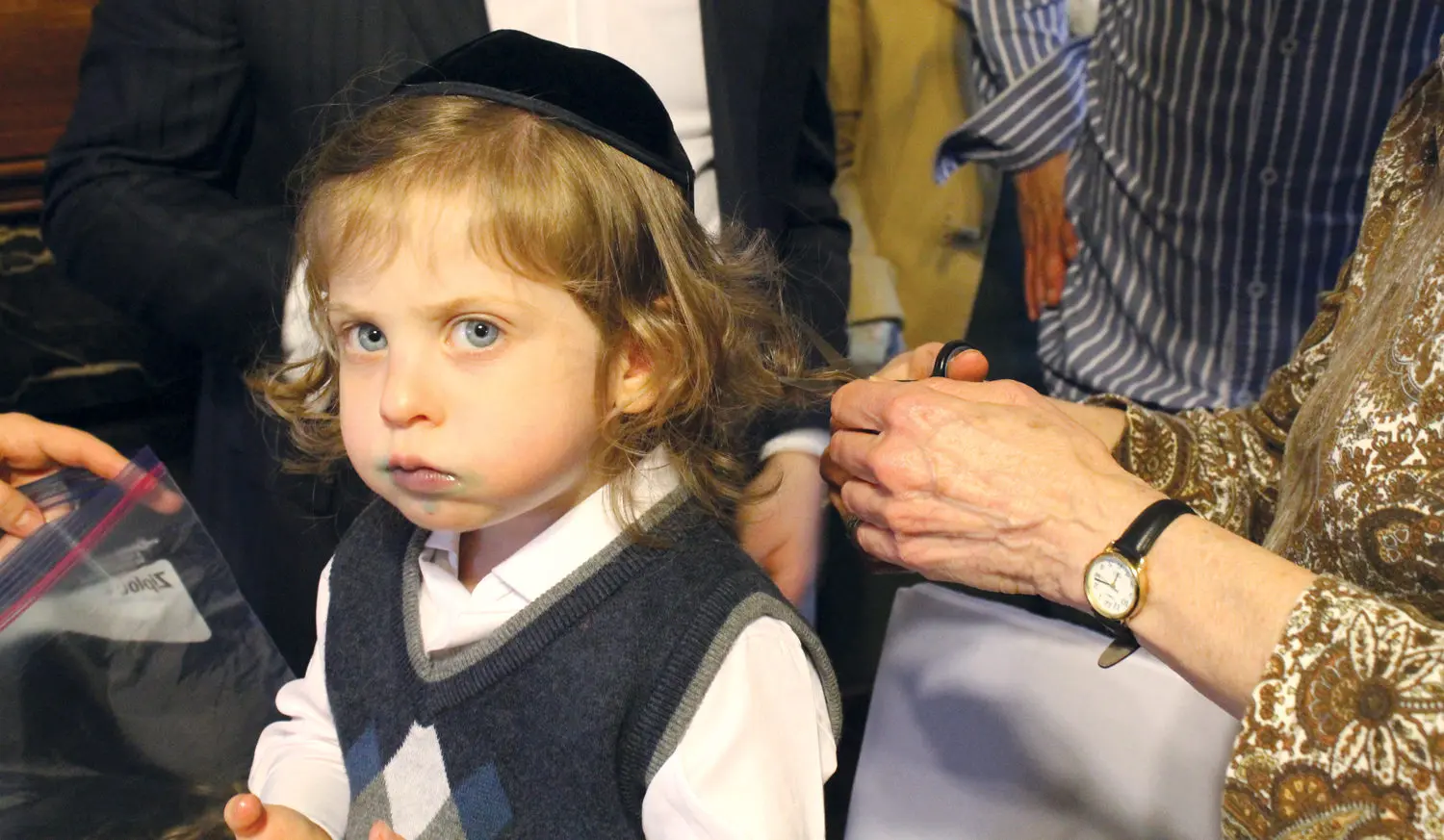
A young boy often waits until age three for his first haircut. This event is called the Upsherin haircut. It marks the start of Torah learning.
The custom was developed through rabbinic teaching. It is not written directly in the Bible.
The Upsherin Haircut Tradition
The Upsherin haircut takes place at or after the third birthday. Family members cut small pieces of hair. The payot remains untouched.
The haircutting ceremony often includes blessings. It celebrates growth and learning.
Spiritual Meaning of the First Haircut
Some teachers compare a child to a tree. Fruit is not taken from a tree in its first years. The first haircut shows readiness for learning.
It connects the child to community and faith.
Religious Views on Cutting the Curls
What happens if someone removes the payot? Halachic interpretation looks at intent and method. Shaving with a razor may break the rule. Cutting by mistake is treated differently.
Communities respond in different ways. Some stress education over a strict reaction.
Halachic Interpretation
Halachic discussion considers:
- The tool used
- The exact area cut
- The person’s intent
Talmudic scholars debated these details.
Community Perspectives Today
Today, practice depends on the observance level. Some Jewish men follow the rule closely. Others do not.
In medical care, doctors should know about payot preservation. Cultural respect matters during treatment planning.
Clinical Considerations in Hair Restoration
Hair restoration must respect payot areas. Doctor-led procedures allow careful graft placement. They reduce the risk of removing culturally important hair.
Modern techniques include:
- FUE – Follicular Unit Extraction
- DHI – Direct Hair Implantation
- Sapphire FUE
- Choi pen implantation
In Greece and Israel, physician-performed FUE often costs USD 3,500 – 6,000 for about 2,500 grafts. This usually includes physician fees, anesthesia, certified operating room use, and follow-up visits.
@trichogenics How to ensure you get assessed properly for a hair transplant and ensure the best possible outcomes. Dr Asi Peretz explains #trichogenics #hairloss #hairlosssolutions #hairtransplant #hairtransplantgreece #hairtransplantturkey #fyp #hairfall #fuesurgery #hairplugs #finasteride #minoxidil
♬ swish_whoosh (large)(794558) - satak
In Turkey, clinics may charge USD 1,800 – 2,800 for similar graft counts. Many of these clinics treat many patients per day and may rely on technicians for extraction.
Price differences often reflect:
- Who performs the surgery
- Number of daily cases
- Time per patient
- Level of follow-up care
Lower supervision can raise risks such as overharvesting or poor angle control, issues sometimes seen in botched hair transplant cases. Certified clinics in Israel and Greece operate under medical regulation.
Dr. Asi Peretz explains that preserving payot requires careful donor mapping and precise graft planning.
Patients should ask about:
- Physician certification
- Operating room standards
- Number of grafts planned
- Post-operative care schedule
Some countries have fewer medical regulations. Patients should verify clinic licensing and supervision. Structured follow-up and physician involvement help protect patient safety.
The Jewish hair cut reflects law, tradition, and identity. Leviticus 19, rabbinic teaching, and community practice shape how Jewish men wear their hair.
The upsherin ceremony marks early learning for a young boy. Modern medicine can respect these customs when planning hair procedures.
Why Choose Trichogenics?
All procedures are performed only by doctors
The uniqueness of Trichogenics lies in its strict medical process; only certified doctors perform every transplant. No technicians or unqualified assistants are involved. Choosing a clinic with proven experience in hair transplants can make all the difference.
Meet Dr. Asi and Dr. Eric Peretz
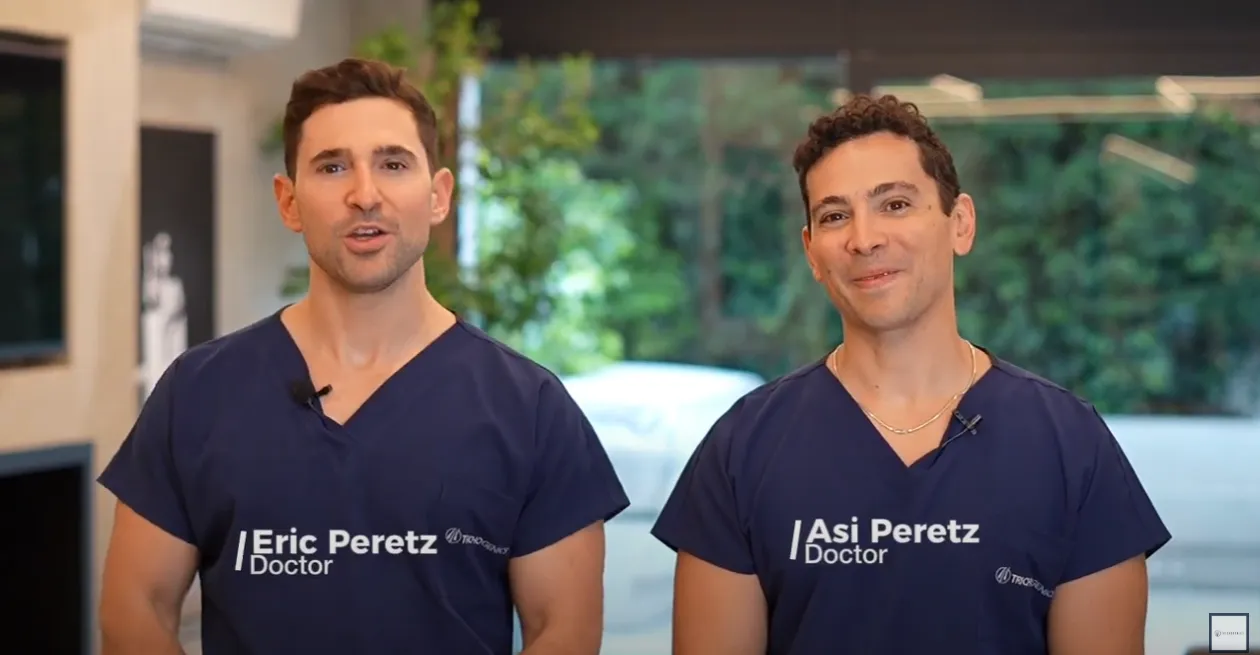
The two doctors leading Trichogenics, Dr. Asi Peretz and Dr. Eric Peretz, are recognized leaders in the field. Their extensive experience, attention to detail, and focus on natural results make Trichogenics the best choice.
Contact Trichogenics today to schedule a personal consultation and get a clear, doctor-led plan for your hair restoration.


