


John Cena has publicly confirmed undergoing a hair transplant in November 2024 after years of visible thinning. The discussion around John Cena’s hair transplant before and after focuses on visible crown density improvement. It also highlights a more defined hairline than in earlier WWE events.
In interviews, he said teasing about his bald spot changed how he viewed treatment. He also said comments about his hair loss from the audience changed his outlook. He even described signs that made him feel his life was shifting.
At Trichogenics, founded by Dr. Asi Peretz and Dr. Eric Peretz, hair restoration is physician-led. It is treated as a medical procedure, like the structured surgical planning used by public figures like Cena.
Key Takeaways
- John Cena confirmed he underwent surgical hair restoration in November 2024, and before-and-after comparisons show improved crown density and reduced visibility of his bald spot.
- His case reflects male pattern baldness progression, where transplanted hair follicles from DHT-resistant donor areas can restore thinning zones when properly planned.
- Cena stated that public comments about his hair completely changed the course of his decision-making, describing signs that said the course of my life was shifting toward treatment.
- Hair transplant outcomes depend on graft count, physician involvement, and structured follow-up care, with clear differences between doctor-led procedures and high-volume technician-based clinics.
Did John Cena Get Hair Transplants?

Yes. Cena confirmed he underwent a transplant in November 2024. Multiple media outlets reported his admission that he chose surgery after experiencing progressive John Cena hair loss over several years.
He explained that comments about bald John Cena images during professional wrestling events pushed him to address visible thinning. This aligns with male pattern baldness, a genetic condition that affects millions of men worldwide.
Hair Transplant in November 2024
The transplant in November 2024 marked a shift in how Cena managed visible crown thinning. Observers noted improvement in density within several months.
A hair transplant in November typically follows a predictable recovery timeline. New growth often begins at three to four months, with more visible thickening by month eight to twelve.
Public Confirmation
Cena openly stated he could no longer hide my hair loss and decided to seek surgical correction. His transparency helped normalize the celebrities with hair transplants discussion.
Public disclosure matters because it clarifies that hair restoration is a medical solution to patterned thinning, not cosmetic concealment.
John Cena Before and After Hair Transplant Results
The John Cena before and after hair transplant comparison shows improved crown coverage and a refined frontal outline. Early images showed a visible bald spot under arena lighting.
Post-surgery photos reveal thicker hair follicles implanted in the thinning area. Lighting and hair length can affect appearance, so comparisons must consider timing and styling.
Bald John Cena vs Post-Surgery
Pre-surgery footage during professional wrestling broadcasts displayed diffuse thinning at the crown. After surgery, density appears more uniform.
This change reflects redistribution of healthy donor hair follicles from the back of the scalp to thinning zones.
Hairline and Crown Density Changes
Cena’s hairline remained conservative. Surgeons often avoid aggressive lowering in patients with active male pattern baldness.
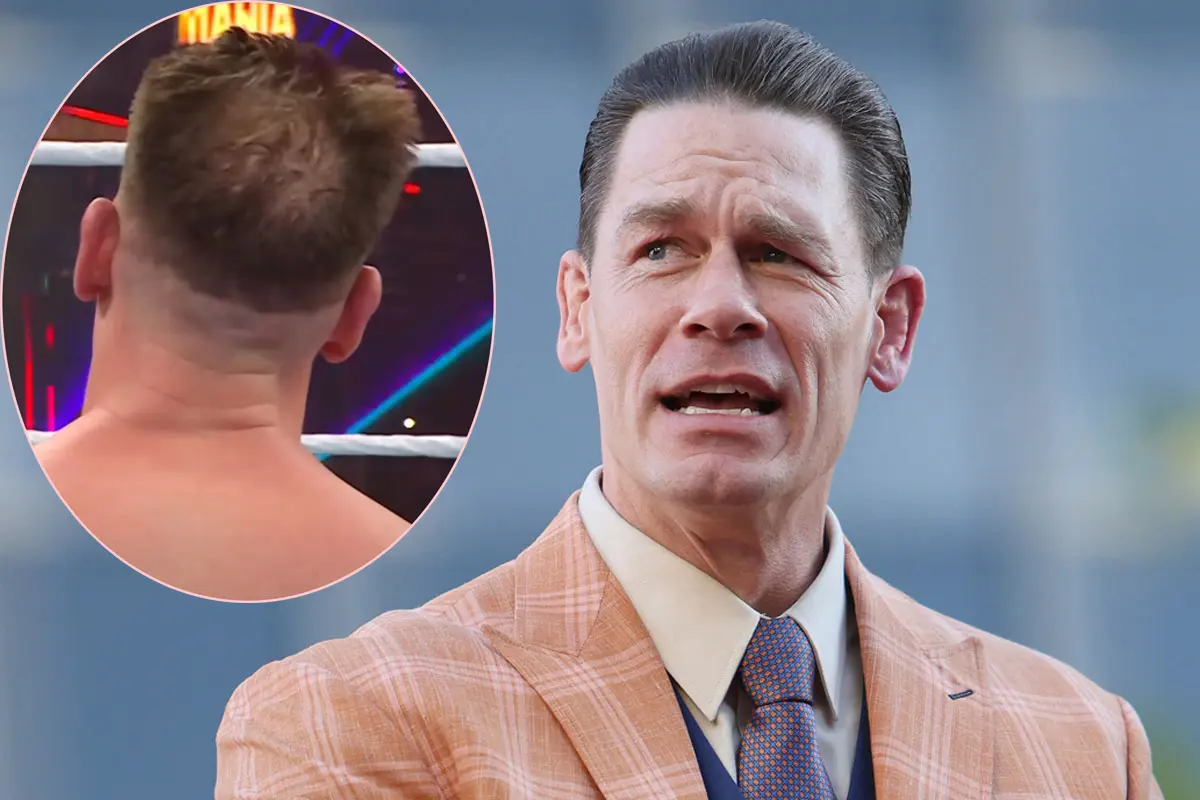
Crown density improvement requires careful graft angulation. Poor angle control can create unnatural swirl patterns and affect overall hair transplant density.
Growth Timeline
Most FUE patients follow this pattern:
- Weeks 1–2 – graft healing phase
- Months 1–3 – temporary shedding
- Months 4–6 – early regrowth
- Months 8–12 – density maturation
This explains why immediate transformation is not realistic.
Why John Cena Experienced Hair Loss
John Cena hair loss is consistent with androgenetic alopecia. This condition affects the crown and frontal scalp due to DHT sensitivity.
Family history often predicts progression. Stress from WWE World travel and physical strain does not cause baldness but may increase shedding.
Male Pattern Baldness
Male pattern baldness involves gradual miniaturization of hair follicles. Over time, follicles produce thinner strands.
@trichogenics Dr Asi Peretz explains why we bald. #trichogenics #hairloss #hairtransplant #hairtransformation #hairtransplantsurgery #hairtransplantgreece #hairlosssolutions #hairtransplantturkey #balding #baldingsolution #fyp
♬ original sound - Trichogenics
Without treatment, thinning expands outward from the crown. Patients with advanced progression sometimes review Norwood 5 hair transplant cases to understand later-stage patterns.
WWE and Professional Wrestling Stress
Professional wrestling involves frequent travel, stage lighting, and physical intensity. While not a direct cause, these factors can highlight thinning under bright lights.
High-definition broadcasting magnifies density contrast.
Procedure Details: FUE or Hair Plugs?
Modern surgery no longer uses outdated John Cena hair plugs techniques. Today, surgeons use follicular unit extraction or DHI.
Follicular unit extraction removes individual grafts with micro punches. This reduces visible scarring.
Follicular Unit Extraction
In physician-performed FUE:
- The doctor extracts grafts
- The doctor designs the hairline
- Implantation follows natural growth angles
DHI uses a Choi pen implantation method. The Choi pen allows direct placement without creating prior channels.
Dr. Asi Peretz emphasizes that physician control over angle and density reduces risk of overharvesting.
Estimated Graft Count
Based on visible crown coverage, Cena may have required 2,000–3,000 grafts. A patient requiring 2,500 grafts typically needs one full surgical day.
Graft estimates depend on donor density and scalp elasticity.
Are Results Permanent?
Transplanted hair follicles are DHT resistant. They usually grow permanently.
However, native hair may continue thinning. Long-term maintenance may include red light therapy minoxidil vitamins protocols.
How Much Do 3,000 Hair Grafts Cost?
Cost depends on who performs the surgery and where it occurs.
Average Cost Per Graft
In Greece or Israel, physician-performed FUE ranges:
- USD 3,500–6,000 for 2,500–3,000 grafts
- Includes physician fees, anesthesia, certified operating room, follow-up
In Turkey:
- USD 1,800–2,800 in high-volume clinics
- Often technician-led
- Multiple patients per day
Country Comparison
Price differences reflect:
- Physician involvement
- Case volume per day
- Follow-up duration
- Surgical time allocated
In physician-led settings in Greece or Israel, one patient may occupy a full day. In some Turkish clinics, teams may rotate between several patients.
@trichogenics 32 year old male 3200 grafts Average: 2.35 hairs/graft FUE 24 months after surgery #trichogenics #hairtransplant #hairtransplantturkey #hairloss #hairlosssolutions
♬ original sound - Trichogenics
Lower cost can correlate with reduced supervision.
Cost Variables
Variables include:
- Number of grafts
- Need for crown vs frontal work
- Use of DHI vs Sapphire FUE
- Follow-up care duration
Structured follow-up reduces complication risk.
Post-Transplant Care and Hairstyle Evolution
After surgery, patients follow structured aftercare. Proper care protects graft survival and follows guidance similar to a hair transplant aftercare guide.
John Cena Scalp Care Routine
Public reports mention red light therapy minoxidil vitamins. These methods support scalp circulation.
Patients often follow:
- Gentle washing protocol
- No friction for 10–14 days
- Avoid intense workouts initially
Red Light Therapy and Minoxidil
Low-level laser therapy increases blood flow. Minoxidil prolongs the growth phase.
These treatments support non-transplanted hair.
John Cena Hair Cut Changes
The hairstyle of John Cena changed subtly after surgery. Shorter cuts can emphasize density.
Hair length influences visual thickness.
Long-Term Hair Maintenance
Maintenance may include:
- Annual checkups
- Medical photography
- Monitoring for signs of hair loss
Doctor-led programs emphasize follow-up over rapid discharge.
John Cena Age and Celebrity Hair Transplants
John Cena’s age places him in his mid-40s. Hair density naturally decreases with age.
Patients in their 40s often require conservative planning.
Hair Density in Your 40s
Surgeons avoid lowering hairlines too aggressively. Future thinning must be anticipated.
Donor supply is limited and must be preserved.
Which Actor Has Done the Most Hair Transplants?
Many actors have undergone repeat procedures. Some require second sessions if thinning continues.
Celebrity hair transplant cases highlight the need for long-term planning rather than one-time correction.
Clinical Considerations for Readers
When researching hair restoration, patients should verify:
- Procedure performed by licensed physician
- Certified operating room
- Clear graft count documentation
- Structured follow-up
In countries with stricter medical regulation such as Greece and Israel, physician-led oversight is mandatory in licensed clinics. In contrast, some high-volume centers abroad may rely heavily on technicians, which changes surgical supervision levels.
Hair restoration remains a medical procedure. Outcomes depend on donor quality, surgeon skill, and realistic planning.
Why Choose Trichogenics?

All procedures are performed only by doctors
The uniqueness of Trichogenics lies in its strict medical process; only certified doctors perform every transplant. No technicians or unqualified assistants are involved. Choosing a clinic with proven experience in hair transplants can make all the difference.
Meet Dr. Asi and Dr. Eric Peretz
The two doctors leading Trichogenics, Dr. Asi Peretz and Dr. Eric Peretz, are recognized leaders in the field. Their extensive experience, attention to detail, and focus on natural results make Trichogenics the best choice.
Contact Trichogenics today to schedule a personal consultation and get a clear, doctor-led plan for your hair restoration.


