


Nizoral shampoo for hair loss can support scalp health and may help improve hair conditions in certain cases, but it is not a primary treatment for hair regrowth. It contains ketoconazole shampoo, an antifungal agent that can reduce scalp inflammation and may influence factors linked to androgenetic alopecia.
Clinical evidence suggests it may improve hair density and reduce shedding with consistent use, but results are usually modest. At Trichogenics, founded by Dr. Asi Peretz and Dr. Eric Peretz, this type of product is viewed as a supportive option rather than a complete solution.
Key Takeaways
- Nizoral shampoo for hair loss can improve scalp health and reduce shedding, but it is not a primary treatment for significant hair regrowth.
- Ketoconazole shampoo works by reducing inflammation and may have mild effects on DHT, helping support existing hair follicles rather than creating new ones.
- Clinical evidence shows modest improvements in hair density and thickness, with results typically visible after 3 to 6 months of consistent use.
- It is most effective for early-stage androgenetic alopecia or for scalp conditions such as seborrheic dermatitis, but less useful for advanced baldness.
- For meaningful results, Nizoral shampoo is often used alongside treatments such as minoxidil or finasteride, and a medical evaluation may be needed if hair loss progresses.
Does Nizoral Shampoo Help With Hair Loss?
Nizoral shampoo for hair loss may help in mild cases, especially when scalp conditions like seborrheic dermatitis are present. It does not directly stimulate robust hair regrowth like some medications, but it can support a healthier environment for hair follicles, similar to other hair-loss shampoos.
Studies show that ketoconazole shampoo may improve hair density and reduce shedding over time.
The effect is supportive rather than transformative. It works best when combined with other hair-loss treatments, such as minoxidil or finasteride. Patients should not expect rapid or dramatic changes from shampoo use alone.
Who It Works Best For
This shampoo may benefit people with early pattern hair loss or scalp inflammation. It is more helpful in early androgenic alopecia, where hair follicles are still active. Individuals with seborrheic dermatitis may also see improvement, especially when addressing whether dandruff causes hair loss.
It is less effective for advanced male pattern baldness, where many hair follicles are no longer active. In these cases, medical or surgical options may be required.
How Nizoral Shampoo for Hair Loss Works
Ketoconazole Effects on Scalp and DHT
Ketoconazole shampoo reduces fungal activity by targeting Malassezia, a yeast linked to seborrheic dermatitis and scalp inflammation. Controlling this microorganism helps normalize scalp conditions, reduce itching, and lower excess oil production. This creates a healthier environment for hair follicles to function without constant irritation.
It may also influence scalp-level DHT (dihydrotestosterone) through a mild effect on 5-alpha reductase, the enzyme that converts testosterone into DHT. It is a hormone that binds to hair follicles and gradually shrinks them.
This process leads to thinner, shorter hairs and eventually reduced hair density, which is characteristic of androgenetic alopecia and male pattern baldness. While ketoconazole does not block DHT as strongly as medications like finasteride, it may reduce its local impact on the scalp.
Research suggests that ketoconazole may also reduce inflammation around hair follicles, another factor linked to hair thinning. Chronic inflammation can disrupt the growth cycle and weaken follicles over time. By reducing inflammation and improving scalp stability, ketoconazole helps support existing hair follicles and maintain hair density rather than directly triggering new hair growth.
Role in Inflammation and Hair Growth
Reducing inflammation is a key benefit of ketoconazole shampoo. Chronic inflammation can disrupt the hair cycle and weaken hair follicles. By reducing inflammation, the scalp supports more stable hair regrowth.
This is especially relevant in seborrheic dermatitis. A healthier scalp helps improve hair density over time.
What Type of Hair Loss Are You Treating
Nizoral shampoo for hair loss is primarily used to treat androgenetic alopecia, also known as pattern hair loss. This condition involves gradual thinning caused by DHT sensitivity.
Other types, such as telogen effluvium, require different approaches. Ketoconazole shampoo may improve scalp condition, but it does not address all causes. Identifying the type of hair loss is essential before treatment.
Nizoral Shampoo for Hair Loss Results and Evidence
What Studies Show About Effectiveness
Clinical studies show that ketoconazole shampoo may increase hair density and improve hair thickness. Some research compares its effects to those of low-strength minoxidil, though the results are less pronounced. It is not considered an FDA-approved treatment for hair regrowth.
Clinical studies also show measurable improvements in scalp condition and reduced shedding. These findings support its role as a supportive treatment rather than a primary solution. It is often used in combination with other therapies.
Although evidence supports its use, most studies report only supportive effects. It does not reverse advanced hair loss. This highlights the need for combination approaches in treating hair loss.
Before and After Results and Timeline
Visible changes from Nizoral shampoo for hair loss occur gradually and are tied to the hair growth cycle. Most users apply it 2–3 times per week, and early improvements usually start at the scalp level rather than immediate hair growth. The first signs are often reduced itching, less flaking, and improved scalp condition within the first few weeks.
A more practical timeline looks like this:
- Weeks 2–4: Reduced dandruff, less scalp irritation, early decrease in shedding
- Weeks 6–8: Shedding stabilizes, hair may feel slightly thicker due to improved scalp health
- Months 3–4: Mild improvements in hair density and hair shaft thickness may become noticeable
- Months 5–6: Results plateau, with maintenance of existing hair rather than significant new growth
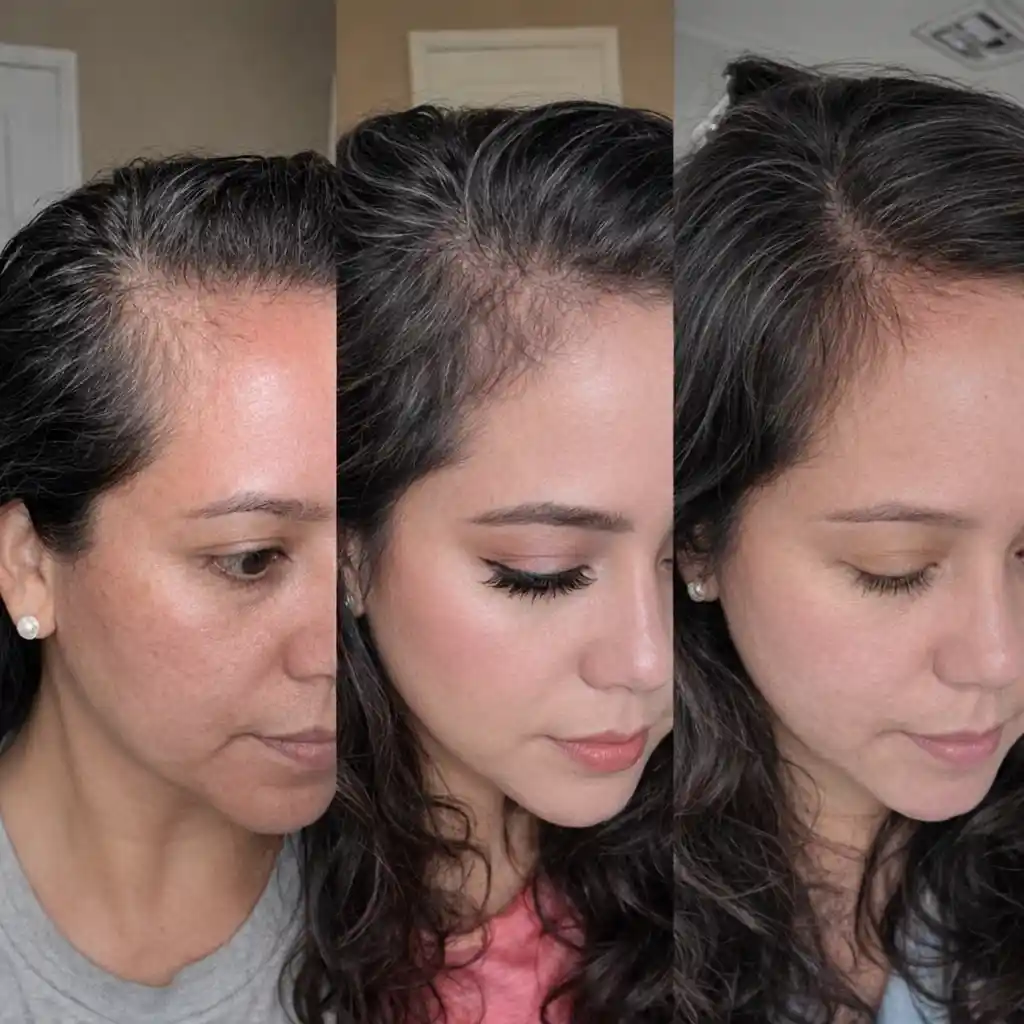
Structural improvements in hair density take longer because hair follicles need time to complete full growth cycles. Significant hair regrowth is uncommon with shampoo alone, especially in moderate-to-advanced androgenetic alopecia.
User Reviews and Common Feedback
User feedback often highlights improved scalp health and reduced dandruff. Some report thicker hair and less shedding. These effects are linked to better scalp condition rather than new hair growth.
Common patterns include:
- Reduced irritation and dandruff
- Less shedding in the early stages
- Slight improvement in hair thickness
Nizoral Shampoo for Hair Loss Female Results
Does It Work for Female Hair Loss?
Nizoral shampoo for hair loss in women can help in specific situations, but it does not treat the root cause of most cases of female hair loss. It may reduce shedding when scalp inflammation or seborrheic dermatitis is present, and it can support early stages of pattern hair loss. These benefits come from improving scalp health, not from directly stimulating hair regrowth.
Key Differences in Female Response
Female hair loss often appears as diffuse thinning. Ketoconazole shampoo can support scalp health, but does not address hormonal causes. Its role remains supportive in most cases.
Nizoral Shampoo for Balding: Does It Work
When It Helps Early Hair Loss
Nizoral shampoo for balding may help in the early stages. When hair follicles are still active, improving scalp health can slow progression. It is most useful in early androgenetic alopecia.
Limits in Advanced Balding
In advanced male pattern baldness, shampoo cannot restore lost hair. At this stage, hair follicles are inactive. Medical or surgical treatments become necessary.
How to Use Nizoral Shampoo for Hair Loss
Recommended Frequency and Strength
Ketoconazole shampoo is usually used 2-3 times per week. It should remain on the scalp for several minutes before rinsing. This allows the active ingredient to work effectively.
How to Maximize Results
To improve results, patients often combine it with other treatments:
- Minoxidil for hair regrowth
- Finasteride for reducing DHT
- Scalp care routines

Consistency is essential. Combination therapy often leads to better outcomes than using shampoo alone.
How Long Should You Use Nizoral Shampoo for Hair Loss
Most people use ketoconazole shampoo for several months to assess results. Short-term use improves scalp symptoms, but longer-term use is needed to achieve changes in hair density.
Hair growth cycles take time. Reduced shedding may appear first, while visible improvements take longer. If no progress is seen, further evaluation may be needed.
Side Effects, Shedding, and Safety of Nizoral
Why Shedding May Happen
Temporary shedding may occur when starting treatment. This happens as weaker hairs are replaced during the hair cycle. It is usually short-term.
Common Negative Effects of Nizoral
Side effects may include dryness, irritation, or itching. These are usually mild and improve with proper use. Overuse can increase scalp sensitivity.
When to Be Concerned
Persistent irritation or worsening hair loss should be evaluated by a professional. Not all cases respond to ketoconazole shampoo.
Nizoral vs Other Hair Loss Treatments
Nizoral vs Minoxidil
Minoxidil is an FDA-approved treatment that stimulates hair follicles. It promotes increasing hair growth and extends the growth phase. Nizoral shampoo plays a supportive role.
Nizoral vs Finasteride
Finasteride reduces DHT by blocking 5-alpha reductase. It is more effective for androgenetic alopecia. Nizoral shampoo has a weaker effect and is often combined with other treatments.
When Nizoral Shampoo for Hair Loss Is Not Enough
Signs You Need Medical Treatment
Ongoing hair loss, visible thinning, or reduced hair density may indicate progression and may require options such as a hair transplant for hair thinning. These signs suggest androgenic alopecia requiring additional treatment.
Doctor-Based Hair Restoration Options
Medical treatments include medications and procedures such as FUE (Follicular Unit Extraction) and procedures such as FUE (Follicular Unit Extraction) and DHI (Direct Unit Extraction), which are part of modern hair transplant techniques. Choi pen implantation allows precise placement of hair follicles. These methods focus on restoring hair density through controlled techniques.
Doctor-led procedures include planning, implantation, and follow-up care. Trichogenics operates in Greece and Israel, where procedures are performed under defined medical protocols. Some regions, including Turkey, have varying levels of regulation, which may affect the consistency of care.
Schedule a Consultation
If you are exploring options for treating hair loss and want a clearer understanding of what may work for your case, a professional evaluation can help guide the next steps. A consultation allows a specialist to assess your hair follicles, identify the type of hair loss, and recommend an appropriate treatment plan.
At Trichogenics, consultations are part of the clinical process used to determine whether medical or surgical approaches are suitable. If you are considering your options, you can schedule an appointment to receive a structured evaluation and discuss potential treatments based on your condition.

