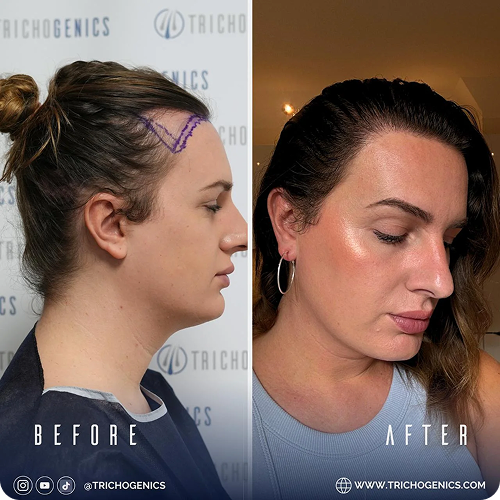

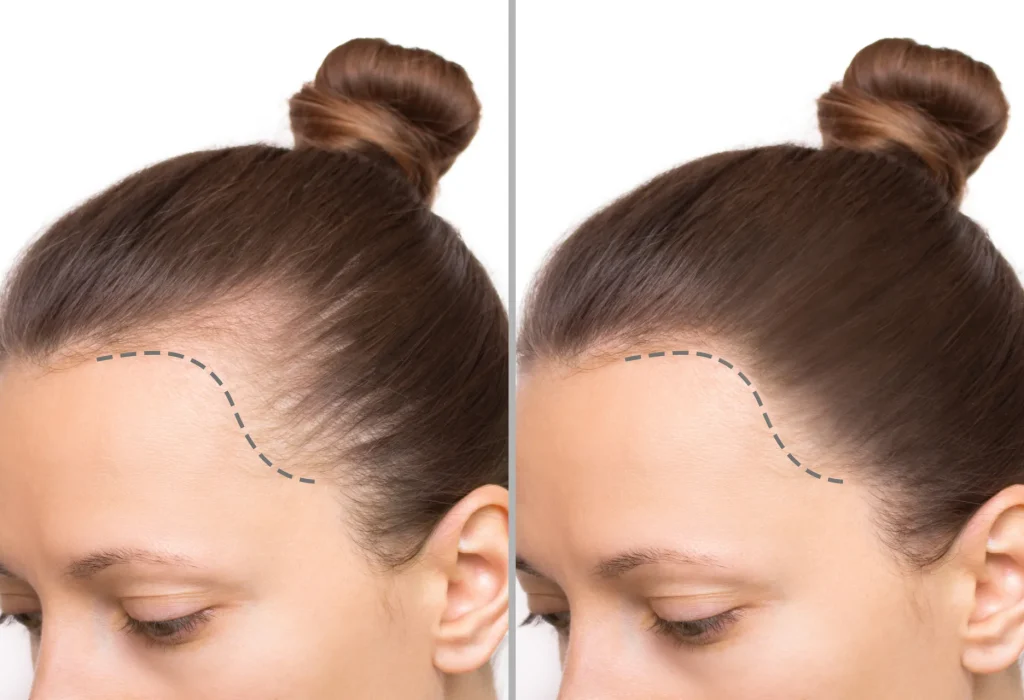
A frontal female hair transplant is a medical procedure that restores the frontal hairline in women experiencing hair loss in that area. It involves relocating healthy follicles from donor hair areas to improve shape, hair density, and overall coverage while maintaining a natural appearance.
This type of hair transplant procedure is often considered when non-surgical hair restoration methods no longer provide enough improvement. Trichogenics, founded by Dr. Asi Peretz and Dr. Eric Peretz, operates in Greece and Israel and focuses on physician-led care. The sections below explain how hair transplant surgeries work step by step, who may benefit, and what to expect.
Key Takeaways
- A frontal female hair transplant restores hairline density, but results depend on diagnosis, technique, and long-term planning.
- Not all patients are candidates, so identifying the cause of female pattern hair loss is essential before surgery.
- Modern techniques such as FUE, DHI, and Choi pen implantation allow precise graft placement for natural results.
- Results develop over time, and achieving full hair density may be limited by biological constraints, as seen in female hair transplant success rates.
- Long-term outcomes improve with follow-up care, since a transplant does not stop future hair loss.
What Is a Frontal Female Hair Transplant?
A frontal female hair transplant restores density along the front of the scalp, especially the frontal hairline, using follicles from stable donor hair areas. This type of hair transplant procedure focuses on improving shape and coverage while preserving natural proportions. Small adjustments in this region can significantly change how the face is framed.
A female hairline transplant differs from approaches used for male hair because women often experience diffuse thinning rather than deep recession. This pattern is commonly associated with female pattern hair loss, which affects hair density without fully removing the hairline. The goal is to improve hair density while maintaining a natural transition.
How It Restores the Hairline
Hair follicles are extracted individually and implanted into thinning areas. Each graft contains one to three hairs, and placement angle and direction affect the final appearance. Careful planning ensures that the transplanted hair blends with existing strands and supports natural hair growth.
Hair transplant surgeries today rely on techniques such as FUE (Follicular Unit Extraction) and DHI (Direct Hair Implantation). Tools like the Choi pen allow controlled implantation with minimal trauma. Hair growth occurs gradually, with visible improvement over several months.
Who Is a Good Candidate
A proper evaluation considers the cause of hair loss, donor hair quality, and long-term stability. Female patients with stable, patterned hair loss are more suitable for a frontal hair transplant. Those with ongoing or unpredictable loss may need medical treatment first.
Consultation helps determine eligibility. According to clinical practice, including insights from Dr. Asi Peretz, diagnosis is essential for planning. Identifying whether hair loss is temporary or permanent improves outcomes.
Hair Loss Patterns in Women
Female patients may experience different types of hair loss, including:
- Female pattern hair loss with diffuse thinning
- Traction alopecia from repeated tension
- Stress-related shedding
Each pattern affects treatment decisions. Identifying the cause helps determine whether surgery or non-surgical care is appropriate.
When a Transplant Is Not Recommended
A transplant may not be suitable in certain cases. Active scalp conditions or unstable hair loss can reduce graft survival. Limited donor hair may also affect results.
Specific scenarios include:
- Active autoimmune scalp conditions
- Scarring alopecia
- Severe donor depletion
Treatment may focus on stabilizing the condition before surgery. This approach improves safety and long-term success.
Female Frontal Hair Loss Causes and Treatments
Frontal hair loss can result from genetics, hormones, or external factors. Female pattern hair loss is one of the most common causes and often progresses gradually. Some female patients may also notice thinning due to styling habits or stress.
Non-surgical hair restoration treatments may help in the early stages. Medications can support follicle function and reduce shedding. If the follicles are no longer viable, a hair transplant may be considered after reviewing hair restoration non-surgical alternatives.
Non-Surgical Treatment Options
Common options include:
- Topical treatments – minoxidil (5% foam or solution) is widely used to support hair growth and improve density in female pattern hair loss.
- Oral medications – spironolactone may help in cases linked to hormonal imbalance, while oral minoxidil is sometimes prescribed in low doses under medical supervision.
- Low-level laser therapy – FDA-cleared devices such as laser caps or combs (for example, iRestore or HairMax) are used to stimulate follicles and support hair growth over time.
These methods help preserve existing hair and may complement surgical treatment.
Female Hairline Transplant Techniques
Modern hair transplant surgeries focus on precision and minimal damage to the scalp. FUE is widely used to extract individual hair grafts from the donor area, while DHI allows direct implantation. Both techniques aim to improve control, natural appearance, and consistent hair density.
Another method, Follicular Unit Transplantation (FUT), involves removing a strip of scalp from the donor area. This technique can provide a large number of hair grafts in a single session, but it may leave a linear scar at the donor site. The choice between these techniques depends on patient needs and clinical evaluation, including differences between FUT and FUE hair transplant methods.
Natural Hairline Design Approach
Hairline design must match facial structure and long-term hair patterns. A gradual transition helps create a natural look, especially along the frontal hairline. Dense packing is planned carefully to maintain scalp health and balanced hair density.
Physician involvement is important in this phase. Design decisions affect how the transplanted hair will look over time. A conservative approach helps maintain balance as hair changes.
Evaluation, Procedure, and Recovery
Evaluation begins with scalp analysis and a review of medical history. This helps identify the cause of hair loss and determine suitability. Planning focuses on graft count and placement strategy.
What Happens During the Procedure
The procedure follows key stages:
- Donor extraction
- Graft preparation
- Implantation using tools like the Choi pen
- Final placement based on hairline design
Each step requires precision to support natural growth and graft survival.
Recovery Phases and Hair Growth
Recovery occurs in defined stages.
- Days 1–10 – the scalp heals, and small scabs form around each graft
- Weeks 2–4 – transplanted hair sheds as part of the normal cycle
- Months 3–4 – new hair growth begins as follicles become active
- Months 6–9 – hair thickens, and density becomes more noticeable
- Months 9–12 – final results develop, depending on individual factors

Follow-up care helps monitor progress, manage any concerns, and support stable, predictable outcomes.
Frontal Female Hair Transplant Cost
Cost varies based on graft count, technique, and clinic expertise. In Israel and Greece, prices typically range from €4,000 to €15,000 ($5,000 to $18,000 USD), depending on the treatment plan.
Traveling abroad for lower-cost hair transplant surgeries may involve risks. In some regions, including Turkey, oversight may be limited, whereas clinics in Greece and Israel adhere to established medical standards.
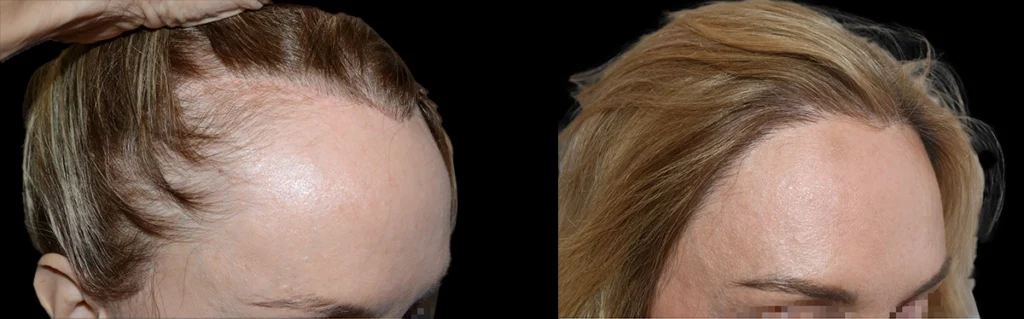
Before and After Results
Results develop gradually as transplanted hair adapts. Early changes may not reflect the outcome. Improvement continues over several months.
Typical density targets range from 30 to 50 follicular units per square centimeter. Higher density may not be achievable in a single session due to limitations in blood supply. A staged approach may be considered when needed to improve hair density.
Risks and Long-Term Outcomes
Hair loss may continue in untreated areas over time. A frontal hair transplant for women can restore existing hairline gaps, but does not prevent further progression. Long-term planning is important to maintain balance.
Risks include swelling, shedding, and minor infection. Most effects are temporary and resolve with proper care. Less common complications that may require medical attention include infection, prolonged inflammation, delayed healing, or uneven hair growth.
Density depends on donor supply and biological limits. The goal is to create the appearance of fullness rather than match the original hair density. Strategic placement supports natural results.
Is a Female Hair Transplant Worth It
A female hair transplant can be worth it for patients with stable hair loss who do not respond to other treatments. It can improve hair density and restore the frontal hairline using transplanted hair that grows naturally over time.
Long-term value depends on proper planning and maintenance. Patients should understand that outcomes develop gradually. A realistic approach helps align expectations.
Choosing the Right Hair Transplant Clinic
Choosing a clinic involves evaluating physician involvement, training, and follow-up care. Doctor-performed hair transplant surgeries help ensure consistency and safety.
Patients may ask:
- Who performs the procedure?
- What techniques are used?
- What follow-up care is provided?