

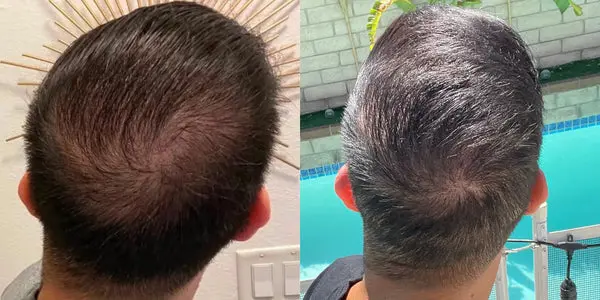
After twelve months of consistent use, most patients see slower hair loss and thicker hair in thinning areas. In many cases, 1 year dutasteride results show higher hair count and improved density, especially in the crown and mid-scalp.
The change is usually gradual, with stabilization first and visible thickening over time. Results vary based on age, stage of androgenetic alopecia, and treatment adherence. A full evaluation at one year provides the clearest view of whether the medication is effective.
Key Takeaways
- Dutasteride 1 year results typically show slower hair loss, higher hair count, and thicker strands in men with androgenetic alopecia, especially when treatment begins early.
- Visible improvement usually follows a timeline, with reduced hair shedding in the first months and clearer density gains closer to the twelve-month mark.
- Clinical comparisons indicate that finasteride and dutasteride both lower DHT, but dutasteride may produce stronger suppression and greater density gains in some patients.
- Accurate evaluation requires consistent photography and medical follow-up, as lighting, hair length, and styling can distort before-and-after comparisons.
What Do 1 Year Dutasteride Results Show?
After twelve months, most patients look for two main things – has hair loss stopped, and has hair density improved. In many clinical studies, dutasteride 0.5 mg increases hair count and slows the progression of androgenetic alopecia.
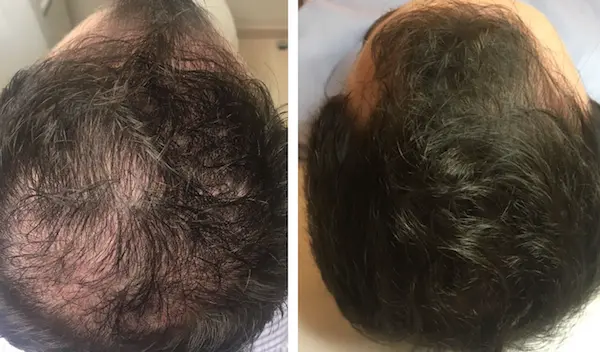
For male patients with early male pattern hair loss, results are often more visible than for those with long-term thinning classified under stages such as Norwood 2 hair patterns.
The goal of treatment is control and stabilization, not full reversal. Dutasteride works by lowering dihydrotestosterone DHT. This hormone binds to receptors in hair follicles and causes them to shrink over time.
When DHT levels drop, miniaturized follicles can grow thicker hair shafts. This leads to visible improvement in hair texture and scalp coverage after consistent months of treatment.
Clinical research comparing dutasteride and finasteride shows that dutasteride may produce stronger DHT suppression. Stronger suppression can lead to greater improvement in hair density in selected patients.
However, response varies based on genetics, age, and how early treatment begins.
After one year, patients may observe:
- Increased hair count in thinning areas
- Thicker hair shafts in miniaturized follicles
- Reduced hair shedding compared to baseline
- Slower progression of androgenetic alopecia
- Improved overall scalp coverage under consistent lighting
It is important to understand what these changes mean. Hair regrowth usually appears gradual. Most patients do not experience dramatic hairline lowering. Instead, they notice that existing hair looks fuller and less fragile.
Doctors often use objective tools such as phototrichograms to measure hair count and density. These tools provide more reliable data than casual mirror checks.
A structured evaluation at twelve months offers a clear view of whether the hair loss treatment is effective.
Patients who begin treatment early often show more significant improvement in hair than those who start after years of follicle shrinkage.
Once hair follicles become inactive, medical therapy cannot reactivate them. In advanced cases, patterns such as Norwood 5 hair transplant classifications often require additional intervention.
Hair Density and Hair Count Changes
Hair density refers to the number of hairs growing in a specific area of the scalp, usually measured per square centimeter.
Hair count is the total number of visible hair shafts within that measured zone. These two metrics help doctors evaluate whether a hair loss treatment is working in a measurable way.
In clinical studies, dutasteride 0.5 mg has shown a higher increase in hair count compared to placebo and, in some trials, compared to oral finasteride.
This effect relates to stronger suppression of dihydrotestosterone DHT. Lower DHT levels reduce ongoing follicle miniaturization in androgenetic alopecia.
Improvement in hair density does not always mean new hair follicles appear.
In most cases, existing miniaturized hair follicles grow thicker and stay longer in the growth phase. This leads to fuller coverage and less visible scalp, especially under bright light.
Doctors often use standardized photography and digital scalp analysis to measure progress.
These tools allow comparison between baseline and 12-month images under controlled conditions. This approach provides more reliable data than casual self-assessment.
After twelve months of consistent use, patients may notice:
- Higher hair count in thinning areas
- Thicker individual hair shafts
- Reduced gap visibility between strands
- Less visible scalp in the crown region
- More uniform density across affected zones
It is important to understand that density gains vary. Patients with early male pattern hair loss often show more significant improvement in hair than those with advanced thinning. Once hair follicles become inactive, medication cannot restore them.
Hair shedding may still occur during treatment. Shedding does not always indicate failure. In some cases, it reflects a shift in the hair cycle as weaker hairs are replaced by thicker strands.
Structured follow-up helps confirm whether density changes are real. A twelve-month evaluation offers a clearer picture of response and helps guide the next step in the hair loss treatment plan.
1 Year Dutasteride Results Before and After
Before-and-after comparisons are one of the most searched aspects of 1 year dutasteride results. Most patients want visual proof that the treatment leads to real change.
After twelve months, the most common difference is thicker hair in areas that were previously thinning, especially in the crown and mid-scalp.
@trichogenics Finasteride or Dutasteride what do these medications do? And should you be using them for hairloss? Dr Asi Peretz, American Board of Hair Restoration Surgeons winner of the James E Arnold award, explains. #finasteride #dutasteride #minoxidil #trichogenics #hairtransplant #hairtransplantgreece #hairtransplantturkey #hairloss #hairfall #fyp #hairlosssolutions #hairtransplantation
♬ original sound - Trichogenics
In many cases, the hairline does not dramatically move forward. Instead, the improvement appears as better coverage and reduced scalp visibility.
This happens because miniaturized hair follicles begin producing thicker strands when dihydrotestosterone DHT levels decrease.
Clinical studies often measure change using hair count and density analysis. Online photos may show visible improvement, but they do not always reflect controlled conditions.
A proper medical comparison uses standardized lighting, equal hair length, and identical camera angles.
When evaluating 1 year dutasteride results before and after, look for these key indicators:
- Increased hair count in the same measured area
- Thicker hair shafts in previously fine strands
- Reduced contrast between scalp and hair
- More consistent density across thinning zones
- Lower visible scalp under bright lighting
It is important to understand what before-and-after images cannot show. Photos do not measure hormone levels. They do not reveal microscopic follicle changes. They also cannot predict long-term stability beyond twelve months.
Patients with early androgenetic alopecia often show clearer visual improvement in hair compared to those with advanced male pattern hair loss.
If hair follicles remain alive but miniaturized, they can respond to hair loss medication. If follicles are no longer active, medical therapy alone will not restore them.
Some patients also combine dutasteride and minoxidil results to enhance visible change. In these cases, before-and-after photos may reflect both DHT suppression and growth stimulation from topical minoxidil.
A structured twelve-month review with a physician provides the most reliable comparison.
Doctors may use scalp imaging systems or dermoscopy to measure improvement in hair objectively. This approach offers more accurate insight than casual self-photography.
Some patients also combine dutasteride and minoxidil results to enhance visible change. In certain cases, this combined strategy delays the need for a second hair transplant.
The goal of treatment is measurable improvement in hair and long-term control of androgenetic alopecia.
How to Evaluate Before-and-After Photos
Before-and-after photos can help you understand progress, but they must be reviewed carefully. Small changes in lighting or hair styling can create the illusion of density.
A bright overhead light can hide scalp visibility, while wet hair can make thinning appear worse.
Controlled photography is essential for reliable comparison. In medical settings, clinics use fixed camera positions and consistent background lighting. This allows doctors to compare hair count and coverage under the same conditions at each visit.
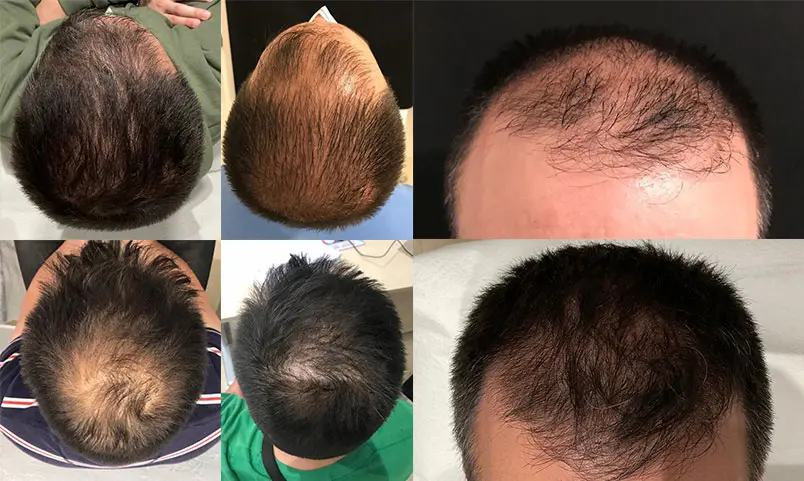
When reviewing dutasteride before and after results, focus on objective elements rather than general appearance. Look at the same scalp area in both images. Check whether hair length is similar in both photos.
Use this checklist when evaluating images:
- Same camera angle and distance
- Same lighting conditions
- Same hair length and styling
- No hair fibers, sprays, or cosmetic concealers
- Clear visibility of the scalp in both images
Pay close attention to the crown and mid-scalp. These areas often respond first in androgenetic alopecia treatment. The frontal hairline may change more slowly, so minor differences there are common even after twelve months.
Be cautious with images taken in different environments. A photo taken outdoors and another taken indoors cannot provide an accurate comparison.
Changes in shadow and contrast can make hair appear significantly improved even if hair count has not changed.
For the most reliable evaluation, clinics often use digital scalp analysis tools. These systems measure hair density and follicle activity directly. This method provides data beyond visual impression.
Online forums and social media posts may show strong improvement in hair, but not all images follow medical standards.
Always consider whether the photos were taken under consistent conditions and whether the patient completed a full year of treatment.
A careful review helps set realistic expectations. Before-and-after photos can show progress, but they must be interpreted with clinical reasoning, not emotion.
Dutasteride Results Timeline
Hair grows in cycles. This is why results take time. The dutasteride results timeline follows normal hair biology.
In the first months, shedding may increase. This does not mean treatment failed. It often signals a shift into a new growth phase similar to what is described during the hair transplant shedding phase.
How Long to See Dutasteride Results
Many patients ask how long to see dutasteride results. Some notice less shedding by month three. Visible thickening often appears after six months.
A full year gives the clearest view. Stopping too early can limit progress.
Results After 4 Months
At four months, shedding may slow. Small improvement in hair texture can begin. Large density changes are uncommon at this stage.
Patience is important during these early months of treatment.
When Results Stabilize by 12 Months
By twelve months, most gains are visible. Hair density often reaches a stable level.
Continued use helps maintain control of dihydrotestosterone DHT. Stopping treatment can restart hair shedding.
Dutasteride vs Finasteride After 12 Months
Dutasteride and finasteride both lower DHT. Dutasteride blocks two types of 5-alpha reductase inhibitors. Finasteride blocks mainly one type.
Because of this, dutasteride may lower DHT more. Some studies show higher hair count gains after one year.
DHT Suppression Differences
Dihydrotestosterone DHT attaches to receptors in hair follicles. This causes shrinkage in men with genetic risk.
Lower DHT levels help protect hair follicles from further miniaturization.
Oral Finasteride vs Dutasteride 0.5 mg
Oral finasteride is approved in many countries for male pattern hair loss. Dutasteride is often used off-label as a treatment option.
Choice depends on:
- Stage of hair loss
- Response to past therapy
- Side effect tolerance
Doctors must review risks before switching hair loss medication.
Dutasteride and Minoxidil Results
Many men combine dutasteride and minoxidil results for stronger outcomes. These drugs work in different ways.
@trichogenics Hair transplant vs hair restoration medication like finasteride, minoxidil and Dutasteride. What is best? And which one should you do? Dr Asi Peretz explains. #hairtransplant #trichogenics #hairtransplantturkey #hairtransplantsurgery #hairtransplantgreece #finasteride #minoxidil #dutasteride #fyp #hairloss #hairfall #hairlossremedy #hairlosssolutions
♬ original sound - Trichogenics
Topical minoxidil helps push follicles into the growth phase. Dutasteride lowers DHT.
Topical Minoxidil Combination Strategy
When topical minoxidil is added, improvement in hair may appear faster. The combination can help in diffuse thinning.
This approach often suits:
- Early androgenetic alopecia
- Men with active hair shedding
- Patients seeking non-surgical control
This combination is often considered in cases of diffuse thinning hair transplant patterns where follicles remain active but miniaturized.
Who Benefits Most From Dual Therapy
Men with living but miniaturized follicles benefit most. If follicles are gone, medicine cannot restore them.
Dual therapy should be reviewed by a licensed physician.
Safety and Long-Term Monitoring
All systemic hair loss treatment needs medical follow-up. Most male patients tolerate dutasteride well, but side effects can occur.
Reported issues include reduced libido and mood changes in a small group. These effects often improve after stopping the drug.
Common Side Effects After One Year
Long-term data show stable safety for many users. Regular check-ups help track changes.
Doctors may review:
- Symptoms
- Hormone levels if needed
- Response to therapy
When to Adjust Treatment
If no improvement in hair appears after one year, doctors may adjust the plan. Some patients may consider surgical options.
Hair transplantation techniques such as FUE, DHI, and Sapphire FUE are widely used in modern practice.
In Greece, a physician-performed FUE procedure for 2,500 grafts often costs USD 3,500 to 6,000 and includes anesthesia, surgeon fees, and follow-up visits.
In Turkey, prices may range from USD 1,800 to 2,800. In some high-volume centers, technicians perform much of the surgery, and multiple patients are treated per day. Lower price often reflects shorter case time and limited post-operative supervision.
In Israel and Greece, licensed physicians often perform the full procedure in certified operating rooms with structured follow-up. Doctor-led planning reduces risks such as overharvesting and poor graft angle control.
Medical therapy such as dutasteride controls hormone-driven hair loss. Surgery redistributes permanent hair follicles. A full plan should address both medical and surgical factors in a safe and regulated setting.
Why Choose Trichogenics?

All procedures are performed only by doctors
The uniqueness of Trichogenics lies in its strict medical process; only certified doctors perform every transplant. No technicians or unqualified assistants are involved. Choosing a clinic with proven experience in hair transplants can make all the difference.
Meet Dr. Asi and Dr. Eric Peretz
The two doctors leading Trichogenics Drs.Asi and Eric Peretz are recognized leaders in the field. Their extensive experience, attention to detail, and focus on natural results make Trichogenics the best choice.
Contact Trichogenics today to schedule a personal consultation and get a clear, doctor-led plan for your hair restoration.


