
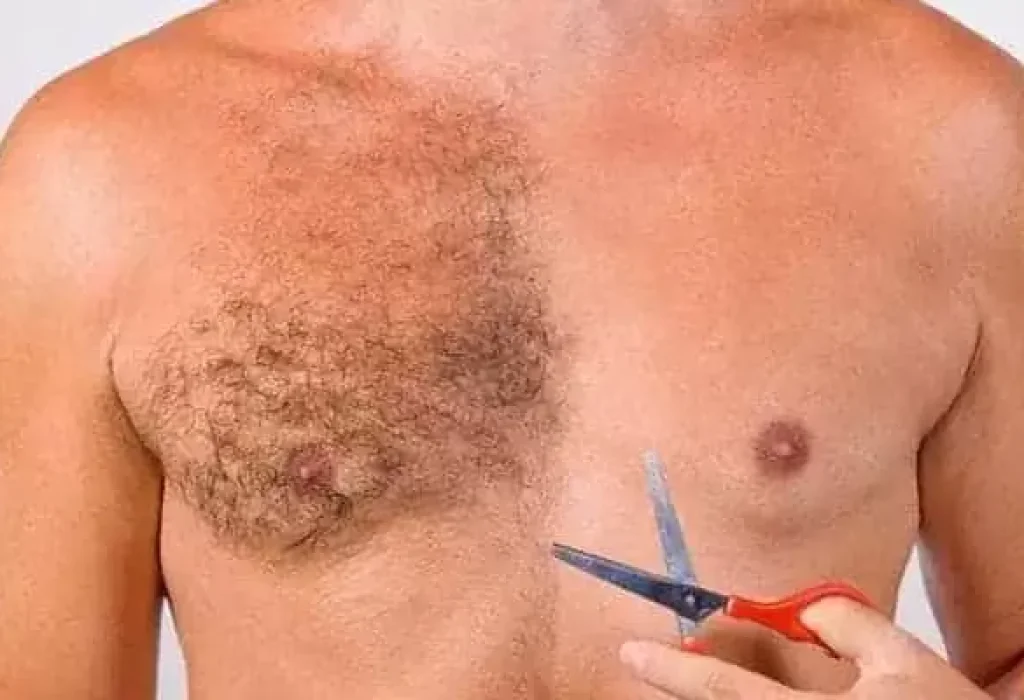
Chest hair can be used for a hair transplant in specific cases, but it comes with clear limitations that patients should understand upfront. Chest hair is often used for hair transplantation when there is insufficient hair on the scalp. It is regarded as a helpful option rather than the primary solution.
It differs from scalp hair in growth cycle, length, and texture, which affects where and how it can be placed on the scalp. Results depend on careful medical evaluation, realistic expectations, and precise surgical planning. The sections below explain when chest hair is appropriate, how the procedure works, and what outcomes patients can reasonably expect.
Key Takeaways
- Chest hair can be used for transplantation in selected cases, primarily when scalp donor hair is limited, and additional coverage is needed rather than full density.
- Chest hair for hair transplant behaves differently from scalp hair, with shorter growth cycles and finer texture, which affects placement and visual blending on the scalp.
- Body hair is typically used to support existing scalp hair in low-visibility areas, not to recreate a natural hairline or uniform appearance.
- Outcomes depend on careful donor evaluation, realistic expectations, and doctor-led planning that considers growth patterns, density limits, and long-term results.
Can Chest Hair Be Used for Hair Transplant
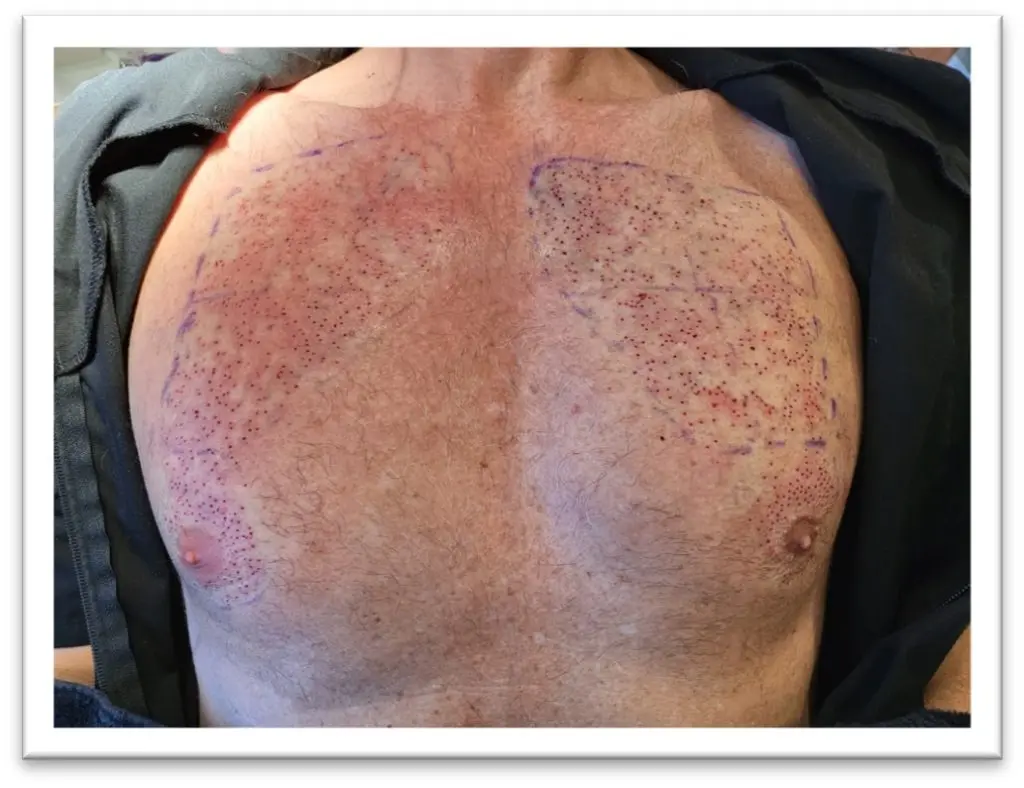
Chest hair can be used for a hair transplant, but it is not suitable for every patient or every scalp area. Doctors consider it only after assessing scalp hair transplants and other donor options.
Chest hair is considered a secondary donor site. The goal is to improve coverage, not to recreate a full scalp hair pattern.
This approach is often discussed alongside beard hair for hair transplant, which tends to provide stronger shafts and more predictable growth.
When chest hair is a viable donor
Chest hair may be considered when the donor site on the scalp cannot provide the needed number of grafts. This often occurs in advanced cases of hair loss or after prior procedures.
Doctors assess hair follicles for thickness, growth phase, and extraction safety. Chest hair works best when blended with existing scalp hair.
When scalp or beard hair is preferred
Scalp hair remains the first choice in most hair restoration procedure plans. Beard hair is often preferred over chest hair because it has a stronger shaft and a longer hair growth cycle.
Chest hair is usually softer, shorter, and grows at a different rate. These factors influence visual consistency and hair density.
Can You Take Body Hair for a Hair Transplant
Yes, doctors can take body hair for a hair transplant, but only under controlled medical conditions.
This approach is known as body-to-scalp hair transplantation. It requires advanced planning and realistic expectations. Body hair grafts behave differently from scalp grafts after placement.
Beard hair is another option in hair restoration, particularly when scalp donor hair is limited. If you are considering facial hair restoration rather than using beard follicles as a donor source, a beard transplant can help restore density and create a more defined, natural-looking beard.
Types of body hair used
Doctors may evaluate several body areas as donor options, including:
- Beard hair
- Chest hair
- Abdominal hair
- Limited areas of arm or leg hair
Each donor site is assessed for follicle depth, growth pattern, and extraction safety. These evaluations are similar to those used in hair transplant density planning, where graft behavior matters more than raw numbers.
Medical limits of body hair
Body hair does not follow the same hair growth cycle as scalp hair. Many body hairs remain shorter and enter resting phases sooner.
This limits the length potential and styling options. Medical planning focuses on function and coverage, not uniform appearance.
Using Chest Hair for Hair Transplant
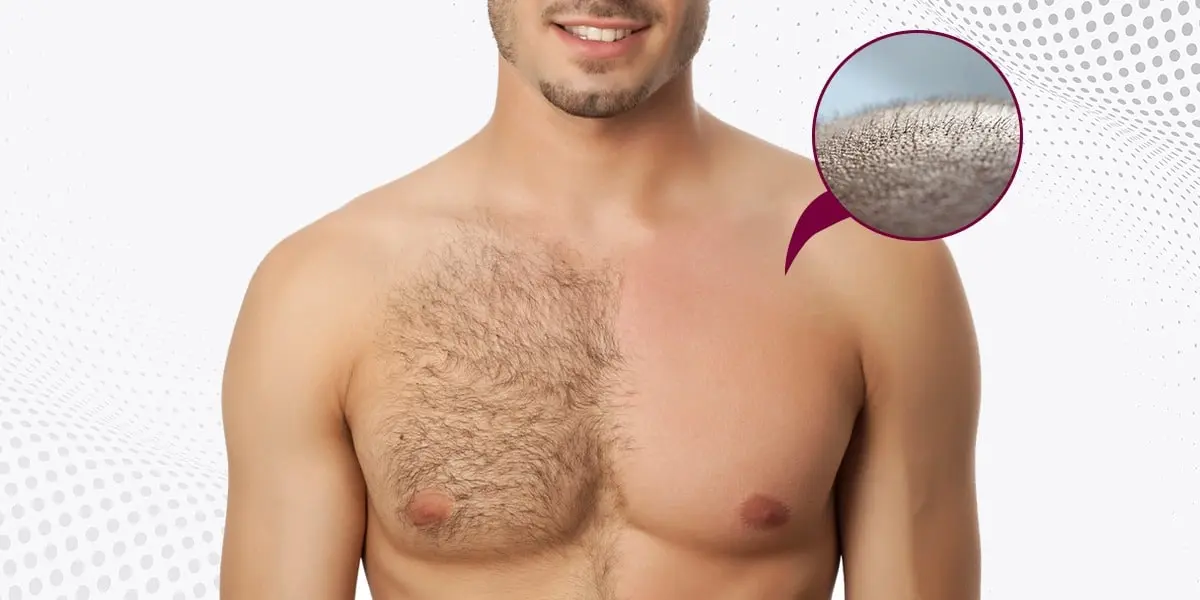
Using chest hair for a hair transplant requires detailed donor evaluation. Doctors examine how chest hair responds to extraction and whether it can survive relocation.
This process relies heavily on surgical skill. Most clinics employ FUE hair transplant principles to minimize scarring and preserve follicular survival.
Donor site assessment
The donor site on the chest is evaluated for skin thickness, hair angle, and follicle depth. Chest hair follicles often sit deeper in the skin than scalp follicles.
This affects extraction time and precision. Follicular unit extraction FUE is commonly used to reduce visible scarring.
Chest hair growth patterns
Compared to scalp hair, chest hair is finer and shorter. Compared to beard hair, it is less dense and less resistant.
Scalp hair provides the most natural appearance in frontal zones. Chest hair is more effective in areas where density is more important than texture, such as the crown, analogous to planning in crown hair transplant cases.
Is Chest Hair Good for Hair Transplant
Chest hair may be beneficial in certain roles, but it is not ideal for restoring a natural hairline. Doctors use it to increase coverage or support existing scalp hair.
Its value depends on realistic goals and careful placement. Results vary based on hair characteristics.
Chest hair vs scalp and beard hair
Compared to scalp hair, chest hair is finer and shorter. Compared to beard hair, it is less dense and less resistant.
Scalp transplantation offers the most natural appearance for the frontal areas. Chest hair is better suited for adding bulk in less visible regions.
Blending and aesthetic impact
Blending chest hair with scalp hair requires careful placement. Doctors avoid placing chest hair alone in high-visibility areas. Mixing grafts helps soften contrast in texture. Poor planning can lead to an uneven appearance.

Hair Transplant from Body Hair to Head
Hair transplant from body hair to the head is technically possible with the modern FUE technique. The main challenge lies in matching hair characteristics to the recipient area.
Doctors plan placement based on hair direction, curl, and length potential. This approach prioritizes function over density.
Can hair be transplanted from the body to the head?
Yes, the question of whether hair can be transplanted from the body to the head is a common patient question. The answer is yes, but with limits. Body hair grafts retain many of their original traits after transplantation. This affects styling and visual outcome.
Best scalp areas for body hair
Body hair is usually placed in areas such as:
- Crown or mid-scalp for added coverage
- Scar repair zones
- Areas behind the hairline
These zones reduce contrast and support existing scalp hair.
Body Hair Transplant to Head Procedure
A body hair transplant to the head procedure follows the same general steps as standard FUE. However, extraction and placement require more time and precision.
Doctor-led procedures are critical to reduce damage to hair follicles. Patient monitoring is essential throughout recovery.
FUE extraction method
The FUE method removes individual follicular units using small punches. This technique reduces visible scarring at the donor site. It allows selective harvesting of body hair grafts. Precision is essential for preserving follicular survival.
Implantation planning
Implantation may be performed using tools such as Choi pens or forceps. Planning focuses on angle, depth, and spacing in recipient sites. DHI and FUE are both recognized approaches in modern hair transplant procedure design.
Structured follow-up facilitates tracking of healing and growth.
Body Hair Transplant to Head Results
Body hair transplants to the head yield results that vary more than traditional hair transplantation. Growth can take longer, and density may be lower.
Patients should expect gradual change rather than dramatic transformation. Clear expectations support long-term satisfaction.
Growth timeline and density
Body hair often enters a resting period before new hair growth appears. Visible change may take several months. Hair density depends on the number of grafts and donor quality. Results continue to improve over time.
Long-term outcome considerations
Body hair may not grow as long as scalp hair. Texture differences remain even after healing. Regular follow-up helps monitor progress and address concerns. Results are functional, not cosmetic perfection.
Benefits and Limitations
Chest hair provides an additional donor supply but has clear limits. Doctors weigh benefits against long-term appearance and growth behavior. Patient education plays a key role in decision-making. This approach supports safety and realistic goals.
When chest hair adds value
Chest hair can add value when:
- Scalp donor hair is limited
- Coverage is needed in low-visibility areas
- Scar repair requires additional grafts
It supports overall coverage rather than a hairline design.
Key limitations patients must know
Patients should understand:
- Chest hair grows differently from scalp hair
- Density and length are limited
- Outcomes depend on medical planning
For safety reasons, patients are often advised to avoid unregulated clinics abroad. Some countries, including Turkey, have lower oversight and limited physician involvement.
Clinics in Israel and Greece operate under stricter medical standards, emphasizing doctor-led care and regulated follow-up.
Why Choose Trichogenics?
All procedures are performed only by doctors
The uniqueness of Trichogenics lies in its strict medical process; only certified doctors perform every transplant. No technicians or unqualified assistants are involved. Choosing a clinic with proven experience in hair transplants can make all the difference.
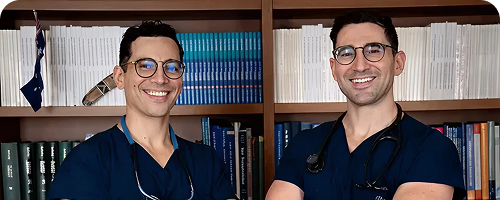
Meet Dr. Asi and Dr. Eric Peretz
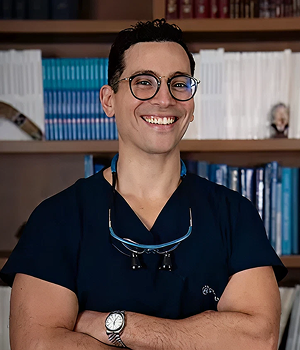
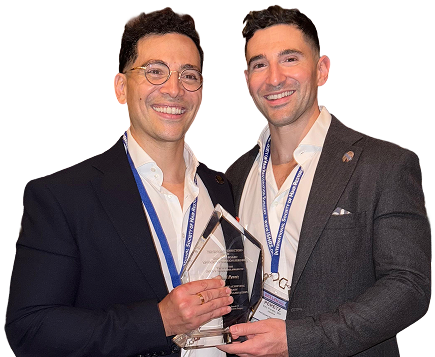
The two doctors leading Trichogenics, Dr. Asi Peretz and Dr. Eric Peretz, are recognized leaders in the field. Their extensive experience, attention to detail, and focus on natural results make Trichogenics the best choice.
Contact Trichogenics today to schedule a personal consultation and get a clear, doctor-led plan for your hair restoration.