

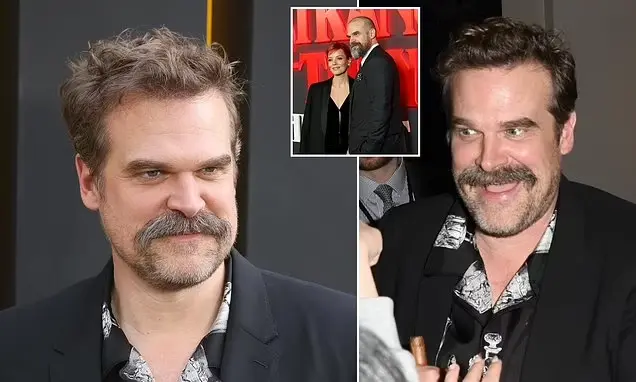
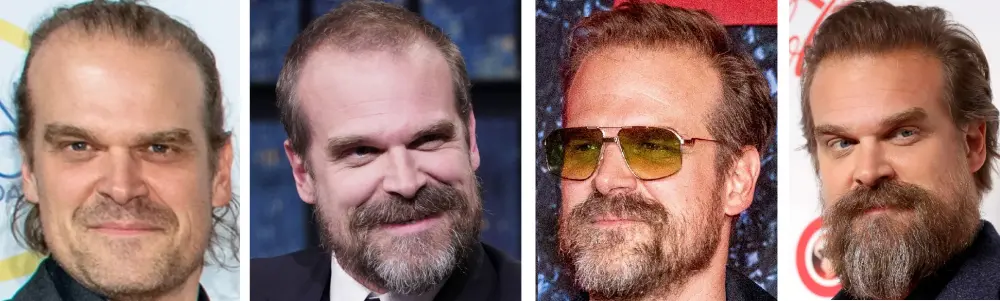
There is no confirmed public statement that David Harbour has undergone surgery, but visible changes in hair density have led to ongoing discussion about a possible David Harbour hair transplant. Before and after photos show a fuller frontal hairline compared to earlier appearances, which fuels speculation.
These differences could result from a procedure such as FUE or DHI, but they could also reflect styling changes or medical treatment. Without direct confirmation, conclusions remain observational rather than medical fact.
Key Takeaways
- There is no confirmed statement that David Harbour had a hair transplant, and most claims are based on visual comparisons of before and after photos rather than medical proof.
- Gradual improvements in hair density can result from FUE or DHI procedures, but they can also occur with medical treatments such as finasteride, so visible change alone does not confirm surgery.
- Physician-led hair transplants in regulated medical settings, such as Greece and Israel, often include structured follow-up and surgical protocols similar to those described in FUE hair transplants.
- Hair transplant outcomes depend on donor density, graft planning, and long-term hair loss patterns, and full results typically take up to 12 months to mature after the procedure.
Did David Harbour Have a Hair Transplant?
There is no official confirmation that he had surgery. News articles and online forums rely on before-and-after photos. This means the claim remains speculation. Visual change alone does not prove a medical procedure.
What’s Confirmed vs. Rumors
Confirmed facts include visible changes in hairstyle and density. Rumors come from comparing older and newer photos. Camera angles and grooming can change how hair looks. Without medical records, the claim stays unverified.
Why Experts Suspect Hair Restoration
Hair doctors look at temple recession and frontal density. If the hairline appears stronger over time, some suspect FUE or DHI. These methods move hair from the back of the head to thinning areas.
Medical treatments like finasteride can also improve density. Patients researching medication often compare options such as dutasteride for hair loss when evaluating non-surgical approaches.
David Harbour Hair Before and After Analysis
Older photos show mild recession at the temples. Newer photos show more even frontal coverage. This contrast fuels David Harbour’s bald discussions online.
David Harbour Before Hair Transplant
Earlier public images show a maturing hairline. The temples appear thinner than in recent years. This pattern matches common male hair loss.
Signs of David Harbour’s Hair Loss
Male pattern hair loss often starts at the temples. The crown may thin over time. Density decreases slowly in most cases.
Is David Harbour Bald Today?
Recent images do not show complete baldness. The frontal area still has coverage. David Harbour’s bald rumors appear exaggerated based on available photos.
Hairline Changes in Public Photos
The change appears gradual. In real FUE procedures, doctors often transplant 2,000 to 3,000 grafts to rebuild the front. Gradual improvement can also result from medical therapy.
Lighting and Styling Effects
Bright light can make the scalp more visible. Short haircuts reduce shadow and make thinning more obvious. These factors can affect public perception.
What Procedure Was Likely Used?
If surgery occurs, experts usually consider FUE or DHI. Both are common in Greece, Israel, and Turkey. The difference lies in the extraction and implantation methods.
FUE vs FUT: Key Differences
FUE removes individual grafts and leaves tiny scars. FUT removes a strip of scalp and leaves a linear scar. Patients comparing these techniques often review FUT vs FUE hair transplant key guide..
In Greece and Israel, a physician-performed FUE procedure for 2,500 grafts often costs USD 3,500 – 6,000. This usually includes anesthesia, operating room fees, and follow-up visits.
In Turkey, high-volume clinics may charge USD 1,800 – 2,800 for a similar graft count. Price differences often relate to:
- Who performs the procedure – physician or technician
- Number of patients treated per day
- Time spent per patient
- Level of medical follow-up
Graft Placement and Density
Natural results depend on angle and spacing. Doctors control graft direction to match native hair. Poor planning can lead to overharvesting in the donor area. Careful placement reduces that risk.
Patients often research what happens to the donor area after hair transplant to understand this aspect of surgery.
Celebrity Hair Transplants Explained
Many public figures choose subtle improvements. A conservative hairline keeps a natural look.
Readers interested in other well-known cases often explore celebrities with hair transplants for comparison.
@trichogenics #onthisday throwback to Dr Eric and Celebrity hair transplants. #trichogenics #hairtransplant #hairtransplantturkey #fypage
♬ original sound - Trichogenics
What Actor Had Five Hair Transplants?
Wayne Rooney publicly confirmed multiple hair transplants. Repeat procedures can happen when hair loss continues.
Why Some Need Multiple Procedures
Hair loss can progress over time. A patient may first treat the front, then later the crown. Structured follow-up helps track changes.
Hair Transplant Basics for Patients
Hair transplant surgery moves healthy hair follicles from the donor area – usually the back or sides of the scalp – to areas with thinning or hair loss.
Doctors commonly use two modern methods: FUE (Follicular Unit Extraction) and DHI (Direct Hair Implantation).
In both techniques, individual follicular units are carefully extracted and implanted to match the natural direction and density of existing hair.
A typical medical plan begins with a clinical evaluation to assess donor density, hair loss pattern, and long-term progression.
For example, a patient with moderate frontal hair loss may require about 2,000–2,500 grafts, while more advanced cases may require 3,000 grafts or more.
Procedures usually take 6–8 hours in a certified operating room and are performed under local anesthesia.
Modern techniques also focus on controlled implantation tools such as the Choi pen, which allows doctors to place grafts at a precise angle and depth. This level of control helps create natural-looking hairlines and balanced density.
Cost can vary depending on the country and the level of medical supervision. For example:
- Greece or Israel: approximately USD 3,500 – 6,000 for around 2,500 grafts, typically including physician fees, anesthesia, and follow-up care.
- Turkey: around USD 1,800 – 2,800, often in high-volume clinics where technicians may perform parts of the procedure.
These differences often relate to how many patients are treated per day, how much time a doctor spends on each case, and whether structured post-operative follow-up is included.
Who’s a Good Candidate
A good candidate usually has:
- Stable donor hair
- Clear hair loss pattern
- Realistic expectations
For example, a patient needing 2,500 grafts must have enough donor density at the back of the head.
Risks, Recovery, and Timelines
After FUE, mild swelling and scabs last about 7 – 10 days. Transplanted hairs shed within weeks. New growth often starts at 3 – 4 months. Final results appear around 12 months.
Proper sterile operating rooms and physician supervision reduce risk.
Doctor-Performed Assessment at Trichogenics
Trichogenics operates in licensed medical facilities in Greece and Israel. Procedures are doctor-led rather than technician-led. Structured follow-up visits allow monitoring of healing and graft growth.
Travel choices matter. Some high-volume centers abroad, including certain clinics in Turkey, treat many patients per day with limited physician oversight.
In regulated settings with direct doctor involvement, surgeons can better control graft angle, density, and donor preservation.
How We Plan Natural Hairlines
Hairline design follows facial structure. Doctors assess donor supply and future loss patterns. Techniques such as Choi pen implantation in DHI allow precise placement.
Asi and Eric Peretz, MD Team
Dr. Asi Peretz is a physician focused on surgical hair restoration. Clinical planning centers on donor safety, graft survival, and balanced density. Medical training and supervision are key parts of safe care.