

When reviewing what medications cause hair loss in females, most cases are linked to telogen effluvium, in which hair follicles shift into a resting phase, leading to diffuse thinning that often appears two to four months after starting treatment.
Hair loss occurs because these drugs affect hormones, cell turnover, or blood flow within hair follicles. In most cases, it is temporary and improves once the medication is adjusted under medical supervision.
At Trichogenics, clinical evaluation focuses on identifying the cause and monitoring recovery to support safe and effective management. Many cases involve multiple contributing elements, which are explored in the factors that influence hair changes.
Key Takeaways
- Many medications can cause hair loss in females by disrupting the hair growth cycle, including beta blockers, ACE inhibitors, hormone replacement therapy, and chemotherapy drugs.
- Drug-induced hair loss is often temporary and linked to changes in the telogen phase, with shedding beginning days to weeks or months after treatment initiation.
- Not all patients experience this side effect, and the severity depends on the drug, dosage, duration, and individual sensitivity.
- Hair regrowth is possible in many cases once the medication is adjusted, but recovery timelines vary and may require medical evaluation.
- You should not stop medication without guidance, and a healthcare professional can help confirm the cause and recommend safe alternatives.
Medications That Cause Female Hair Loss
List of Common Causes
Some medications are commonly linked because they affect hair follicles or the hair cycle. This includes both temporary shedding and more rapid loss, depending on the drug.
Key groups include:
- Chemotherapy drugs such as cyclophosphamide
- Beta blockers like propranolol
- ACE inhibitors such as lisinopril
- Antidepressants like sertraline
- Hormone replacement therapy

Hair loss associated with these drugs varies depending on how they affect the hair growth cycle.
What Prescription Drugs Cause Hair Loss in Women
Prescription drugs that cause baldness in women include hormonal treatments such as birth control and its effects on hair, antidepressants, beta blockers, ACE inhibitors, acne medications like isotretinoin, thyroid medications, and chemotherapy drugs.
These medications are linked because they affect hormones, blood flow, or cell activity in hair follicles, including imbalances like low progesterone, which can lead to related hair changes.
Drug-induced alopecia may begin days to weeks after starting treatment or months after starting certain medications, depending on the mechanism and individual response.
How Medications Affect Hair Growth
Can Medication Cause Alopecia?
Yes, some medications can cause alopecia by disrupting the hair cycle and pushing hair follicles into the telogen phase. This leads to increased shedding, with more hairs shed than usual.
Not all patients experience this side effect, and the likelihood depends on dosage, duration, and sensitivity. Some notice mild thinning, while others experience more visible hair loss.
Can Hair Grow Back After Medication?
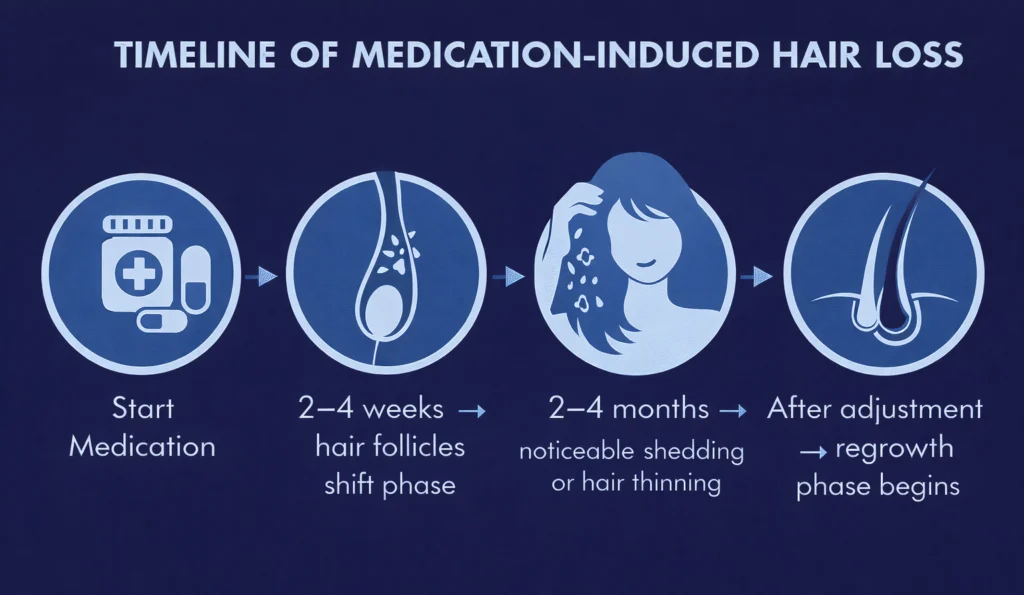
Common Timeline of Medication Hair Loss
This process follows a delayed pattern and may present as hair thinning or more rapid loss, such as anagen effluvium, depending on the drug.
- Start medication
- 2–4 weeks → hair follicles shift phase
- 2–4 months → noticeable shedding or hair thinning
- After adjustment → regrowth phase begins
How Long Does Hair Loss Last and Regrowth Timeline?
This process follows a predictable timeline. After starting a drug, hair follicles may shift into the resting phase within a few weeks, but visible shedding usually appears about two to four months later.
In most cases, shedding slows within three to six months after the medication is adjusted or stopped. Hair regrowth often begins shortly after, with noticeable improvement over six to twelve months, depending on the individual and the type of condition.
How to Stop Hair Loss From Medication
Should You Stop the Medication?
You should not stop medication without medical guidance. A healthcare professional can assess whether the drug should be adjusted or replaced.
Stopping treatment abruptly may create risks, especially for chronic conditions.
Medical Treatment Options
Doctors may suggest alternative medications or supportive treatments to reduce shedding. Some treatments help support hair follicles during recovery.
Clinical monitoring is important to ensure safe adjustments and track progress.
Other Causes of Female Hair Loss
What Is the Number One Cause of Female Hair Loss
The most common one is genetic and hormonal thinning. This condition differs from drug-induced shedding and progresses gradually. Understanding this difference helps guide diagnosis and treatment decisions.
If you are experiencing any of these symptoms, a proper evaluation can help identify the cause and next steps. You can schedule an appointment at Trichogenics to review your case and discuss your options.