

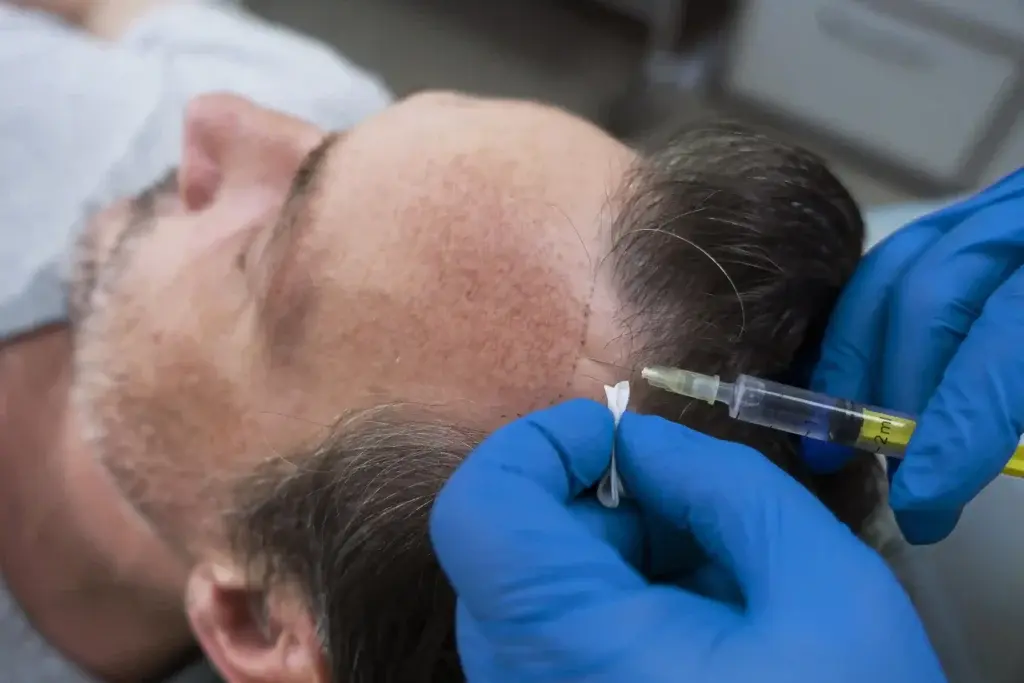
Dutasteride mesotherapy for hair loss is a medical treatment that delivers small amounts of dutasteride directly into the scalp to help manage androgenetic alopecia and pattern baldness. The goal is to reduce DHT activity near the hair follicles while limiting systemic absorption compared to oral dutasteride.
In dutasteride mesotherapy, doctors use controlled microinjections to target thinning areas and support hair density and hair growth. This approach may help slow follicle miniaturization, but results vary based on the stage of hair loss and patient factors.
Further sections explain how the technique works, its safety profile, and how it compares to other hair loss treatments.
Key Takeaways
- Dutasteride mesotherapy delivers a 5-alpha reductase inhibitor directly into the scalp to reduce DHT levels around hair follicles and slow androgenetic alopecia.
- The treatment uses localized microinjections to limit systemic absorption compared to oral dutasteride, but mild injection site side effects can still occur.
- Clinical studies show variable improvements in hair density and hair growth, and results depend on the stage of pattern baldness and patient factors.
- It is an off-label option for hair loss and should be performed in licensed medical settings with physician oversight and structured follow-up care.
What Is Dutasteride Mesotherapy?
Dutasteride mesotherapy uses dutasteride microinjections placed into thinning areas of the scalp. These dutasteride injections for hair loss target hair follicles directly. Unlike oral dutasteride, the drug is not absorbed through the stomach.
Doctors may suggest this option for early or moderate androgenetic alopecia, including patterns similar to diffuse thinning hair transplant cases where follicles are still active.
It does not replace hair transplants but may help slow further hair loss.
Technique and Microinjections
The doctor injects dutasteride into the upper layer of the scalp. Each injection site is spaced evenly across areas of thinning hair. Depth is usually about 2 – 4 mm.
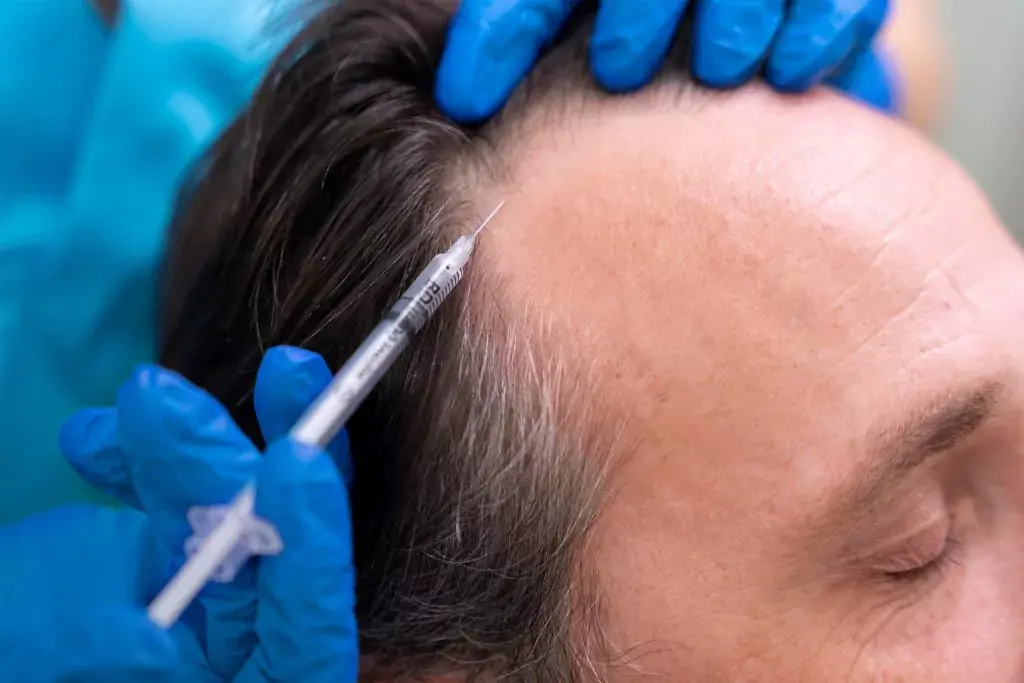
The process includes:
- Cleaning the scalp
- Marking thinning zones
- Injecting small, measured amounts
Injecting dutasteride requires medical training to ensure even coverage and safe placement.
How It Works in Pattern Baldness
Pattern baldness happens when DHT shrinks hair follicles over time. Dutasteride blocks the enzyme that makes DHT. Lower DHT levels may help protect existing follicles.
This may lead to:
- Slower hair thinning
- Improved hair density
- Support for new hair growth
Because the drug stays mostly in the scalp, systemic absorption is lower than with oral treatment such as described in dutasteride for hair loss therapy.
Does It Work? Evidence and Results
Some placebo controlled studies show improved hair density and thicker hair shafts after treatment. Other studies show modest change. Results vary based on age, stage of hair loss, and genetics.
Doctors often measure:
- Hair density per square centimeter
- Hair shaft thickness
- Standardized before and after photos
Female pattern hair loss patients may respond differently than men, especially when compared to outcomes discussed in female hair transplant success rate evaluations.
Safety and Side Effects
Most side effects are mild. Patients may notice redness or swelling at the injection site. Mild tenderness can last a few days.
Less common side effects may include:
- Temporary scalp pain
- Headache
- Hormone-related symptoms
Although systemic absorption is lower than oral dutasteride, risk is not zero.
Dutasteride Mesotherapy vs Other Treatments
Compared to Oral Dutasteride
Oral dutasteride lowers DHT throughout the body. This may increase the chance of systemic side effects. Mesotherapy focuses on local areas only.
Compared to Topical Treatment and Oral Minoxidil
Topical treatment and oral minoxidil increase blood flow and extend the growth phase of hair. They do not block DHT. These options can be combined in some treatment plans.
@trichogenics Finasteride or Dutasteride what do these medications do? And should you be using them for hairloss? Dr Asi Peretz, American Board of Hair Restoration Surgeons winner of the James E Arnold award, explains. #finasteride #dutasteride #minoxidil #trichogenics #hairtransplant #hairtransplantgreece #hairtransplantturkey #hairloss #hairfall #fyp #hairlosssolutions #hairtransplantation
♬ original sound - Trichogenics
Compared to Hair Transplants
Hair transplants such as FUE and DHI move healthy follicles from one area to another. In Greece or Israel, a physician-performed FUE for 2,500 grafts often costs USD 3,500 – 6,000. This usually includes doctor fees, anesthesia, and follow-up visits.
In Turkey, some high-volume clinics offer packages between USD 1,800 – 2,800. In many cases, technicians perform most of the procedure, and one doctor supervises several patients per day.
Less time per case can increase the risk of uneven graft placement or overharvesting. Procedures done in certified medical settings with full doctor control reduce these risks.
How Often Is Treatment Needed?
Many plans include three sessions spaced one month apart. Maintenance sessions may occur every 4 – 6 months.
Frequency depends on:
- Degree of hair loss
- Response after early sessions
- Use of other hair loss treatments
Patients with progressive thinning similar to Norwood 5 hair stages may require a combined strategy rather than mesotherapy alone.
Cost of Dutasteride Mesotherapy
In Greece and Israel, sessions may cost USD 300 – 600 each when performed by a licensed physician. This often includes sterile equipment and medical supervision.
Lower prices abroad may reflect limited doctor involvement or reduced follow-up care.
Who Is a Good Candidate?
Good candidates have early or moderate androgenetic alopecia. Patients who cannot tolerate oral finasteride or oral dutasteride may consider this option.
It is not suitable for:
- Advanced baldness needing surgical density
- Active scalp infection
- Scarring hair disorders
A full medical exam determines suitability.
FDA Approval and Regulatory Status
Dutasteride is FDA approved for prostate enlargement, not specifically for hair loss. Using dutasteride mesotherapy for pattern baldness is off-label.
Patients should seek treatment in licensed clinics with clear medical oversight. Countries such as Greece and Israel have regulated medical systems and certified operating rooms.
Clear regulation and physician control improve patient safety and follow-up care.
Why Choose Trichogenics?
All procedures are performed only by doctors
The uniqueness of Trichogenics lies in its strict medical process; only certified doctors perform every transplant. No technicians or unqualified assistants are involved. Choosing a clinic with proven experience in hair transplants can make all the difference.
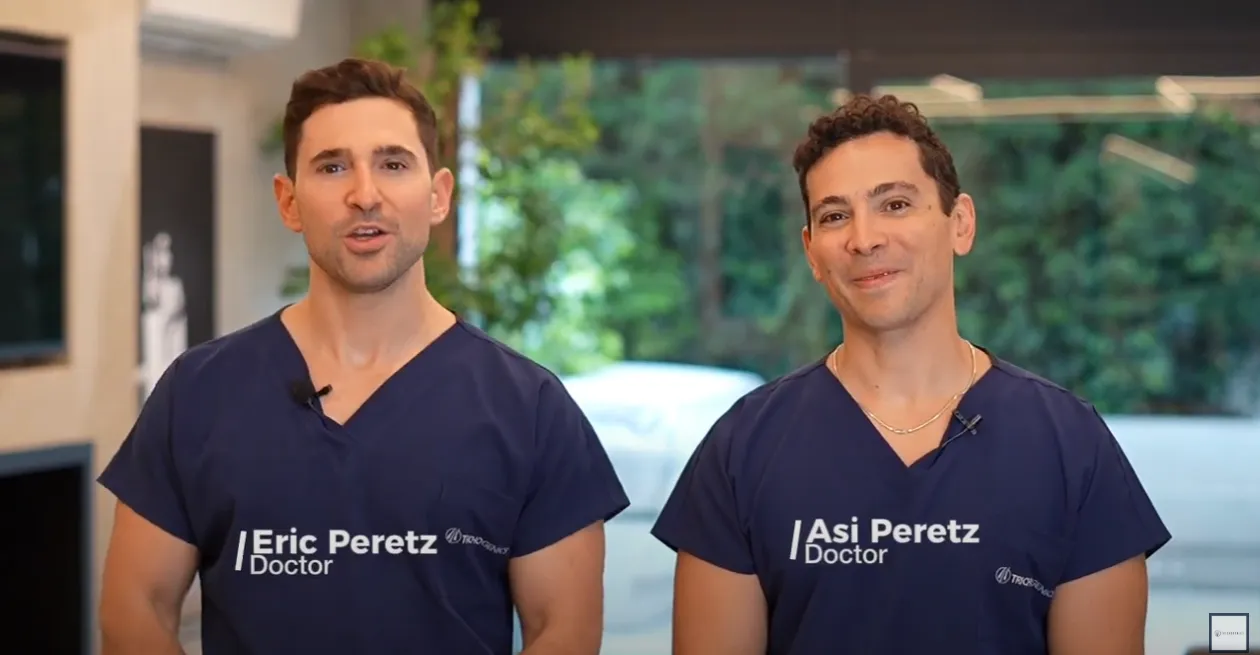
Meet Dr. Asi and Dr. Eric Peretz
The two doctors leading Trichogenics Drs.Asi and Eric Peretz are recognized leaders in the field. Their extensive experience, attention to detail, and focus on natural results make Trichogenics the best choice.
Contact Trichogenics today to schedule a personal consultation and get a clear, doctor-led plan for your hair restoration.


