

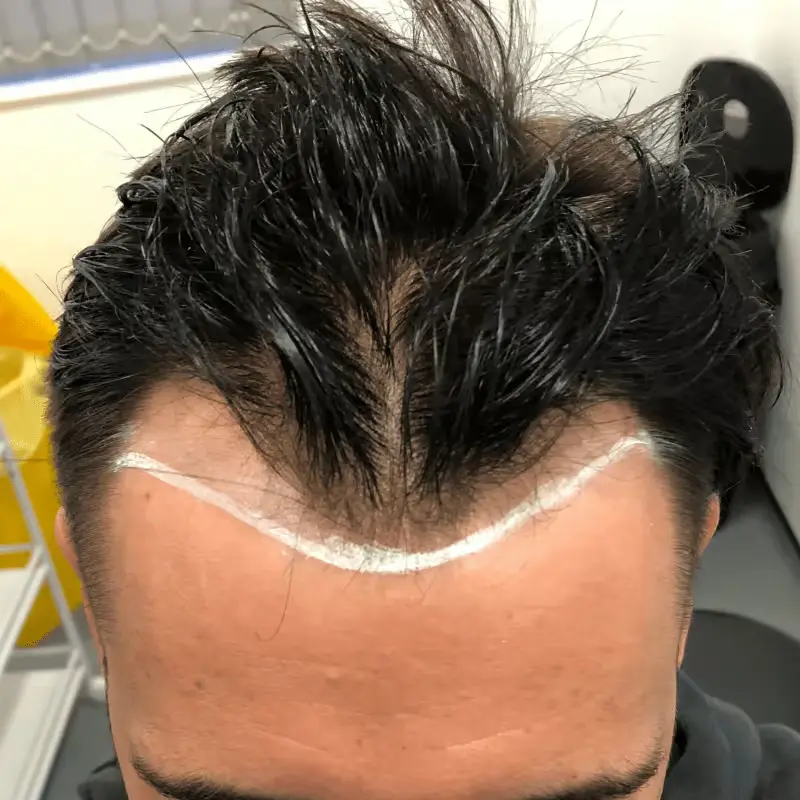
A widow’s peak hair transplant is a medical procedure. It helps restore or change a V-shaped hairline.
This is done when thinning or recession affects how it looks. It works by moving healthy hair follicles from a safe donor area to the front hairline. This helps improve density and shape.
A widow’s peak hair transplant does not remove the natural hairline. Instead, it reshapes the hairline based on facial features and hair loss patterns.
This method is often used by men and women with a receding hairline caused by genetics or male pattern baldness, as described in what is the best age for a hair transplant.
Key Takeaways
- A widow’s peak hair transplant reshapes or restores a V-shaped hairline by moving healthy follicles from a stable donor area to improve density and balance without removing natural anatomy.
- Results depend on factors such as donor hair quality, graft count, facial features, and long-term hair loss patterns, which is why personalized planning is essential.
- Modern techniques like FUE and DHI focus on precise graft placement and controlled angles, supporting natural growth and shorter recovery times.
- Cost and safety vary by location, and regulated, doctor-led care with structured follow-up plays a key role in predictable outcomes and patient safety.
Can a Widow’s Peak Be Fixed With a Hair Transplant?
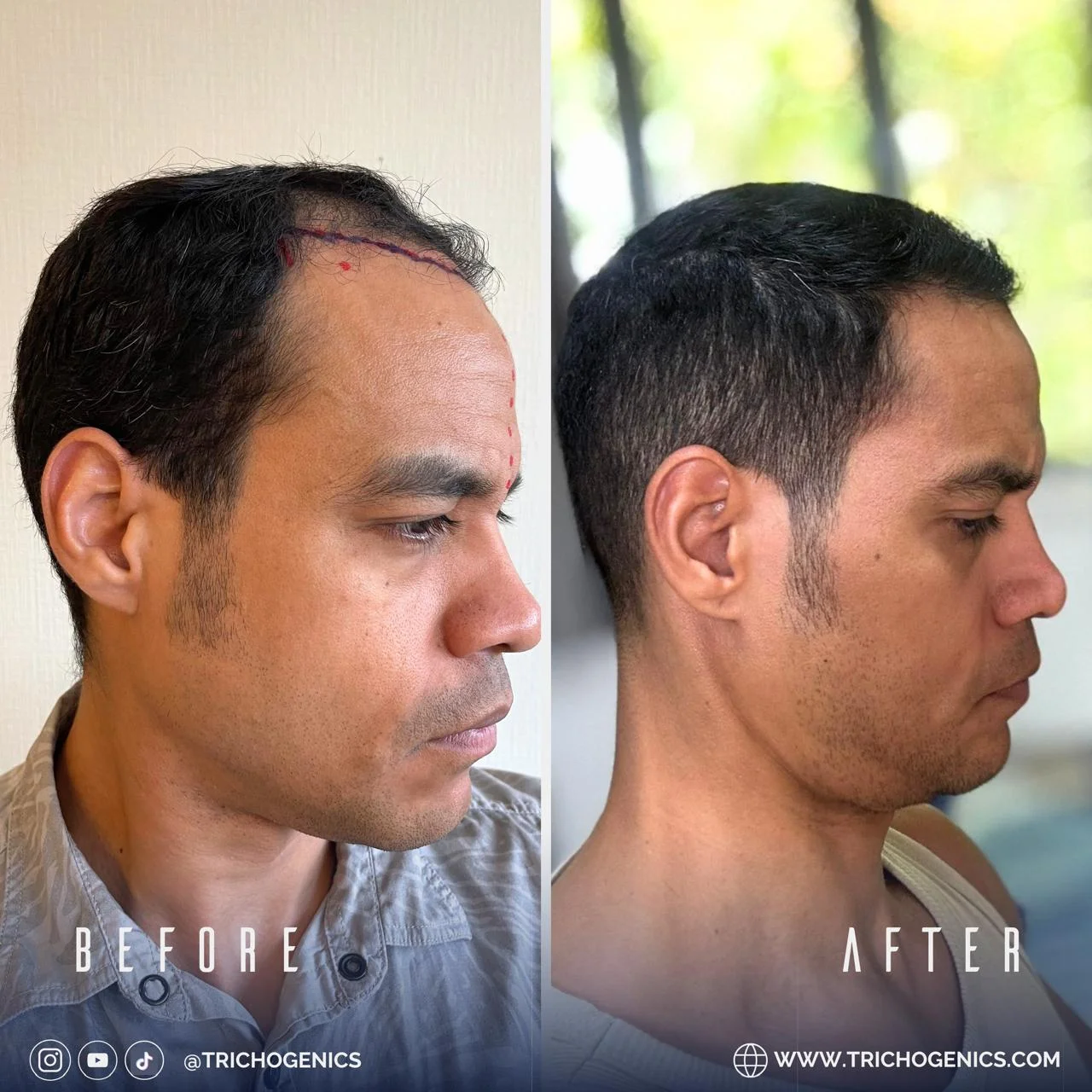
Yes, a widow’s peak can be modified or reinforced with a hair transplant when hair loss alters its appearance.
A hair transplant for widows peak focuses on redistributing hair grafts to create a smoother or more defined transition along the frontal hairline.
The goal is not to erase natural anatomy, but to correct thinning that disrupts symmetry.
Results depend on donor hair quality, facial features, and the extent of recession, similar to other hairline-focused procedures such as hair transplant or forehead reduction.
Widow’s Peak Balding: Causes and Prevention
Widow’s peak balding often relates to genetics and hormone-driven hair loss.
Male pattern baldness commonly affects the frontal hairline first, which can exaggerate widow’s peak hairlines over time. In some cases, traction, inflammation, or untreated scalp conditions may also contribute.
Understanding the cause helps guide treatment planning.
@trichogenics Dr Asi Peretz explains why we bald. #trichogenics #hairloss #hairtransplant #hairtransformation #hairtransplantsurgery #hairtransplantgreece #hairlosssolutions #hairtransplantturkey #balding #baldingsolution #fyp
♬ original sound - Trichogenics
How to Stop Widow’s Peak Balding
Hair loss progression may slow with early intervention, though it cannot always be fully stopped. Common preventive approaches discussed in clinical settings include:
- Medical hair loss treatments that target hormone sensitivity
- Scalp care routines that reduce inflammation
- Early evaluation before visible recession worsens
These steps may delay the need for surgical intervention in some patients, especially when addressed before patterns resemble advanced cases such as diffuse thinning hair transplant.
Widow’s Peak Treatment Options
Widow’s peak treatment can involve surgical and non-surgical approaches depending on severity. Mild thinning may respond to conservative care, while structural hairline changes often require surgical correction.
Treatment selection should consider long-term progression rather than short-term appearance.

Hair Transplant vs Non-Surgical Options
Key differences between treatment options include:
- Hair transplant procedures that relocate permanent donor hair
- Non-surgical methods that aim to preserve existing hair
- Combined strategies are used when loss is active but limited
A clinical assessment helps determine which option fits the patient’s needs.
Best Hair Transplant for a Widow’s Peak
The best hair transplant for a widow’s peak depends on precision and hairline design needs. Modern techniques focus on controlled placement rather than dense packing.
The chosen method must respect natural angles and growth patterns at the shaped point of the hairline, similar to the approach used in FUE hair transplant.
FUE vs FUT for Hairline Design
Two established surgical approaches are used:
- FUE hair transplant, which extracts individual follicular units from the donor area
- Follicular unit transplantation FUT, which involves a narrow donor strip
FUE is often favored for widow’s peak work due to its minimally invasive nature and flexible graft placement.
@trichogenics FUT or the strip method vs FUE, which is better? Which method is best for you? #hairtransplant #hairloss #fue #fut #stripmethod #hairtransplantturkey
♬ 提示音 - unknown
How a Widow’s Peak Hair Transplant Works
A widow’s peak hair transplant begins with detailed planning of the frontal hairline. Surgeons evaluate facial features, existing density, and long-term hair loss patterns before placing grafts. The goal is to create continuity rather than an artificial edge.
Hairline Design and Facial Balance
Design focuses on proportional balance rather than symmetry alone. The widow’s peak may be softened, reinforced, or subtly adjusted depending on facial structure. Careful angling ensures the transplanted hair blends with the surrounding growth.
Donor Area and Graft Placement
Donor hair is typically harvested from the back or sides of the scalp, where follicles resist thinning.
Hair grafts are sorted by size and placed to match natural density changes. Attention to donor area management helps preserve future treatment options.
How Many Grafts Are Needed to Fix a Widow’s Peak?
The number of grafts required varies widely. Small corrections may need only a few hundred hair grafts, while advanced recession may require more extensive coverage.
Graft count depends on hair thickness, donor supply, and the desired density. A personalized plan is necessary to avoid overharvesting.
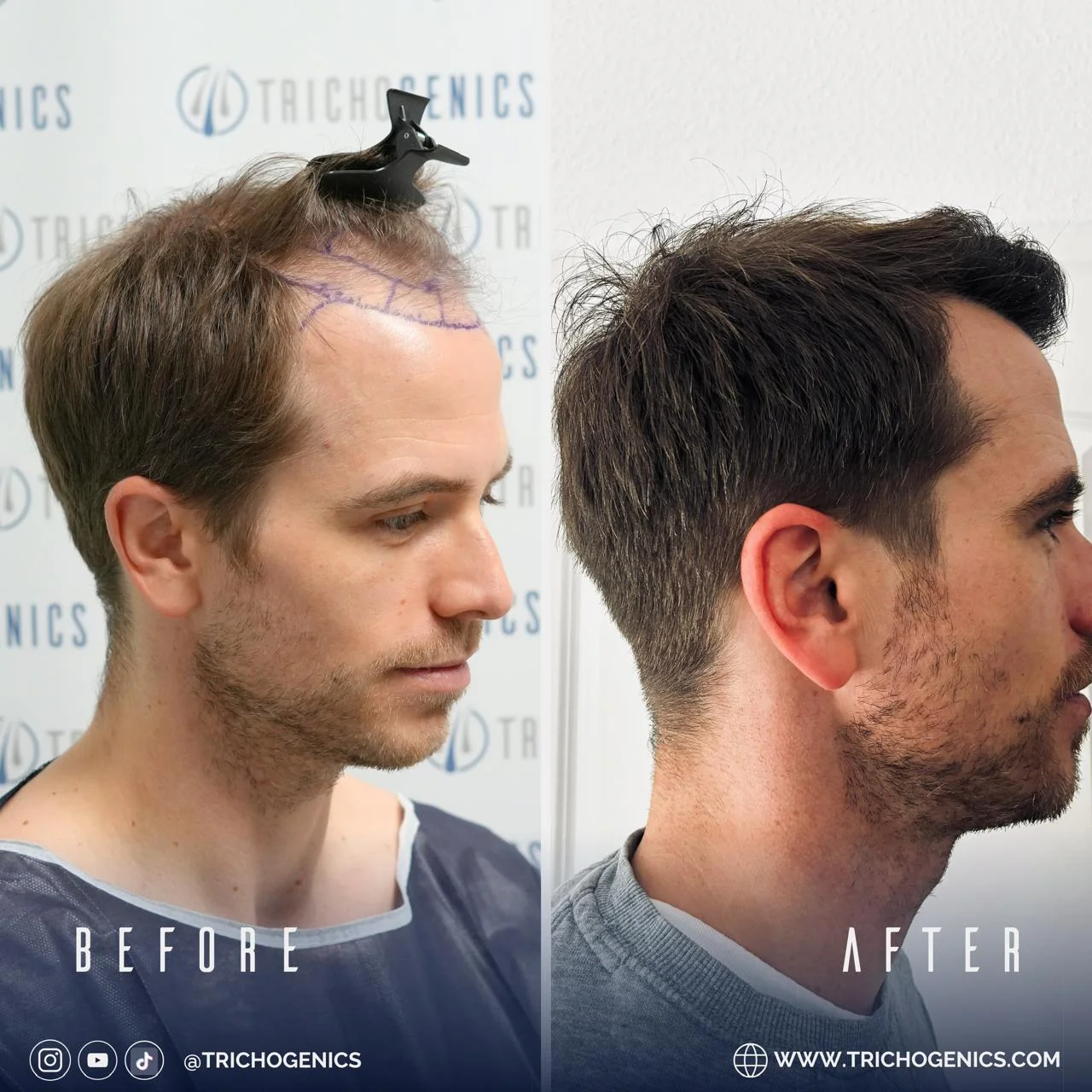
Widow’s Peak Hair Transplant Before and After
Before and after comparisons help patients understand realistic changes. Results focus on improved continuity rather than dramatic transformation. Early images show placement patterns, while later stages reveal natural blending.
Results and Growth Timeline
Hair growth occurs gradually:
- Initial shedding often appears in the first weeks
- New growth usually begins after several months
- Final appearance develops over a longer period
Recovery times vary, but most patients resume normal routines within days.
Widow’s Peak Hair Transplant Cost
Widow’s peak hair transplant cost depends on clinical factors rather than a fixed price. Graft numbers, technique choice, and planning complexity all influence total cost.
Real cost examples
- United States clinics: Small widow’s peak corrections (500–800 grafts): about $4,000–$7,000 USD. More extensive hairline reshaping with 1,000–1,500 grafts: around $8,000–$12,000 USD.
- Europe (Greece/Israel): Minor widow’s peak refinements: roughly €3,000–€5,000 (≈ $3,200–$5,400 USD).Broader frontal hairline work with greater graft count: about €5,500–€9,000 (≈ $5,900–$9,700 USD).
- Mexico (premium surgeon-led clinics):
Targeted adjustments needing limited grafts: $3,500–$6,000 USD.Larger reshaping plans with higher graft counts: $6,500–$9,500 USD.
These figures represent typical ranges for medically guided, doctor-led procedures. Individual quotes vary by clinic, graft count, follow-up care, and patient-specific planning.
What Affects the Cost
Several factors influence pricing:
- Number of required grafts
- Chosen surgical technique
- Physician involvement and follow-up
Comparing cost alone without a clinical context can be misleading.
Widow’s Peak Hair Transplant in Turkey
Some patients consider a widow’s peak hair transplant in Turkey due to advertised pricing.
Concerns are similar to those discussed in are hair transplants in turkey safe, especially in procedures involving cosmetic hairline design.
Risks, Safety, and Regulation Differences
Concerns often include:
- Limited regulation of surgical staff
- Inconsistent patient follow-up
- Reduced accountability for complications
For these reasons, some patients choose treatment in regulated environments such as Greece or Israel, where physician training and certification standards are clearly defined.
Recovery, Results, and Long-Term Expectations
Recovery involves short-term healing and long-term hair maturation. Most patients experience mild redness and scabbing early on.
Over time, transplanted hair behaves like natural hair and requires routine care. Long-term results depend on ongoing hair loss management.
Who Is a Good Candidate?
Good candidates include individuals with a stable donor supply and localized frontal thinning. Men and women with a receding hairline or defined widow’s peak changes often benefit most.
A full evaluation considers age, hair loss pattern, and expectations. Not all patients are suitable for surgery at every stage.
Risks and Limitations
All surgical procedures carry risks. Potential limitations include uneven growth, temporary shedding, or the need for future treatment as hair loss progresses.
A realistic understanding of outcomes helps patients make informed decisions. Medical guidance remains essential throughout the process.
Why Choose Trichogenics?
All procedures are performed only by doctors
The uniqueness of Trichogenics lies in its strict medical process; only certified doctors perform every transplant. No technicians or unqualified assistants are involved. Choosing a clinic with proven experience in hair transplants can make all the difference.
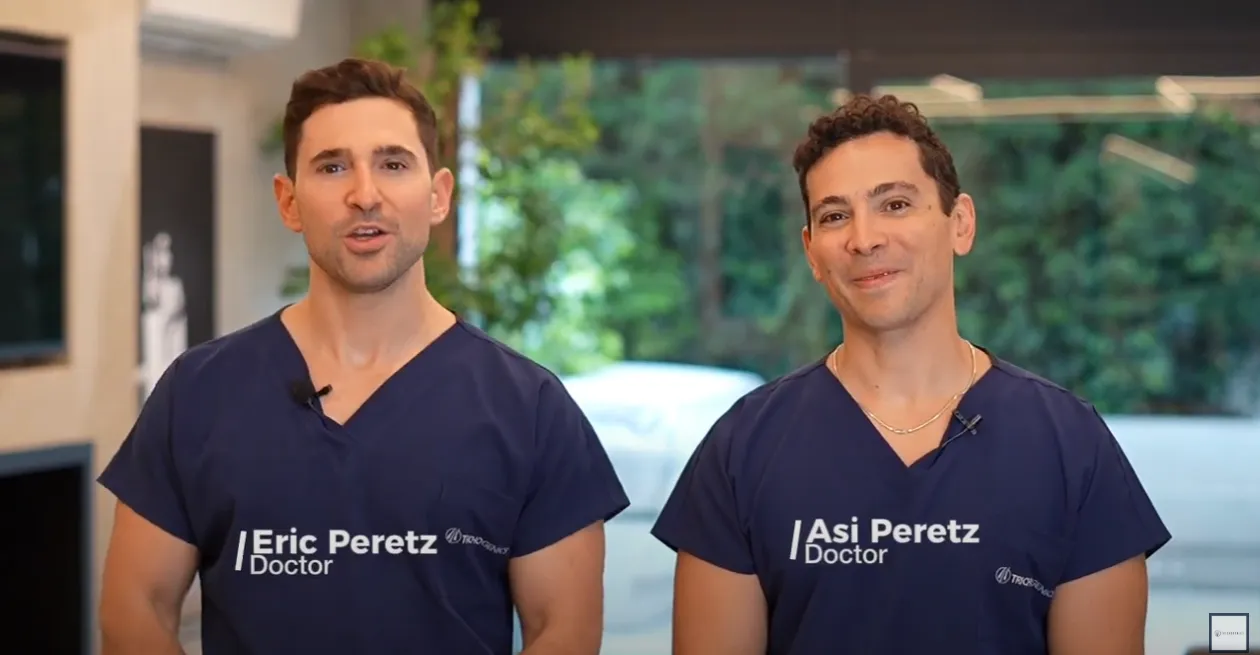
Meet Dr. Asi and Dr. Eric Peretz
The two doctors leading Trichogenics, Dr. Asi Peretz and Dr. Eric Peretz, are recognized leaders in the field. Their extensive experience, attention to detail, and focus on natural results make Trichogenics the best choice.
Contact Trichogenics today to schedule a personal consultation and get a clear, doctor-led plan for your hair restoration.


