
The hair around that zone can keep thinning, which changes how the full result looks.
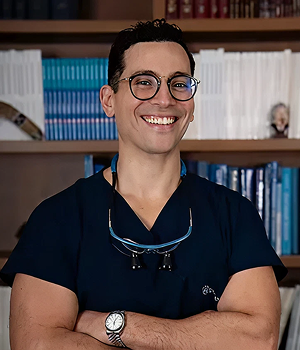
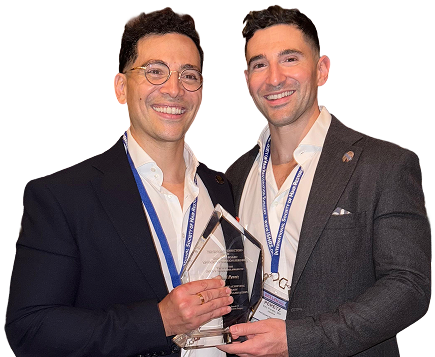
Trichogenics, founded by Dr. Asi Peretz and Dr. Eric Peretz, approaches these questions through doctor-led planning and structured follow-up. This article explains what stays stable, what changes, and how patients protect their results over the years that follow.
Key Takeaways
- Transplanted follicles usually keep growing after 10 years because they carry their donor site’s resistance to hair loss.
- Most changes after a decade come from the natural hair around the graft, which can keep thinning and leave the treated area looking patchy.
- Donor supply is limited and does not regrow, so conservative harvesting protects your options for a future procedure.
- Finasteride and minoxidil protect the surrounding native hair rather than the transplanted follicles, so any decision about them should involve a doctor.
- Doctor-led surgery, a carefully designed hairline, and structured follow-up give results the best chance to age well.
What Does a Hair Transplant Look Like After 10 Years (Before and After)
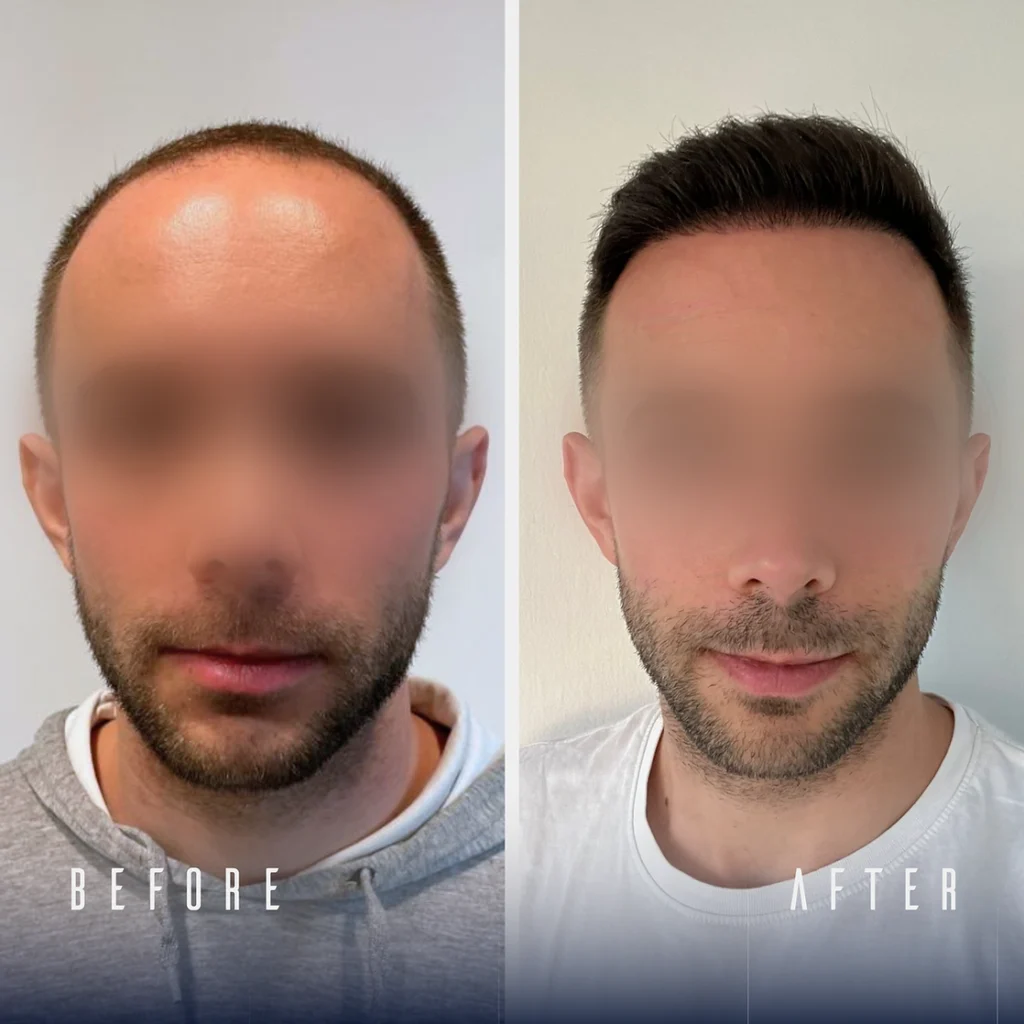
A hair transplant after 10 years usually looks natural when the procedure was planned well. The transplanted hair grows, gets cut, and ages like the rest of your hair. In most cases, the transplanted area keeps steady coverage, and the overall look depends on how the surrounding hair has changed.
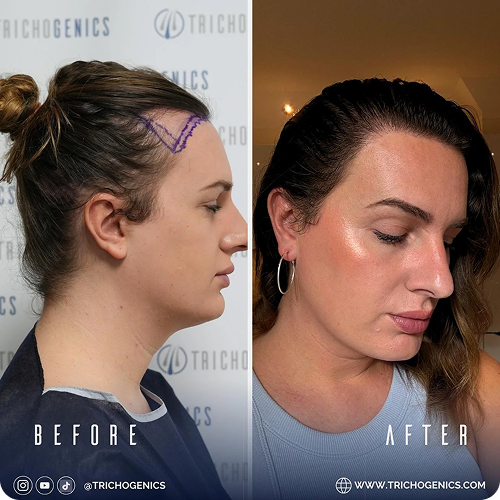
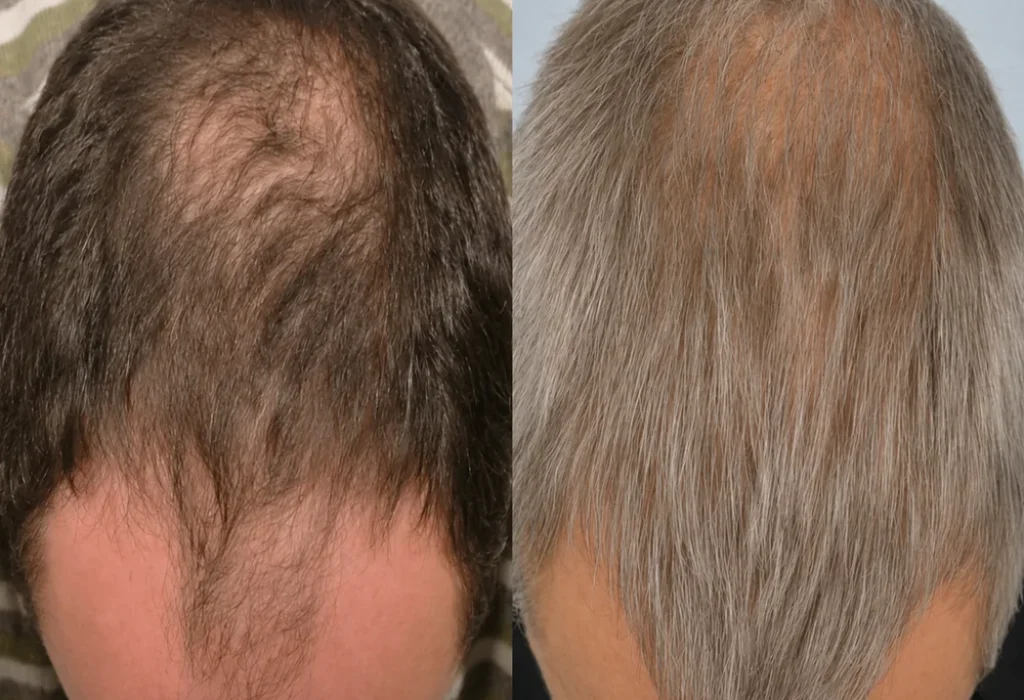
Hair transplant after 10 years: before and after photos show this pattern clearly. The treated zone holds its hair density, while the frame around it may shift as native hair thins. This is why 10 years after a hair transplant, two patients with similar surgeries can look different. Their donor hair quality, age, and rate of hair loss all shape the final result.
Do Hair Transplants Fall Out After 10 Years
Transplanted follicles do not usually fall out after 10 years. Surgeons take grafts from the back and sides of the scalp, where hair resists the hormone linked to androgenetic alopecia. These transplanted follicles carry that resistance into their new location, so they keep growing.
Patients often see temporary shedding in the first months, called shock loss. This is normal and different from permanent loss, and the hair regrows within a few months as it moves through the phases of hair transplant recovery.
Over the long term, the main risk is not the transplanted hair disappearing but the original hair around it continuing to recede.
Hair Transplant Results After 10 Years: What Studies Show
Research on hair transplant results after 10 years points to high graft survival under good conditions. Studies report survival rates between 90 and 98 percent when experienced surgeons do the work, with reputable clinics around 90 to 95 percent and the most skilled surgeons reaching 95 to 98 percent.
Follow-up data on patients years post-surgery also shows strong satisfaction, though some record a gradual drop in hair density.
Survival also depends on where the donor hair comes from. At one year, scalp grafts survive at about 89 percent, beard grafts at about 95 percent, and body hair at about 76 percent. Scarring forms of alopecia survive far worse than androgenetic alopecia, which is why a surgeon should confirm the cause of hair loss before planning.
One long-term review found density falling by roughly 4 to 6 percent over each five-year interval. This reflects natural aging more than transplant failure. The data supports a simple point: well-performed procedures deliver durable long-term results, but no surgery freezes the scalp in time.
Why Results Change Over Time
Several factors explain why hair transplant results shift across a decade. The transplanted hair stays, but the scalp around it keeps aging. Understanding these changes helps patients set realistic expectations for their long-term outcomes.
Continued Thinning of Natural Hair
The most common reason results change is the loss of non-transplanted hair. Androgenetic alopecia continues in areas the surgery did not treat. As this native hair thins, the transplanted area can start to look isolated or patchy.
This is why hairline design matters so much. A surgeon who places a natural hairline with future loss in mind produces a result that ages well. Patients who keep losing surrounding hair may see gaps form near the recipient areas, even when the grafts stay healthy.
Donor Area Limits and Overharvesting
The donor area holds a finite number of grafts. Most patients have roughly 4,000 to 8,000 harvestable follicles across the donor zone, and a single large session can use a big share of that supply. Careful graft count planning protects what remains.
Donor hair does not grow back where it was removed. Overharvesting lowers donor density and can leave visible thinning at the back and sides of the scalp. Grafts taken from outside the permanent zone, near the edges of the donor area, can also miniaturize and thin in later years, so conservative harvesting keeps the result stable.
Scarring and Hairline Aging
Every transplant leaves some scar. The strip method, or FUT, leaves a single linear scar across the back of the head. FUE leaves small dot-shaped scars spread across the donor zone.
Both types usually stay hidden under surrounding hair, and a technique called trichophytic closure can help a linear scar heal thinner. A scar can still become visible if nearby hair thins or the patient cuts their hair very short.
As the face ages, a hairline placed too low in youth can also look unnatural, which is another reason conservative hairline design supports better long-term outcomes.
Factors That Determine Long-Term Success
The durability of hair transplant results depends on more than the surgery itself. Technique, patient habits, and medical support all shape how the result holds up. Dr. Asi Peretz and other specialists treat these factors as connected parts of one long-term plan.
Surgeon Skill and Technique
Surgeon skill influences long-term outcomes more than the specific method chosen. DHI and FUE are both widely accepted techniques in modern hair restoration. DHI often uses a Choi pen, a tool that implants each graft directly without separate channel creation.
Doctor-led procedures matter here. Physician training and certification affect how grafts are handled, how the natural hairline is designed, and how carefully the donor area is managed. At Trichogenics, doctors perform the procedures rather than delegating them to technicians, which keeps clinical judgment at the center of each step.
Some patients also use supporting options such as PRP, which may improve graft survival when combined with FUE, or scalp micropigmentation to add the look of density. These are adjuncts, not replacements for sound surgical planning, and a doctor should advise whether they fit a given case.
Lifestyle, Nutrition, and Aftercare
Patient habits affect how transplanted hair settles and survives. Smoking slows healing and raises infection risk, so surgeons often advise stopping for several weeks before and after surgery. Poor nutrition and low levels of iron, vitamin D, zinc, or biotin can also weaken hair over time.
Aftercare in the first weeks protects the grafts. A step-by-step guide to 1-month post-hair transplant results and care explains the washing, product, and sun protection routine.
Patients should avoid tight hairstyles that cause traction, limit harsh sun exposure, and treat any scalp condition early. These habits support hair density across the years that follow.
Role of Finasteride and Minoxidil
Finasteride and minoxidil help maintain results, but they work on the native hair, not the transplanted follicles. These medications slow androgenetic alopecia in the surrounding areas, and by protecting that hair, they help preserve the overall look.
Only about a third of patients stay on finasteride four years after surgery, according to one cited figure. Stopping medication can speed the loss of non-transplanted hair. Any decision to start or continue these drugs should be made with a doctor, since suitability varies by patient.
Protecting Your Results for Decades
Protecting hair transplant results takes ongoing attention. The surgery is one event, but long-term outcomes depend on choices made in the years after. Simple habits and regular check-ins help patients keep their results strong.
Preserving Your Remaining Donor Supply
The donor area is a limited resource that cannot be replaced. Preserving donor density gives patients options if they want more coverage later. A surgeon who harvests conservatively in the first procedure leaves room for future work.
Patients should ask about their remaining graft count after surgery. A responsible clinic tracks how much donor hair has been used and how much stays available. This planning protects both appearance and future flexibility, and it keeps a second procedure realistic if one is ever needed.
Warning Signs That Need a Checkup
Some symptoms call for a scalp examination rather than worry. Sudden shedding, bald patches, pain, redness, scaling, or ongoing itching can signal a problem. These signs do not always mean the transplant failed, but they deserve a professional look.
Structured patient follow-up helps catch issues early. Many clinics schedule reviews at set points, often around 12 months, once the hair transplant phases are complete, to assess growth and scalp health.
Untreated infection in the early weeks is rare but can cause scarring or pigmentation changes, so early contact with your doctor matters.
What Happens 20 Years After a Hair Transplant
Twenty years after a hair transplant, the transplanted follicles usually still grow. They age like natural hair, so they may turn grey, grow more slowly, or become finer, while the transplanted area tends to hold its coverage.
The surrounding hair, though, has had two more decades to change. Many patients need extra support or a second procedure by this point to address new loss. The transplant itself remains, but the scalp around it reflects ongoing age and genetics.
Will You Need a Second Hair Transplant
A second hair transplant is not automatic. Many patients never need one, while others choose a touch-up as new loss appears. Field data suggests a meaningful share of hair transplant patients, roughly a quarter to a third, undergo more than one procedure over their lifetime, and one industry figure puts the rate near 31.9 percent.
When a Touch-Up Makes Sense
A touch-up makes sense in specific situations. Patients consider a second procedure when new hair loss affects untreated areas, when they want more density, or when the hairline needs refinement. Surgeons usually recommend waiting at least 6 to 12 months between sessions so the first result settles.
Before planning a second transplant, a doctor should assess donor density, scalp health, and existing scars. No surgeon should promise unlimited grafts without examining the donor area first. This check keeps the second procedure realistic and safe.
What a Repair Procedure Involves
Repair procedures correct poor results from earlier surgery. These cases have grown as transplant volume has risen worldwide. Common problems include an unnatural hairline design, a visible linear scar, and a depleted donor area from overharvesting.
A repair surgeon evaluates what donor hair remains and what the scalp condition allows. Many older, poor-quality results can be improved, though options depend on the remaining supply. Repair work is more complex than a first procedure and needs careful planning by an experienced doctor.
Choosing a Clinic for Lasting Results
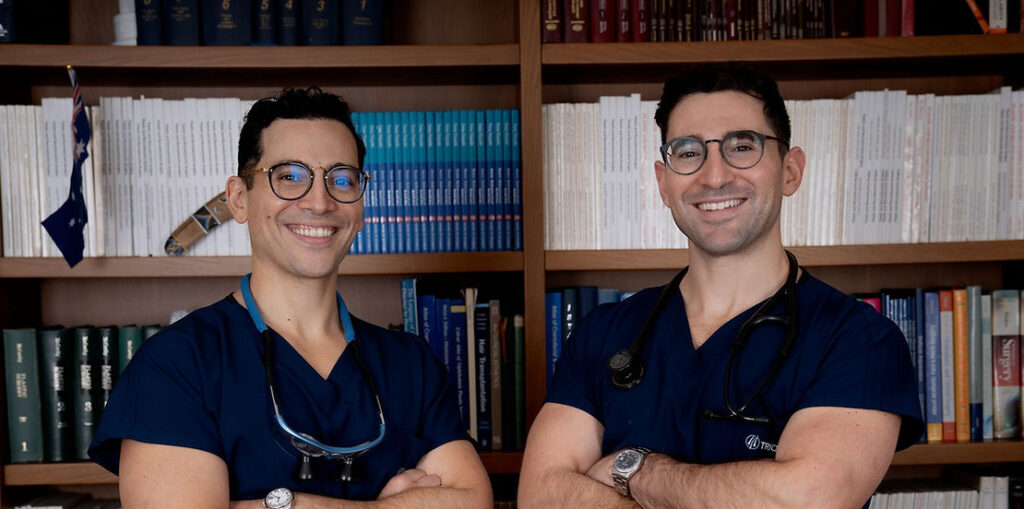
Choosing the right clinic shapes your long-term results more than any single technique. Look for doctor-led procedures, clear physician training and certification, and a structured follow-up plan. These factors protect both the quality and the durability of your result.
Location is part of this decision. Trichogenics operates in Greece and Israel, where hair restoration is performed under strict medical regulation and by qualified doctors. Some patients travel to Turkey or other low-cost destinations for cheaper procedures, but many of these markets carry weaker regulatory oversight.
Reduced regulation can mean technicians rather than doctors perform the surgery, which raises the risk of overharvesting, scarring, and poor hairline design that only becomes clear years later.
A clinic that plans for the long term treats your donor area as a lifelong resource. Ask who performs the surgery, how the donor area will be managed, and what follow-up looks like after the first year. That approach, more than price, determines what your hair transplant looks like a decade on.
A hair transplant after 10 years tells a clear story. The transplanted follicles usually stay, grow, and age naturally, while the hair around them keeps following its own genetic path. The difference between a result that ages well and one that does not often comes down to early planning: conservative hairline design, careful donor management, and honest expectations.
Patients who understand these factors make better decisions. They protect their donor supply, support their native hair with medical guidance, and stay in contact with their doctor over time.
Dr. Asi Peretz and the team at Trichogenics treat the first procedure as the start of a long-term relationship, not a one-time event. If you are researching hair restoration, focus on the decade ahead, and let a careful plan today shape what you see ten and twenty years from now.