
Follicular unit extraction describes how a physician harvests follicles, whereas direct hair implantation describes how those follicles are placed. Dr. Asi Peretz and Dr. Eric Peretz founded Trichogenics as a physician-performed clinic, and the sections below outline how each technique functions.
Key Takeaways
- Neither DHI nor FUE is universally better, because both produce natural results and share the same follicle extraction step. The right choice depends on your hair loss pattern, the number of grafts you need, and your surgeon’s training.
- FUE suits larger areas and high graft counts, while DHI gives finer control for smaller zones such as the hairline and temples. The main difference is how the follicles are implanted, not how they are harvested.
- Recovery time, graft survival, and the month-by-month results timeline are broadly similar for both techniques. Final results typically take 12 to 18 months to appear.
- A surgeon’s training matters more than the method you choose. Verify that a licensed physician performs each step of your procedure before you book.
- Hair transplants do not stop ongoing hair loss, so a clinic should plan for future thinning and discuss supporting treatments with you.
DHI vs FUE at a Glance
- Choose FUE to cover a large area or place a high number of grafts in one session.
- Choose DHI for fine control over a smaller area, such as the hairline or temples.
- Expect similar graft survival, similar recovery, and a similar results timeline with either technique.
- Weigh the surgeon’s training above the method.
What is DHI Hair Transplant vs FUE
To appreciate what DHI hair transplant is vs. FUE, separate the operation into two stages: extraction and implantation. Both techniques share the same extraction stage and diverge only in how the surgeon positions each follicle.
How FUE Works
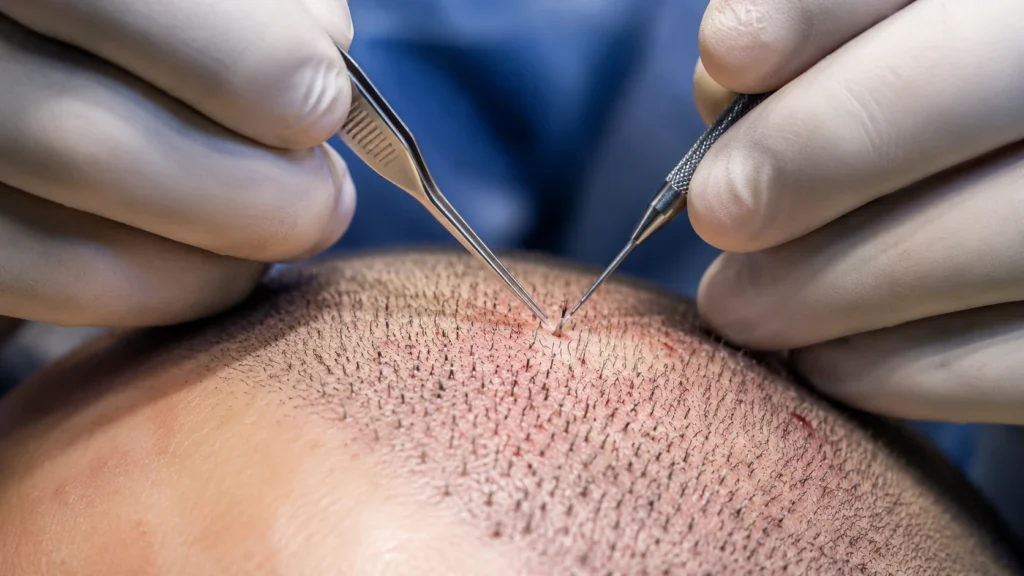
FUE stands for follicular unit extraction. The surgeon removes individual follicular units from the donor area with a circular punch measuring 0.7 to 1 millimeter, usually along the back and sides of the scalp, where hair resists the hormone behind androgenetic alopecia.
The surgeon then prepares the recipient sites, which are minute incisions across the thinning region, and inserts each fue follicular unit in a planned sequence. An fue hair transplant leaves small, scattered scars instead of one linear scar, and short hair generally conceals them.
How a DHI Hair Transplant Works
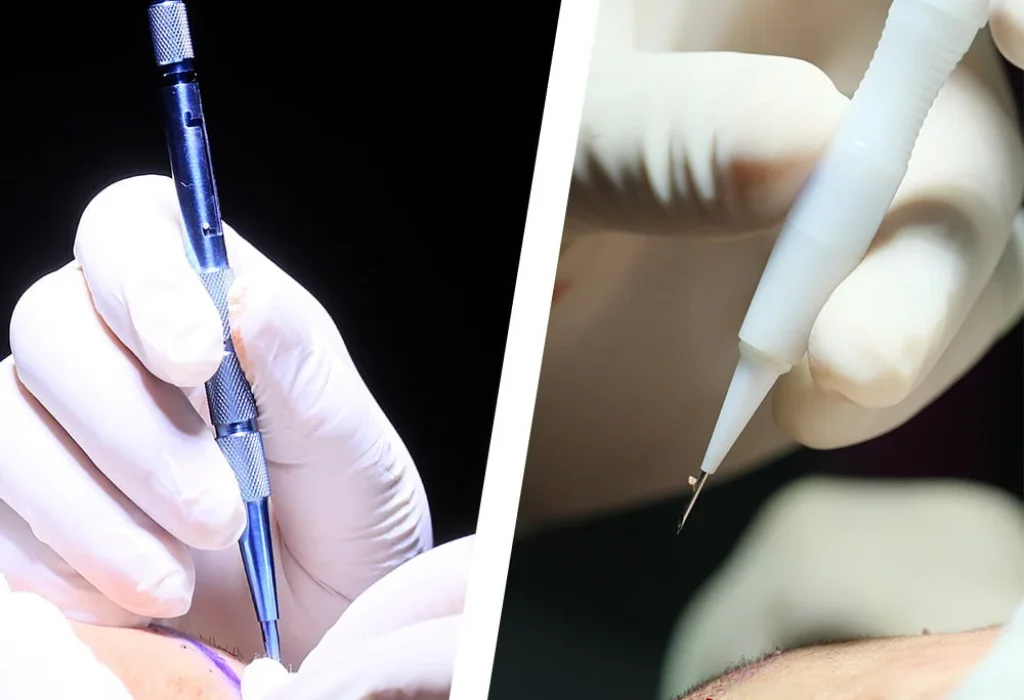
DHI stands for direct hair implantation, and it relies on the same follicular unit extraction that FUE uses. The surgeon loads each follicle into a Choi implanter pen, whose hollow needle forms the channel and deposits the graft in one motion, so the surgeon does not create recipient channels beforehand.
The implanter pen permits deliberate adjustment of angle, depth, and direction, which many surgeons favor for a delicate hairline. Because DHI and FUE share an extraction method, the genuine comparison concerns hair implantation.
FUE vs DHI Hair Transplant: Key Differences
The FUE vs DHI hair transplant comparison reduces to a few practical distinctions, summarized below.
Implantation and Density
In FUE, the surgeon opens the recipient sites first and places the grafts in a second step, whereas in DHI the Choi implanter pen performs both actions at once. Some clinics claim DHI achieves greater density, but the evidence does not confirm this as a general rule.
Density depends on the blood supply and condition of the scalp, and crowding grafts too closely can reduce survival in the recipient area with either technique.
Graft Capacity and Procedure Time
The number of grafts you require influences both the duration of surgery and the choice of technique. FUE accommodates a high graft count and suits extended sessions across several zones, while DHI suits smaller sessions that demand fine precision.
Loading each follicle into the pen takes additional time, and a typical operation lasts five to eight hours depending on the graft count and the surgical team.
Shaving and No-Shave Options
FUE usually requires a complete shave of the donor area so the surgeon can reach every follicle accurately. DHI can sometimes be done with a partial shave or none, which appeals to patients who prefer to conceal the procedure, although the surgeon still trims the donor zone in most cases.
What to Expect on Surgery Day
The sequence below varies by clinic and technique.
- Consultation and planning: the surgeon confirms the hairline design, target density, and number of grafts.
- Preparation: the team trims or shaves the donor area and cleans the scalp.
- Anesthesia: the surgeon numbs the treated areas with a local anesthetic.
- Extraction: the surgeon harvests follicular units one by one.
- Implantation: the surgeon places the grafts, either into prepared sites or with the Choi pen.
- Aftercare briefing: the team explains washing, sleeping position, medication, and follow-up.
Most patients stay awake during the operation, and you should arrange for someone to accompany you home because the long session leaves most patients fatigued.
DHI vs FUE Success Rate and Results
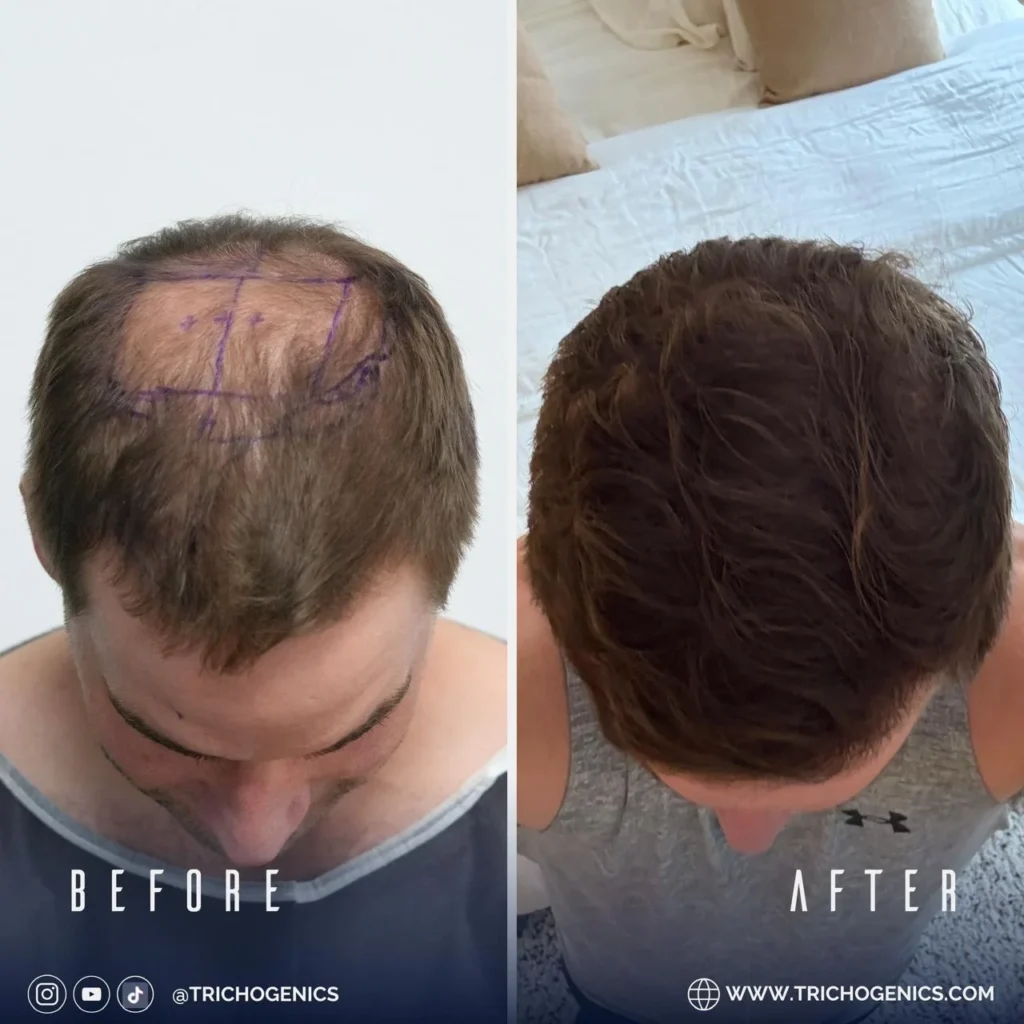
When patients compare DHI vs fue success rates, the reported figures fall remarkably close together, because both techniques share the same extraction method and healing process.
Graft Survival Rates
Graft survival measures the proportion of transplanted follicles that establish a blood supply and keep growing. Published figures for FUE and DHI occupy a similar high range when a trained surgeon operates, and no reliable study shows either technique surpassing the other. Rough handling, prolonged storage outside the body, and crowding the recipient area reduce survival in both.
DHI vs FUE Results Month by Month
DHI vs FUE results follow an identical timeline because the follicles heal in the same manner.
- Weeks 2 to 4: the transplanted hairs shed, a normal and expected phase.
- Months 3 to 4: new growth begins to appear.
- Months 6 to 9: noticeable thickening and improved coverage develop.
- Months 12 to 18: the final result stabilizes.
Both techniques produce a natural result when the surgeon plans angle and density with precision, and the transplanted hair usually persists for life because donor hair resists balding.
Scarring and Donor Area
Both techniques avoid the long linear scar of older strip surgery and leave minute scars under one millimeter in the donor area, which short hair conceals. The donor area holds a finite supply of hair follicles from the donor zone that do not regenerate once removed, so a skilled surgeon extracts evenly to preserve a full appearance.
DHI vs FUE Recovery Time
Patients often anticipate a considerable difference in DHI vs fue recovery time, yet both techniques heal on a remarkably similar schedule because the wounds are of comparable size and depth.
The First Two Weeks
Small crusts form around each graft and across the donor area, and they typically detach within ten to fourteen days. Avoid strenuous exercise, direct sunlight, and swimming during this period, and sleep with the head elevated for the first few nights to limit swelling.
Most patients return to desk work within several days, and since both techniques involve a similar recovery, your choice will not alter your time away from work by much.
Is DHI Less Painful than FUE?
In practice, the two procedures feel comparable, because the surgeon applies a local anesthetic for both and you should perceive little discomfort during the session. Mild soreness, tightness, and swelling may follow either technique for several days, and over-the-counter analgesics usually manage these symptoms. Claims that one method is substantially less painful lack strong supporting evidence.
Treatments That Support Your Transplant
A transplant restores hair in treated areas but does not stop hair loss in the surrounding native hair, so many surgeons recommend a medical plan alongside surgery. Your physician decides which options suit your health history.
- Finasteride: an oral medication that reduces the hormone driving pattern baldness and can slow further loss in men, which requires a prescription and a discussion of side effects.
- Minoxidil: a topical treatment that supports hair growth and, in some practices, healing after surgery.
- Platelet-rich plasma (PRP): an injection from your own blood, with mixed evidence, so ask what research supports it before paying.
Disadvantages and Risks of DHI Hair Transplant
Understanding the trade-offs of DHI sets realistic expectations, and its principal disadvantages include the following:
- Higher cost: DHI frequently costs more than FUE because it demands additional time and training.
- Longer sessions: loading each follicle slows the process, particularly in large cases.
- Graft limits: DHI is less practical for very high graft counts across extensive baldness.
- Steeper learning curve: the Choi implanter requires specific skill, so outcomes vary with surgeon experience.
Both techniques share the general risks of surgery, including minor bleeding, infection, swelling, and temporary numbness, and inadequate technique can produce an unnatural hair angle or uneven density. These risks remain low when a trained physician operates within a regulated clinic. Hair loss can also progress in untreated areas, so a competent surgeon plans for future thinning.
Who is a Good Candidate
Choosing between dHI and FUE begins with an assessment of your own hair and goals, which a physician confirms during consultation.
Best Candidates for FUE
FUE suits patients with extensive hair loss who need a high number of grafts across the crown and mid-scalp, and who accept a complete shave of the donor area. Men with advanced pattern baldness often select an fue hair transplant to cover wide regions in one session.
Best Candidates for DHI
DHI suits patients who need precise work in a smaller area, such as a receding hairline or the temples, where the implanter pen provides tight control. It also suits early-stage hair loss in patients who wish to avoid a complete shave.
Women and Repair Cases
Both techniques treat female hair loss, which often presents as diffuse thinning, and many women prefer DHI because it can avoid shaving long hair. Both also repair earlier transplants and conceal scars, after a physician first assesses the available donor supply.
How Surgeons Design a Natural Hairline
The hairline is the most visible feature of a transplant, so its design determines whether the result looks natural. A skilled surgeon avoids a perfectly straight line, places the finest single-hair grafts at the front edge, and positions multi-hair grafts behind them to build density gradually.
Angle and direction matter as much as placement, since natural hair points in different directions across the temples, front, and crown.
A hairline placed too low on a young patient can look unnatural if the surrounding hair continues to recede, so surgeons often place the line conservatively and reserve donor supply for later sessions.
DHI vs FUE Cost and Value
Cost often influences the DHI vs fue decision, although price should never be the only consideration. DHI usually costs more because it requires additional time and training with the Choi implanter, and the difference varies by clinic and graft count.
An unusually low price can signal a warning, because some clinics reduce expenses by letting technicians instead of physicians perform surgery.
Compare itemized quotations that list the technique, the number of grafts, the surgical team, and postoperative care, and ask what the price includes and excludes.
How to Choose the Right Surgeon
The surgeon matters more than the technique, and this is the most consequential decision in your hair restoration process.
Why Doctor-Performed Surgery Matters
Hair restoration is a surgical discipline that demands medical training rather than technical speed. A licensed physician should manage the planning, the extraction, and the implantation, because delegating these steps raises the risk of infection, scarring, and wasted donor hair.
Clinics in strictly regulated countries such as Greece and Israel hold physicians to rigorous standards, and Trichogenics operates in both countries with physician-performed procedures from beginning to end.
Questions to Ask Before Booking
Ask the following before you commit:
- Will a licensed doctor perform my surgery, or a technician?
- How many fue and dhi procedures has the surgeon completed?
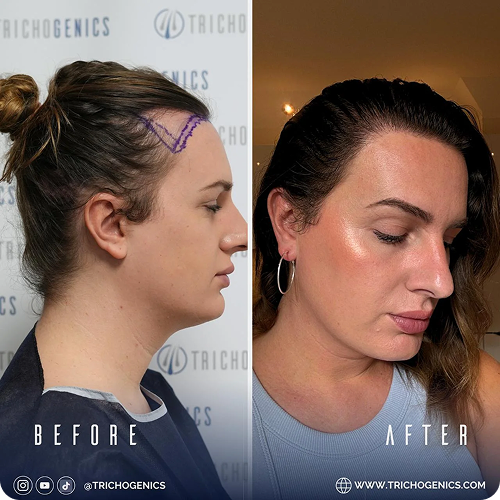
- May I see before and after photographs of real patients?
- What does follow-up care include?
- How do you plan for my future hair loss?
Checking a Clinic Abroad
Regulation and enforcement differ widely between countries, and in popular destinations, including Turkey, patients and medical bodies have reported clinics where technicians perform extraction or implantation with limited physician involvement.
Verify in writing the surgeon’s name and license number, which steps the surgeon performs personally, the facility’s accreditation, and who treats complications after you return home. Greece and Israel both operate established medical licensing systems.
DHI and FUE at Trichogenics
Trichogenics is a hair restoration clinic with locations in Greece and Israel, and it offers both DHI and FUE with every procedure physician-performed. Dr. Asi Peretz and the medical team evaluate each patient individually to match the technique to the case, using established methods including Choi implanter pen implantation and standard follicular unit extraction.
Structured follow-up supports healing in the months after surgery, and patients researching fue vs. DHI hair transplant options may consult the team for a personalized plan based on their hair loss pattern and donor supply.
DHI VSFUE FAQs
Is DHI Better for Hairlines
DHI frequently suits hairline work because the implanter pen controls angle and depth precisely, but a skilled surgeon can also build a natural hairline with FUE. The technique matters less than the hands that apply it.
Can you combine DHI and FUE?
Yes, some surgeons use FUE for large areas and DHI for detailed hairline work within one session. Your surgeon determines whether your case warrants a combined plan.
Are DHI and FUE results permanent?
Transplanted hair is usually permanent because the follicles come from zones that resist pattern baldness. Hair loss can still continue in untreated areas, so some patients need additional sessions.
Can You Have a Second Transplant Later
Yes, if hair loss continues or you want more density, though the finite donor supply limits what is possible. A surgeon assesses your remaining supply first.
Can DHI Treat Beards and Eyebrows
Yes, surgeons use FUE extraction and the implanter pen for both, because the pen’s fine control matches the angle and direction of surrounding hair.