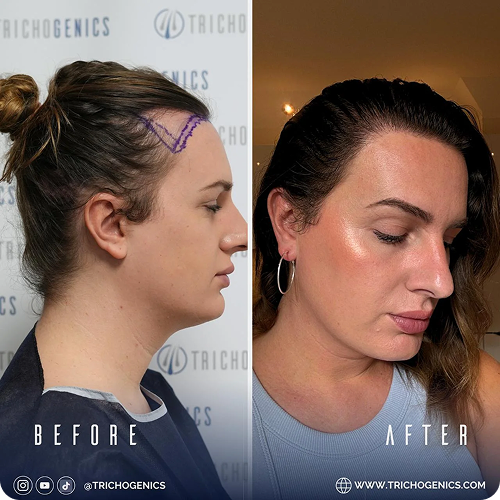

Trichogenics, which operates in Greece and Israel, was founded by Dr. Asi Peretz and Dr. Eric Peretz, both physicians who specialize in hair restoration. Outcomes depend on the curl pattern, the donor area, and the surgeon’s technical training.
Key Takeaways
- Curly hair can be transplanted successfully, and the curl often makes the result look fuller with fewer grafts than straight hair. Outcomes still depend on your hair loss pattern and donor supply.
- Curved follicles raise the risk of transection during extraction, so the surgeon’s experience with curly hair matters more than usual.
- FUE and FUT are the two main techniques, and the right choice depends on curl tightness, skin type, and your tolerance for a linear scar.
- Expect shedding around weeks two to four, visible growth from about month three, and full results between 12 and 18 months.
- In Israel or Greece, a hair transplant typically costs €4,000 to €15,000, so compare written quotes and what each one includes.
Do Hair Transplants Work for Curly Hair
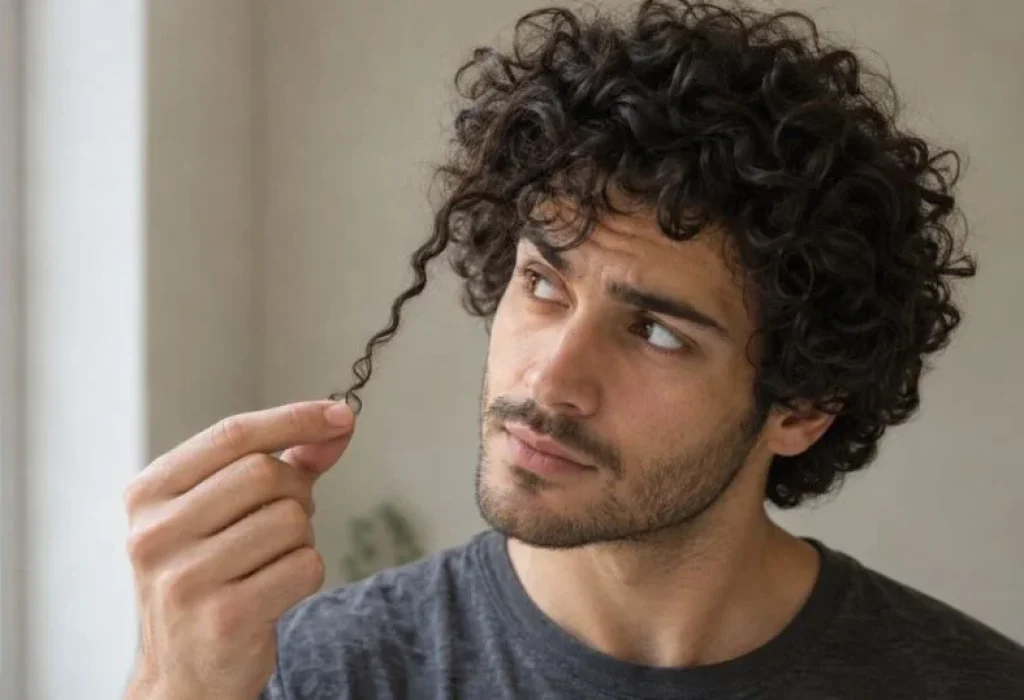
For appropriately selected patients, they do, and the natural curl often improves apparent coverage. Transplanted hair keeps the texture, color, and curl pattern of its donor follicle, so surgery does not change how your hair behaves.
Curls occupy more space above the skin, so curly and wavy hair generally requires fewer grafts for the same perceived density compared to straight hair. Individual outcomes still vary with the pattern of hair loss, donor supply, and healing response, so two-month hair transplant results may look thin before growth fills in.
Who Makes a Good Candidate
For every hair transplant curly hair patient, candidacy is a medical judgment rather than a fixed formula. A consultation determines whether surgery suits your hair type and goals. Clinicians usually look for these features:
- A stable, recognizable pattern of hair loss caused by androgenetic alopecia.
- A healthy donor area with sufficient follicular density.
- Realistic expectations about coverage, timing, and possible additional sessions.
Who Should Wait or Consider Alternatives
Patients with early, rapidly progressing hair loss often benefit from medical therapy first, because transplanted hair cannot stop thinning in the surrounding native hair. A limited donor area may also restrict the coverage that a single operation can achieve.
In these cases, a physician may recommend stabilizing the condition or planning staged procedures.
Why Curly Hair Is Harder to Transplant
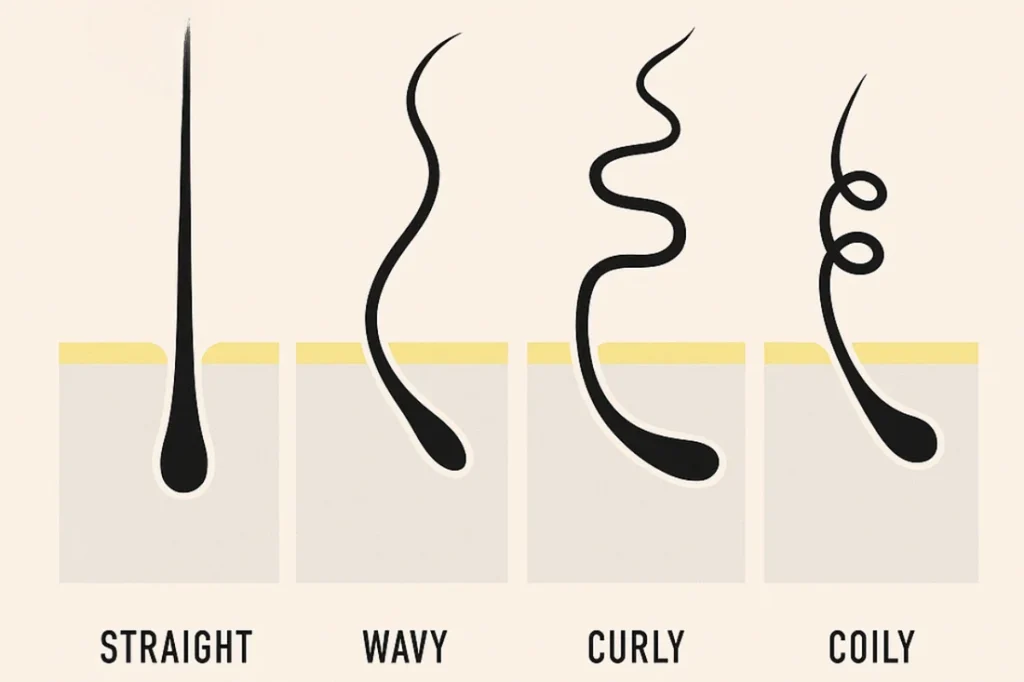
Curly hair follicles curve beneath the scalp, and that curve produces the spiral shape of the shaft. Because the surgeon cannot see the curvature from the surface, extraction carries a higher risk of transection, which means the follicle is cut and the bulb damaged.
Studies of Afro-textured hair report elevated transection rates, so curly hair transplants require additional planning. Tightly closed curves combined with firm skin appear to carry the highest risk, although this guidance comes from clinical experience rather than controlled trials.
Hair types also range from loosely wavy to tightly coiled, and each pattern changes the surgical plan.
Best Technique for a Curly Hair Transplant
The two principal hair transplant procedures are follicular unit extraction (FUE) and follicular unit transplantation (FUT). Selection depends on curl tightness, skin laxity, graft requirements, and tolerance for a linear scar.
Implantation tools such as the Choi pen, used in direct hair implantation (DHI), let the physician control angle and depth in the recipient area.
FUE for Curly Hair
Follicular unit extraction removes individual units from the donor area with a small circular punch. Surgeons often choose a slightly larger punch for curved follicles, and manual extraction is frequently preferred for tightly coiled hair because it offers finer control. Some clinics also offer a no-shave variation, in which only small donor patches are trimmed, and the surrounding hair covers them.
FUT for Curly Hair
FUT removes a narrow strip of tissue from the donor area, and technicians dissect it into grafts under magnification. Because FUE is often less suitable for tightly curled hair, surgeons frequently consider FUT for tight curls. The method leaves a thin linear scar that patients with very short hairstyles should weigh carefully.
Grafts and Density with Curly Hair
Curly strands bend across the scalp and cover more surface than straight strands of equal length. A surgeon may therefore plan fewer grafts for acceptable coverage, which can shorten surgery and spare the donor area.
Most claims about reduced graft numbers come from clinic observation rather than comparative evidence, so graft direction and angle matter more than raw counts.
Afro Hair Transplant: What to Know
An Afro hair transplant involves the tightest curl patterns and the most sharply bent follicles, so technical demands increase. Surgeons typically ask about keloid history and test a small area first, particularly before extracting from non-scalp sites such as the beard.
The transplanted hair keeps its natural texture, and planning that respects curl direction produces a natural result.
Curly Hair Transplant Procedure Step by Step
A curly hair transplant follows a defined clinical sequence. The physician begins with a scalp examination, curl analysis, and medical history review. The standard steps are:
- Local anesthesia numbs the donor area and the recipient area.
- The surgeon extracts follicular units by FUE, or removes a strip for FUT.
- The team prepares the grafts under magnification.
- The physician creates recipient sites angled to match the natural curl direction.
- Grafts are implanted with forceps or a Choi pen.
Risks and Side Effects
Every transplant surgery carries general risks such as infection, bleeding, swelling, and donor-site scarring. For curly hair, the main technical risk is transection of curved follicles, which reduces viable grafts. Patients with a history of keloids need special evaluation, and a physician trained in hair restoration reduces these risks without eliminating them.
Hair Transplant for Curly Hair Cost
The cost of a hair transplant for curly hair varies with graft number, technique, clinic location, and surgeon experience. In Israel or Greece, a hair transplant typically ranges from €4,000 to €15,000, or about $5,000 to $18,000 USD, while readers in the United States can compare this with hair transplant costs in NYC.
Because curly hair often needs fewer grafts, the total may sometimes run lower than an equivalent straight-hair case, although this is never certain. Request a written quote after evaluation, and compare what it includes, such as follow-up visits and medications, instead of focusing on price alone, because the most expensive hair transplant does not always mean better results.
How to Choose a Surgeon
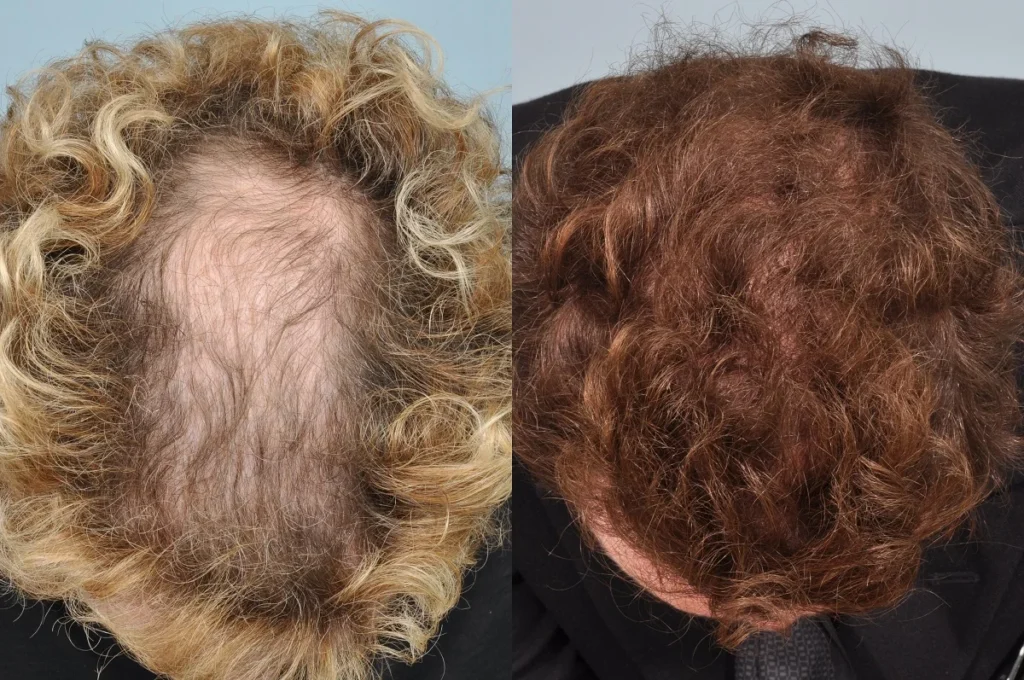
Surgeon selection influences the outcome more than any other variable. Experienced surgeons hold recognized medical training and certification in hair restoration, and they personally perform the critical steps.
Before-and-after photographs of comparable curl patterns provide practical evidence of that experience. Useful questions include:
- Which steps does the physician perform personally?
- How many curly or Afro-textured cases has the physician treated?
- What follow-up schedule follows surgery?
Medical tourism also deserves caution. Where hair transplant surgeries are marketed at high volume and low prices, including Turkey, patients have reported technicians performing steps that should be physician-led, and oversight varies between clinics.
Verify who operates and who manages complications after you return home.
Curly Hair Transplants at Trichogenics
Trichogenics operates clinics in Greece and Israel, and physicians perform every procedure. Its founders, Dr. Asi Peretz and Dr. Eric Peretz, specialize in hair restoration. Consultations review hair loss patterns, donor supply, and curl characteristics before any recommendation.
Hair Transplant FAQs
Can Wavy Hair Be Transplanted
Yes, wavy hair can be transplanted with the same techniques, and the graft keeps its wave after growth. The density advantage is modest compared with tighter curls. Your surgeon assesses follicle angle during consultation.
Will Transplanted Hair Stay Curly
Transplanted hair keeps the curl pattern of its donor follicle. Early regrowth may look frizzy before the texture settles over several months. Hair care and climate still affect day-to-day appearance.
Is No-Shave FUE Possible with Curls
No-shave FUE can work in selected cases, because longer hair is lifted so only small donor patches are trimmed. Tight curls make the technique harder, since follicle direction is difficult to track under longer hair. Your surgeon decides whether it suits your hair length and graft requirement.