

A few factors decide whether your scar stays nearly invisible or turns into something you notice every time you get a haircut.
Skin Type and Healing Response
People with thicker dermal layers tend to scar less visibly. Those with thinner or lighter skin, or anyone prone to keloids, may need extra treatment like laser therapy or PRP to keep scarring under control.
Surgeon Skill and Technique
This matters more than almost anything else. A skilled surgeon uses smaller punch sizes (typically 0.7- 0.9 mm) for FUE and DHI extractions, which limits trauma and scar tissue formation. Precise placement, clean incisions, and proper layered closure all shape how a scar looks a year later.
Poor technique or excessive graft extraction in a single session leads to more visible scarring and, over repeat FUT procedures, can also reduce donor density over time.
Donor Area Laxity
If your scalp has limited elasticity, closing an FUT incision under tension raises the risk of the scar widening later. Experienced surgeons assess donor laxity before surgery specifically to avoid this.
Post-Transplant Care
How you treat the area in the weeks after surgery affects the outcome as much as the surgery itself:
- Keep the scalp clean and hydrated
- Avoid scratching or picking at scabs
- Protect the area from sun exposure
- Avoid heavy exercise or physical strain too early in recovery
- Follow your surgeon’s aftercare instructions exactly
Silicone gels, laser resurfacing, and scalp micropigmentation can all help reduce a scar’s appearance further down the line.

Can Hair Actually Grow on a Scar?
Sometimes, yes. But scar tissue doesn’t behave like normal skin. It has a weaker blood supply and lacks the follicular structure that helps a new graft anchor and survive, so the surrounding tissue thickness and texture can make it harder for grafts to take hold.
That doesn’t rule it out. Pre-treatment with microneedling or PRP therapy can improve blood flow to the area and boost graft retention before transplantation. A skilled surgeon places grafts strategically to maximize coverage while minimizing further trauma to already-compromised tissue.
Survival rates reflect the difference: grafts placed into scar tissue succeed at roughly 60-80%, compared to 90-95% on healthy skin. Scar thickness, blood supply, and how closely you follow post-transplant care all affect where you land in that range.
How to Prevent Noticeable Scarring Before You Even Book Surgery
Prevention starts well before the procedure itself.
- Pick an experienced surgeon. Precise incisions, careful tension control, and clean graft placement do more to prevent visible scarring than anything you can do afterward.
- Weigh FUT against FUE or DHI. If a visible line at the back of your head is a dealbreaker, FUE or DHI avoids that entirely.
- Ask about donor laxity assessment. A surgeon who checks scalp elasticity before surgery is taking a real step toward preventing a widened scar later.
- Follow your aftercare plan closely. Skipping steps or resuming heavy activity too early is one of the more common reasons a scar ends up wider or more visible than it needed to be.
- Consider where you have the procedure done. The regulatory environment and who actually performs the surgery both affect your outcome.
Bring up your scarring concerns during your consultation. A good surgeon walks you through which technique and closure method fits your goals, hair type, and how short you like to wear your hair.
View this post on Instagram
Healing Timeline: What to Expect Week by Week
Healing follows a fairly predictable path, though the timeline differs by technique.
First 7-14 Days: A crust forms over the incision or extraction sites. FUT patients typically have sutures removed around day 10-14. Some redness and tightness in the donor area is normal.
4-6 Weeks: Inflammation drops off. Scars flatten and lighten. Hair around the treated area usually resumes normal growth.
3-9 Months: This is the window where FUT scars can sometimes widen, usually from tension on the wound, early physical strain, or individual healing differences. FUE and DHI scars, by contrast, are already fading noticeably by this point.
12 Months and Beyond: Scars mature fully. Collagen remodeling stabilizes, and color typically blends with the surrounding scalp. FUT scars remain permanent but are usually thin and easy to conceal with a bit of length. FUE and DHI scars are often close to undetectable.
In short: FUT needs 3-6 months to fully settle, while FUE and DHI heal in as little as 7-10 days with far less visible aftermath.
Treating and Hiding a Scar You Already Have
If you’re already dealing with a scar that bothers you, you have more options than you might think. None erase scar tissue completely, but several bring visibility down to the point where it’s hard for anyone else to notice.
Surgical Options
- Scar revision surgery excises the old scar and re-closes the area under less tension, often combined with additional FUE grafts (typically 500-800 grafts) for camouflage. This works best when there’s adequate donor laxity left to work with.
- Trichophytic closure beveling, used during revision, lets hair grow directly through the new scar line.
- FUE grafts placed into the scar add hair directly where the scar tissue is, breaking up its visibility.
Non-Surgical and Dermatological Options
- Scalp micropigmentation (SMP) tattoos tiny dots that mimic hair follicles, making a linear scar nearly disappear, especially useful for anyone who wears their hair short.
- Fractional laser resurfacing improves scar texture and color so it blends better with surrounding skin.
- Microneedling stimulates healing and can improve how a scar looks and feels over time.
- PRP therapy supports tissue health and can be used both before grafting into a scar and as a standalone treatment to improve its appearance.
- Chemical peels can help even out scar coloring and texture in some cases.
Temporary and No-Treatment Options
- Growing your hair longer over the scar
- Hair fibers or topical concealers for short-term, event-based coverage
View this post on Instagram
What Scar Treatment Costs
Pricing depends heavily on the method and how much correction is needed:
- Scar revision surgery: $3,500-$8,000
- Laser treatment or microneedling: $300-$1,000 per session
- FUE grafts into scar tissue: $3,000-$7,000
- Scalp micropigmentation: $500-$2,500
For a full hair transplant procedure performed by a physician in Israel or Greece, expect a range of roughly $5,000-$18,000 USD (€4,000-€15,000), depending on graft count and technique.
Where You Have Your Procedure Matters
The regulatory environment affects more than just price. It shapes who actually performs your surgery and how much oversight exists around your safety and results.
In Israel and Greece, hair transplants are performed in certified medical facilities under physician supervision. A physician-led FUE or DHI session in Greece typically runs $3,500-$6,000 for around 2,500 grafts, including anesthesia and structured follow-up care.
In parts of Turkey, high-volume clinics may advertise packages from $1,800-$2,800, often bundled with hotel stays. But some of these clinics perform 10-20 procedures a day and delegate parts of the surgery to technicians rather than doctors, which can mean less individualized attention and less oversight during the parts of the procedure that matter most for scarring and results.
Reports have documented technician-driven models in parts of the country, which is a real consideration if minimizing your scar is a priority.
The price gap between these options largely reflects physician involvement, time spent per patient, and the quality of post-operative monitoring, not just overhead.
Why Trichogenics Only Performs FUE and DHI
Trichogenics doesn’t perform FUT. That’s a deliberate choice, not an oversight. FUE and DHI give patients natural results with far less visible scarring, quicker recovery, and more flexibility for anyone who likes to wear their hair short.
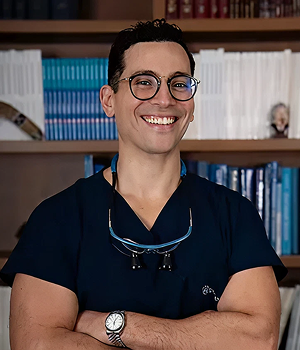
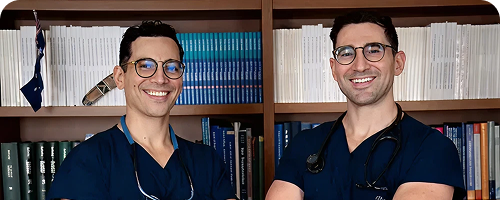
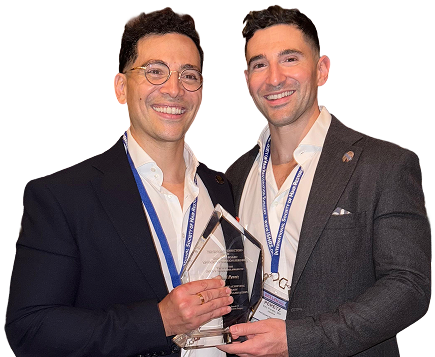
Every procedure at Trichogenics is performed by a doctor, never handed off to a technician. Dr. Asi I. Peretz and Dr. Eric Peretz are both ABHRS Diplomates and Fellows of the World FUE Institute, placing them in a small group of hair restoration surgeons worldwide. They lead every stage of planning, graft selection, and placement themselves, and patients get structured follow-up throughout recovery.
For DHI procedures, Trichogenics uses Choi pen implantation, which gives precise control over the angle and direction of every graft placed.
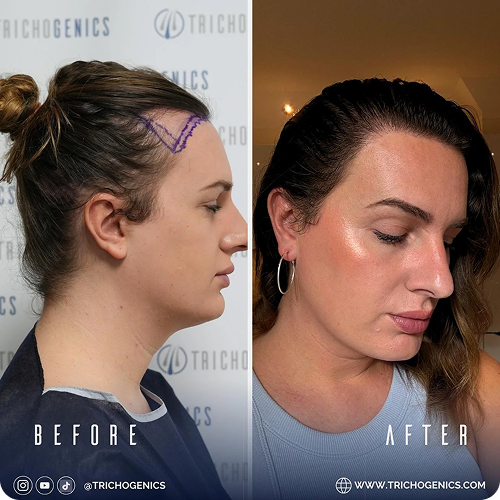
Want to see real results? Visit our Hair Transplant Results Gallery for before-and-after photos from actual patients.
The Trichogenics Difference: Hair Transplant Experts
Check out our clinic reviews and schedule a consultation for a hair loss evaluation and to check your eligibility for a hair transplant. We are here to answer your questions. We will create a treatment plan just for your hair restoration goals.