
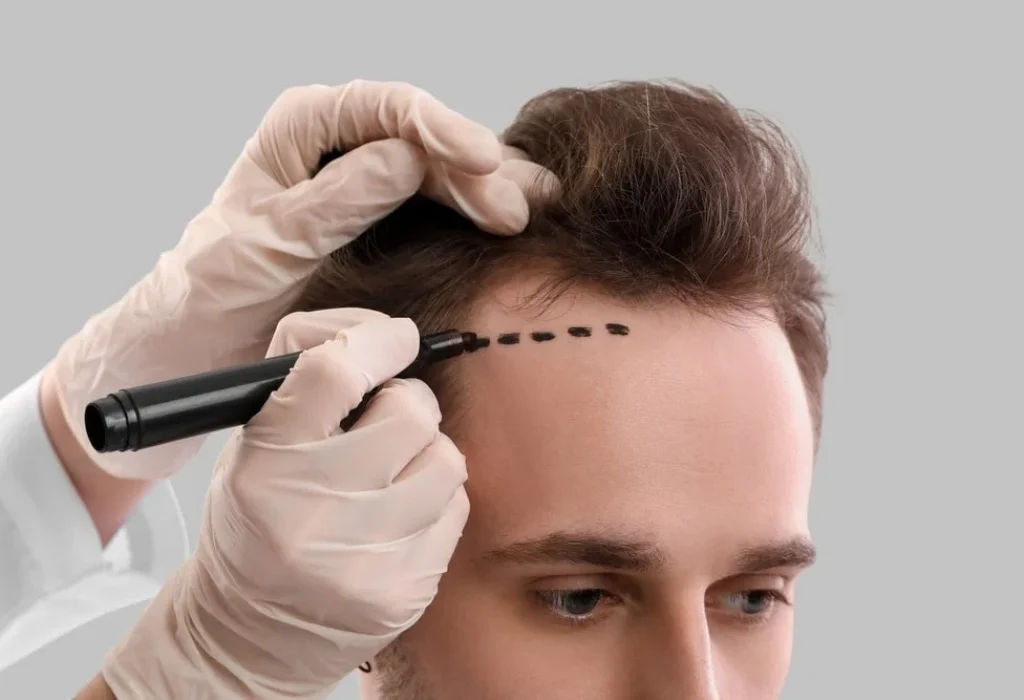
You will learn how each method works, what recovery looks like, how pricing is structured in the US and abroad, and how doctor-led care shapes results.
Key Takeaways
- A hair transplant procedure is a defined surgical or non-surgical intervention to restore hair in thinning or bald areas
- The two main surgical techniques are FUE and DHI with Choi pen implantation, both offered at Trichogenics
- Non-surgical options include stem cell therapy, exosomes, mesotherapy, and red light therapy
- US pricing reflects tighter regulation and physician-led care, while Israel and Greece typically range from $5,000 to $18,000 USD
- Recovery unfolds over 12 to 18 months, with final density visible by the end of the first year
- Doctor-led procedures performed by ABHRS-certified surgeons offer the strongest safeguards for a lasting result at a high level of clinical quality
What Is a Hair Transplant Procedure?
A hair transplant procedure is a medical operation that relocates healthy follicles from a donor area, usually the back or sides of the scalp, to areas affected by thinning or loss. The term describes a defined sequence of clinical steps performed under sterile conditions, with a specific goal and measurable outcome.
In hair restoration, the procedure flow runs from consultation and planning through graft extraction, implantation, and post-operative care, the same structured logic behind how do you spell procedure questions from readers new to the term.
In medicine, what a procedure means in science comes down to an ordered set of actions producing a reliable, repeatable result, distinct from a general treatment because it has clear start and end points. Hair restoration procedures include follicular unit extraction, direct hair implantation, beard and eyebrow transplants, and adjunct therapies such as exosome or mesotherapy sessions.
In process vs. progress, progress is the result you see over time, while the process is the path from consultation to final results. Hair restoration relies on several types of processes, including assessment, surgery, and follow-up, and procedure management keeps each one organized and consistent.
An operation vs. procedure distinction matters clinically too. An operation typically implies a more invasive event, often involving general anesthesia or significant tissue disruption, while a procedure can be less invasive under local anesthesia, as with modern FUE and DHI transplants.
Types of Surgical Hair Transplant Procedures
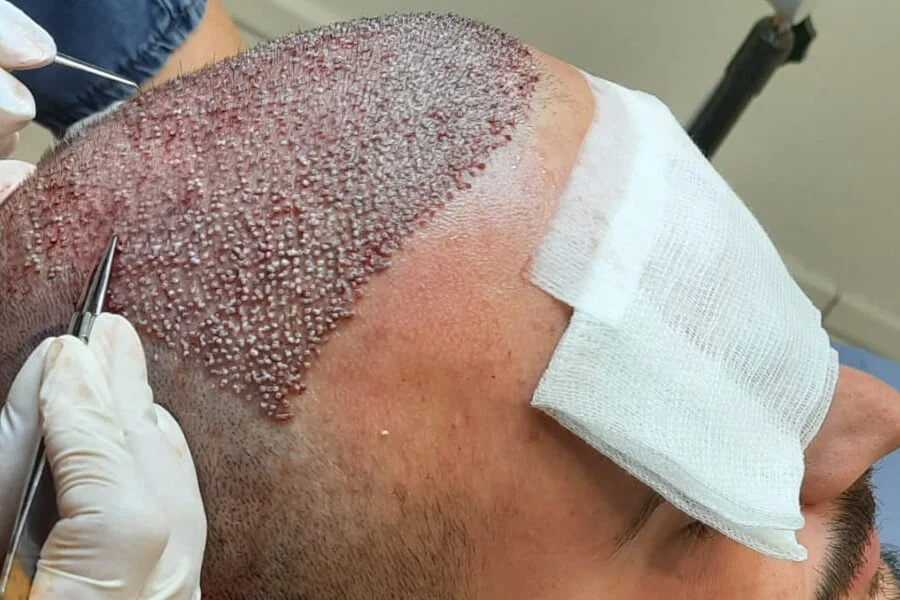
Surgical hair restoration today is dominated by two techniques: Follicular Unit Extraction (FUE) and Direct Hair Implantation (DHI). Both move individual grafts one at a time and leave no linear scar, which is why they are considered the standard of care.
Trichogenics offers only these two techniques and does not perform Follicular Unit Transplantation (FUT), the older strip method.
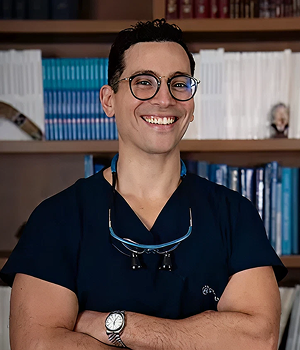
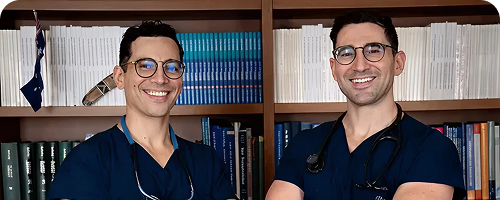
The choice between FUE and DHI depends on factors like the size of the recipient area, hair type, donor supply, and whether the patient prefers to shave the head. Dr. Asi I. Peretz and Dr. Eric Peretz assess these variables during consultation and design a plan tailored to each case.
This case-by-case planning helps ensure consistency in graft survival and final density.
FUE Hair Transplant Explained
Follicular Unit Extraction removes individual follicular units directly from the donor area using a small punch tool. Each graft is then examined, sorted by follicle count, and placed into sites the surgeon has prepared in the recipient area. The technique avoids a linear scar and allows for shorter donor hair after healing.
FUE may suit patients who prefer shorter hairstyles or want to avoid a linear scar. When scalp donor hair is limited, surgeons may assess whether beard hair for a hair transplant or chest hair for a hair transplant is suitable. Patients who want to keep their existing hairstyle may also consider a no-shave hair transplant, depending on their donor area and treatment plan.
DHI with Choi Pen Implantation
Direct Hair Implantation uses a specialized Choi implanter pen that loads a graft and places it into the scalp in one motion, without a separate incision step. This gives the surgeon real-time control over the angle, depth, and direction of each hair. The result is precise placement and reduced graft handling.
The Choi pen technique helps surgeons place grafts precisely when designing a hairline, restoring eyebrows, or adding density to a defined area. Trichogenics uses Choi pen implantation as part of its DHI protocol. For patients who want to keep their existing hairstyle during treatment, a hair transplant with long hair may also be an option.
Why Trichogenics Doesn’t Perform FUT
FUT, also known as the strip method, removes a strip of scalp from the donor area, which is then dissected into individual grafts. The technique leaves a linear scar and typically requires a longer recovery. It is still performed in some clinics but is no longer considered the gold standard for most patients.
Trichogenics focuses on FUE and DHI for their precise graft placement and less visible scarring. The operation vs procedure distinction matters here: FUT removes a strip of scalp that requires wound closure, while FUE extracts individual follicular units. Graft size also explains why older hair plugs could look unnatural; the comparison between hair plugs and modern hair transplants shows how placement has changed.
Specialty Hair Restoration Procedures
Beyond scalp restoration, several specialty procedures use the same underlying techniques to address other areas of concern. These procedures include beard, eyebrow, and gender-affirming transplants, each with its own planning considerations. Case selection is guided by the same clinical principles that shape scalp work.
Beard Transplant
Using FUE, a beard transplant moves follicles, usually from the scalp, into patchy or sparse areas of facial hair. Each graft must follow the angle and direction of the surrounding beard to blend in naturally.
Eyebrow Transplant
When comparing hair restoration procedures, examples that demand precise graft placement include eyebrow transplants. An eyebrow transplant uses single-hair grafts to rebuild thinning or lost brows. Each hair must follow the natural growth angle of the surrounding brow.
Transgender Hair Transplant
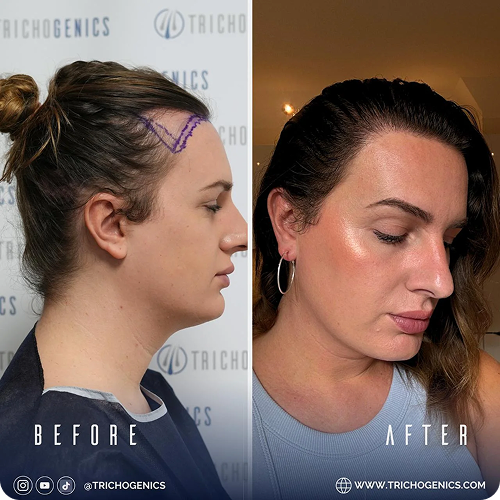
A transgender hair transplant may reshape the hairline for feminization or restore facial hair for masculinization. The surgeon plans graft placement around each person’s goals, donor hair, and hormone therapy status.
No-Shave and Long Hair Techniques
Some patients prefer to keep their existing hairstyle during surgery. A no-shave hair transplant can limit how much hair needs to be trimmed. For patients who want to preserve more of their existing length, a hair transplant with long hair may be another option.
Non-Surgical Hair Restoration Procedures
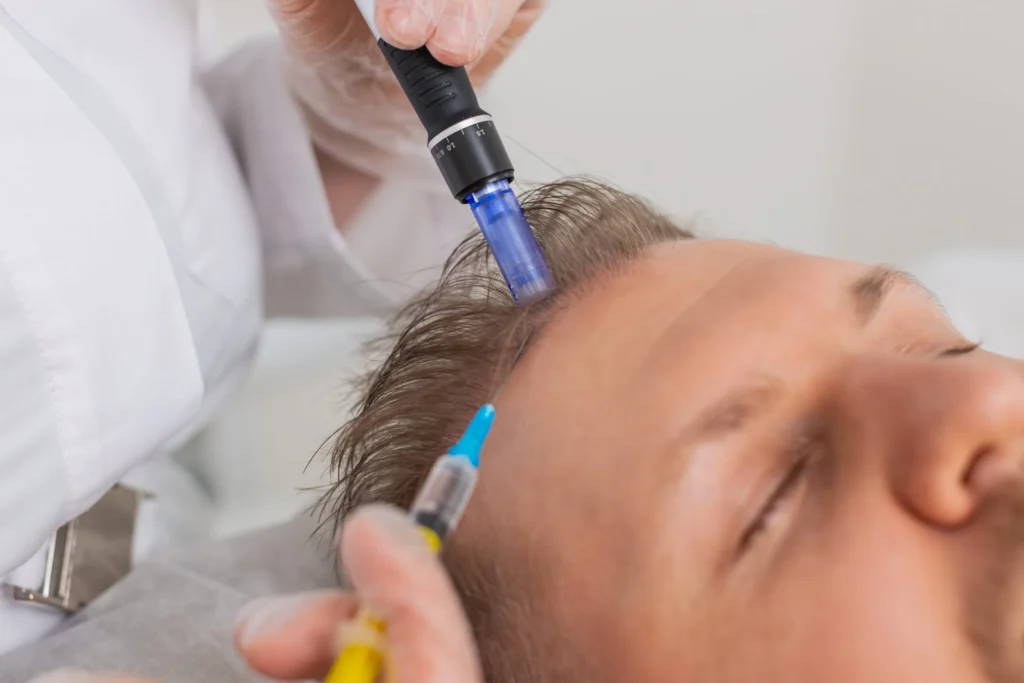
Not every case calls for surgery, and several non-surgical procedures support hair health or serve as alternatives to transplantation. These options work at the follicle and scalp level to slow loss, thicken existing hair, or stimulate regrowth. They can be used alone or combined with surgical procedures for a fuller plan.
Stem Cell Therapy
Researchers are studying stem cell hair restoration as a possible approach to thinning hair. Evidence about its long-term results remains limited, so patients considering it should discuss their options with a clinician.
Exosome Therapy
Exosomes carry signals between cells, which is why researchers are studying exosome therapy for hair restoration. Whether it improves results when paired with other treatments remains uncertain.
Mesotherapy and Dutasteride Mesotherapy
Mesotherapy for hair uses small scalp injections of ingredients such as vitamins or growth factors. Dutasteride mesotherapy uses a similar approach to deliver medication to thinning areas. Results vary, so a clinician should assess whether either option fits the patient’s type of hair loss.
Red Light Therapy for Hair Loss
Low-level laser treatment, including red light therapy for hair loss, uses specific wavelengths of light to support activity in existing follicles. Sessions are noninvasive and may form part of a broader treatment plan.
Hair Transplant Alternatives
Patients who are not surgical candidates or prefer to explore other options can consider hair transplant alternatives, including medication, topical treatments, and light-based devices.
Hair Transplant Procedure Cost
Cost varies widely depending on the number of grafts, the technique used, the surgeon’s training, and the geographic location of the clinic. In the United States, hair transplant procedures are typically priced per graft or as a package, and pricing reflects the higher regulatory and clinical standards of American practice. Cost is one factor among several, and it should not be viewed in isolation.
Patients also weigh the surgeon’s credentials, the clinic’s protocol, and the level of physician involvement in each step. A lower price often reflects fewer resources dedicated to planning, follow-up, and graft handling. Reading the fine print on what is included matters as much as the sticker figure.
US Costs vs. Israel and Greece
Hair transplants in Israel and Greece typically range from €4,000 to €15,000 Euros, which converts to roughly $5,000 to $18,000 USD based on exchange rates as of 2026. Since currency values shift over time, patients comparing international pricing should check current conversion rates rather than relying on a fixed figure.
Prices in these countries are lower in part because of different regulatory environments and lower operational costs. Patients considering travel should factor in flights, accommodation, follow-up limitations, and the level of physician oversight during the procedure.
What Determines Your Procedure Price
Several variables shape the final price of a hair restoration procedure. Understanding them helps you compare quotes accurately and identify what you are actually paying for. Procedure pricing usually includes surgeon time, technician support, consumables, and follow-up visits.
Key factors that influence cost include:
- Number of grafts required for the target area
- Technique used, such as FUE or DHI with Choi pen
- Surgeon’s training, board certification, and case volume
- Clinic location and local operating costs
- Post-operative care and follow-up schedule
- Use of adjunct therapies like exosomes or mesotherapy
What to Expect After Your Procedure
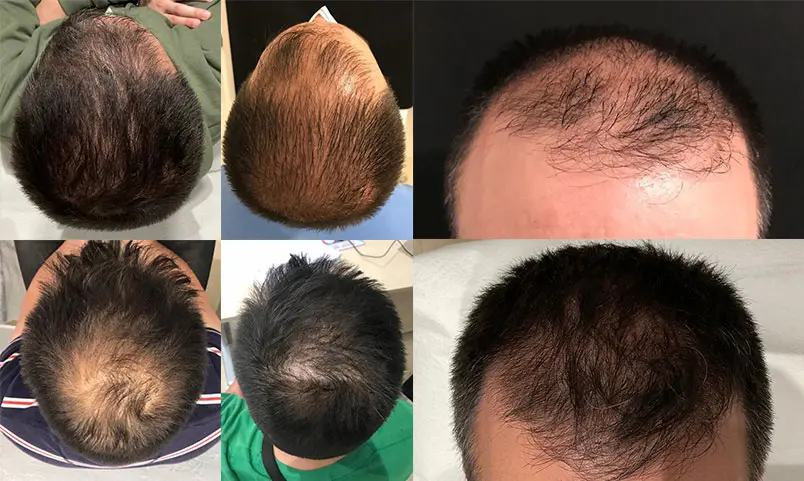 Recovery unfolds in defined stages, and knowing what to expect helps set realistic expectations. According to Dr. Peretz, Immediate healing takes about two weeks, but the full result develops over roughly 12 to 18 months as transplanted follicles cycle and mature. Follow-up appointments are part of the plan and support graft survival and lasting growth.
Recovery Phases Month by Month
After surgery, patients move through several hair transplant phases: early healing and scabbing, temporary shedding, then gradual regrowth that often begins around month three or four.
Final Density and Results
Final hair transplant density depends on the number of grafts, hair characteristics, and graft survival. Coverage develops gradually: many patients see more growth after six months, while fuller results often take a year or longer.
Choosing a Doctor-Led Procedure
The single largest predictor of a good outcome is who performs the procedure and how involved they are at every step. In the United States, hair transplant care is more controlled than in many overseas markets. Here, doctors guide planning, graft selection, and placement to protect long-term hair growth.
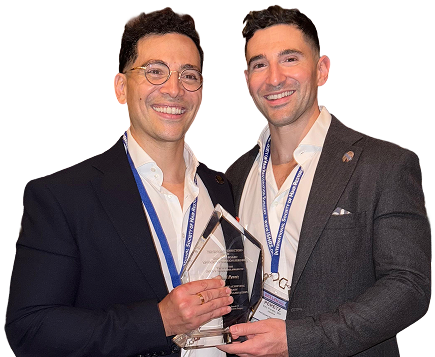
Trichogenics offers care from trained physicians in the United States. Care is led by Dr. Asi I. Peretz and Dr. Eric Peretz, both ABHRS Diplomates and Fellows of the World FUE Institute, a small group of hair restoration surgeons worldwide. This level of credentialing reflects a commitment to continuous improvement in technique and to the standards that support consistent, repeatable results.
Doctor-led care also matters for risk management. Complications are rare in modern hair restoration, but when they occur, physician oversight makes a difference in how they are addressed. A clinic where the surgeon plans and executes the procedure, rather than leaving most of the work to other team members, carries different accountability at every step.
The clinic’s standard operating procedure covers everything from graft handling times to post-operative check-ins. Patients benefit when these steps are documented, followed, and reviewed after each case.
Hair Transplant Procedure FAQs
Is a hair transplant a full surgical operation?
A modern FUE or DHI hair transplant is a minimally invasive procedure performed under local anesthesia. It is technically a surgical procedure but does not involve general anesthesia or hospitalization. Recovery is faster and less involved than a traditional operation.
How is a clinical protocol different from a procedure?
The distinction between protocol vs. procedure comes down to instructions and actions. A protocol sets the rules for sterilization, graft handling, and safety. A procedure is the sequence of clinical steps performed during surgery. Together, they guide consistent care.
What determines whether I am a candidate?
Candidacy depends on the pattern and stability of hair loss, donor supply, general health, and realistic expectations. A consultation with a board-certified physician is the only reliable way to assess these variables in real-world detail.
How many grafts will I need?
Graft count depends on the size of the area, desired density, and available donor supply. Estimates are made during consultation after assessing the scalp both up close and at a broader planning level.
Can I combine surgical and non-surgical procedures?
Yes. Many patients pair a transplant with adjunct therapies like exosomes or mesotherapy to support graft survival and existing hair. Your surgeon will recommend combinations based on your case.