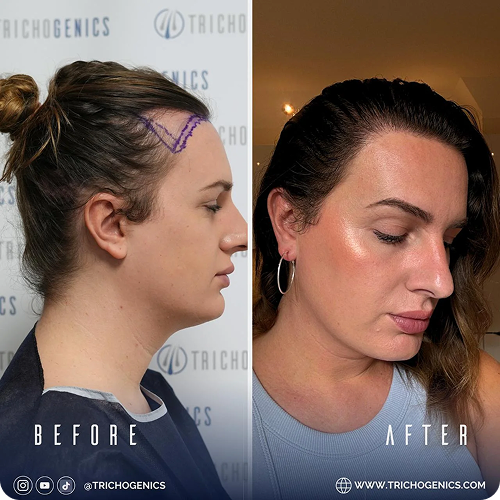

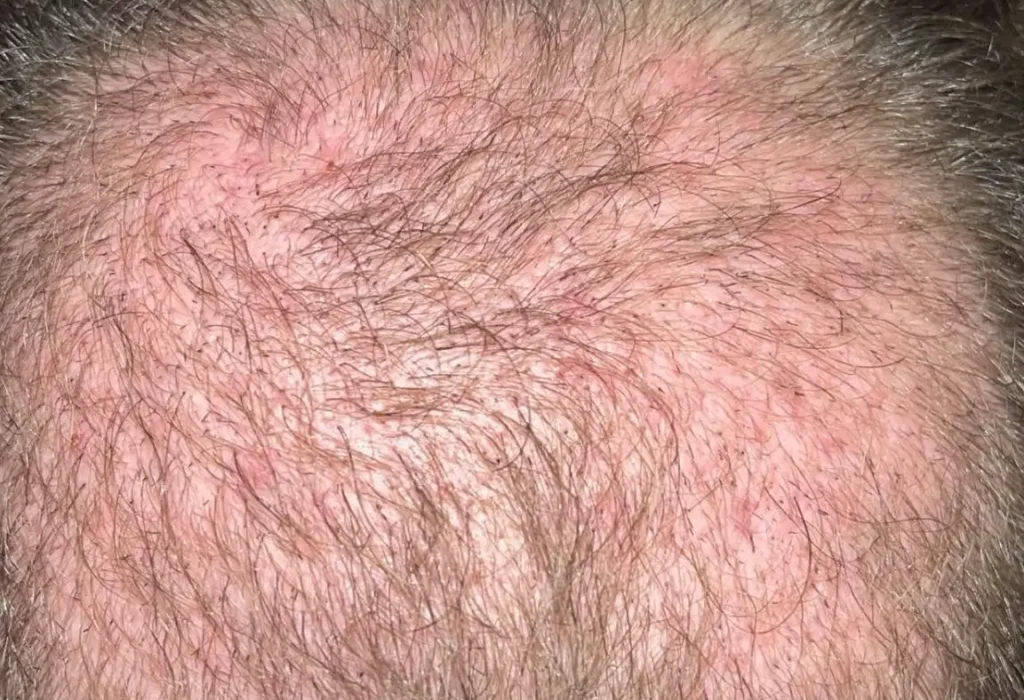
You can expect 2-month hair transplant results to look thin, uneven, and still early in development. Most follicles remain in a resting phase, so density is minimal, and new hairs may appear fine or scattered. Shock loss is common at this point, making progress harder to notice on the surface.
This stage is normal and signals that internal recovery is underway. More visible growth typically appears from month three onward as follicles transition into active development.
Key Takeaways
- At two months post-transplant, visible progress remains limited, but internal hair growth activity is developing beneath the scalp.
- Patchiness, shedding, and uneven density are typical early signs of recovery rather than treatment failure.
- Side effects like pimples or shock loss are common and usually resolve with simple care and monitoring.
- Greater density and noticeable coverage increase in the following months post, especially between months three and twelve.
Month-by-Month Hair Transplant Results
Hair transplant recovery follows a predictable timeline, and month two sits near the early stages of visible change. Some patients feel discouraged when they do not yet see apparent density, but this is part of the normal progression. Results develop gradually, not instantly, and understanding each step helps set realistic expectations during the hair transplant journey.
How Month Two Compares to Later Growth Stages
Month two is still early compared to the more visible stages ahead. Most people start seeing clear improvements over time. Based on typical progress, changes become easier to notice in later months.
You can expect this general timeline:
- Month 1–2 → shedding, thin appearance, early growth control
- Month 3–6 → visible growth, thicker hairs start forming
- 12 months → density and final refinement in most cases
This structure helps individuals track their progress with patience and confidence.
@trichogenics Hair transplant before and after 🤩 #hairloss #trichogenics #hairtransplant #hairtransplantturkey #finasteride #minoxidil #malepatternbaldness #balding #dutasteride #hairlossremedy #minoxidil
♬ original sound - Trichogenics
Hair Transplant After 2 Months — Normal Appearance
The appearance of hair transplant after 2 months varies by patient, but most results still look thin. Some areas appear uneven, especially where grafts transition through shock loss. This phase highlights early stages of recovery rather than final density.
2 Months After a Hair Transplant: Visual Results
Newly transplanted hair is short, fine, and still developing. The follicles remain active under the skin even if shedding occurs above it. As more hairs start forming, the thickness gradually increases.
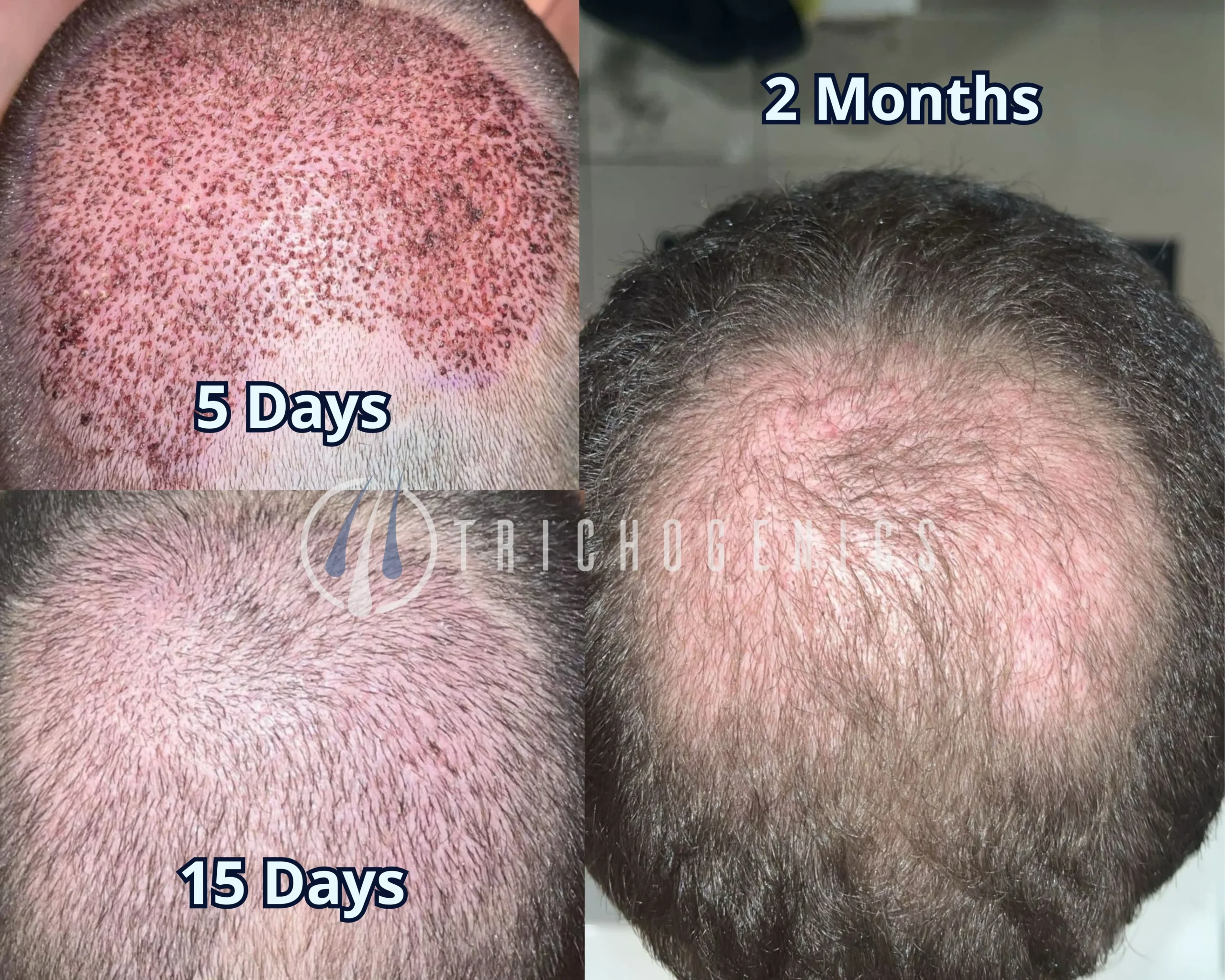
2 Months After FUE Transplant — Early Growth Stage
In 2 months after FUE transplant cases, scattered sprouting is common. Some patients notice tiny new hairs along the hairline or in central areas. Others see minimal visual change but are progressing internally.
Why Results Look Thin or Uneven
Thinness reflects the hair transplant after two months resting phase. This stage occurs when the follicles rest before rebuilding growth. The process supports long-term success and should not be rushed.
Why Is My Hair Transplant Patchy After 2 Months?
Patchiness is regular and temporary. The scalp heals at different speeds, and density returns gradually. This uneven appearance tends to improve as hair growth cycles become more active.
Month-Two Side Effects
Side effects are typically mild, short-lasting, and part of a healthy reaction. Most patients experience natural changes without complications. Understanding them makes the journey less stressful.
Shock Loss and Follicle Dormancy
Shock loss occurs when the scalp sheds weak hairs to restart growth. Beneath the skin, hair follicles enter a recovery pattern. They gradually shift into active regrowth over the next few months.
2 Months After Hair Transplant: Pimples Causes & Treatment
Small pimples may appear as new hairs try to break through the skin. This is common and usually harmless. Warm compresses and gentle washing often reduce irritation.
Mild pimples are regular when:
- They are few in number
- They improve within days
- They do not cause severe pain
- They appear where grafts are emerging
Most cases resolve without medical treatment.
Normal vs Concerning Signs
It is helpful to know which changes are expected and which require attention. Awareness reduces anxiety and helps identify problems early.
What’s Expected at Month Two
Most patients see:
- Thin or uneven growth
- Minor shedding or shock loss
- Early sprouts of fine hairs
- Visible progress remains limited
These outcomes match typical hair transplant recovery phases.
Red Flags You Should Not Ignore
A few signs are not typical and may require assistance from a qualified provider. Professional evaluation protects long-term results.
Seek medical advice if you experience:
- Persistent pain or heat in the scalp
- Thick pus or bleeding from grafts
- Sudden empty patches with total hair loss
- Strong odor or expanding swelling
At Trichogenics, we offer support during every stage.
Care Instructions at Month Two
Taking care of the scalp supports healthier long-term results. The healing process depends on gentle maintenance and patient awareness.
Washing, Products, and Scalp Handling
Continue washing with soft recommended shampoo. Avoid scratching, friction, or harsh styling. Moisturizing sprays may help relieve dryness.
Activity Restrictions & Recovery Tips
Limit sweat-heavy training, helmets, or direct sunlight exposure. A gradual return to exercise is acceptable, but avoid excessive stress on the transplanted areas. Better care means stronger growth ahead.
Recommended routine at month two:
- Gentle washing every few days
- Minimal product use
- No rough towels or nails
- Light exercise only
Simple habits produce reliable outcomes.
What Happens After Month Two
Starting from month three, progress speeds up steadily. Hair follicles move into active growth and become more visible over time. Patience pays off with consistency.
Growth Expectations for Months 3–12
Months three to six show the most excitement, as thicker strands replace finer ones. Most patients see strong coverage over 12 months. Change is gradual but continuous.
@trichogenics How long does it take for the hair to grow after a hair transplant? Dr Asi Peretz explains. #hairtransplant #balding #hairloss #hairtransplantturkey #hairtransplantation #hairtransplantsurgery #hairfall #hairtransformation #trichogenics #hairlosssolutions #hairlossremedy #fyp
♬ original sound - Trichogenics
When Noticeable Density Returns
Denser coverage emerges once the resting follicles activate. Volume and definition increase as the hair transplant timeline unfolds. Each week brings subtle but optimistic change.
Why Trichogenics Over Turkey
Many people travel to Turkey for low-cost procedures, but safety and regulation levels are inconsistent.
Hair transplant surgeons in Turkey are not always licensed, and some clinics operate without strict medical oversight. This makes Turkey an unsafe option with higher risks.
Trichogenics presents a safer path in Israel and Greece, where we operate with full supervision, medical protocols, and expert care.
Under specialists like Dr. Asi Peretz, patients receive real guidance, real follow-up, and real safety — not discounted results.
What This Stage Means for Your Final Result
At two months, results are early, but meaningful progress is underway. While density may seem limited, new change follows as healing and growth advance.
With Trichogenics guiding recovery in Greece and Israel, patients move forward clearly, safely, and confidently toward a natural final result.
Why Choose Trichogenics?
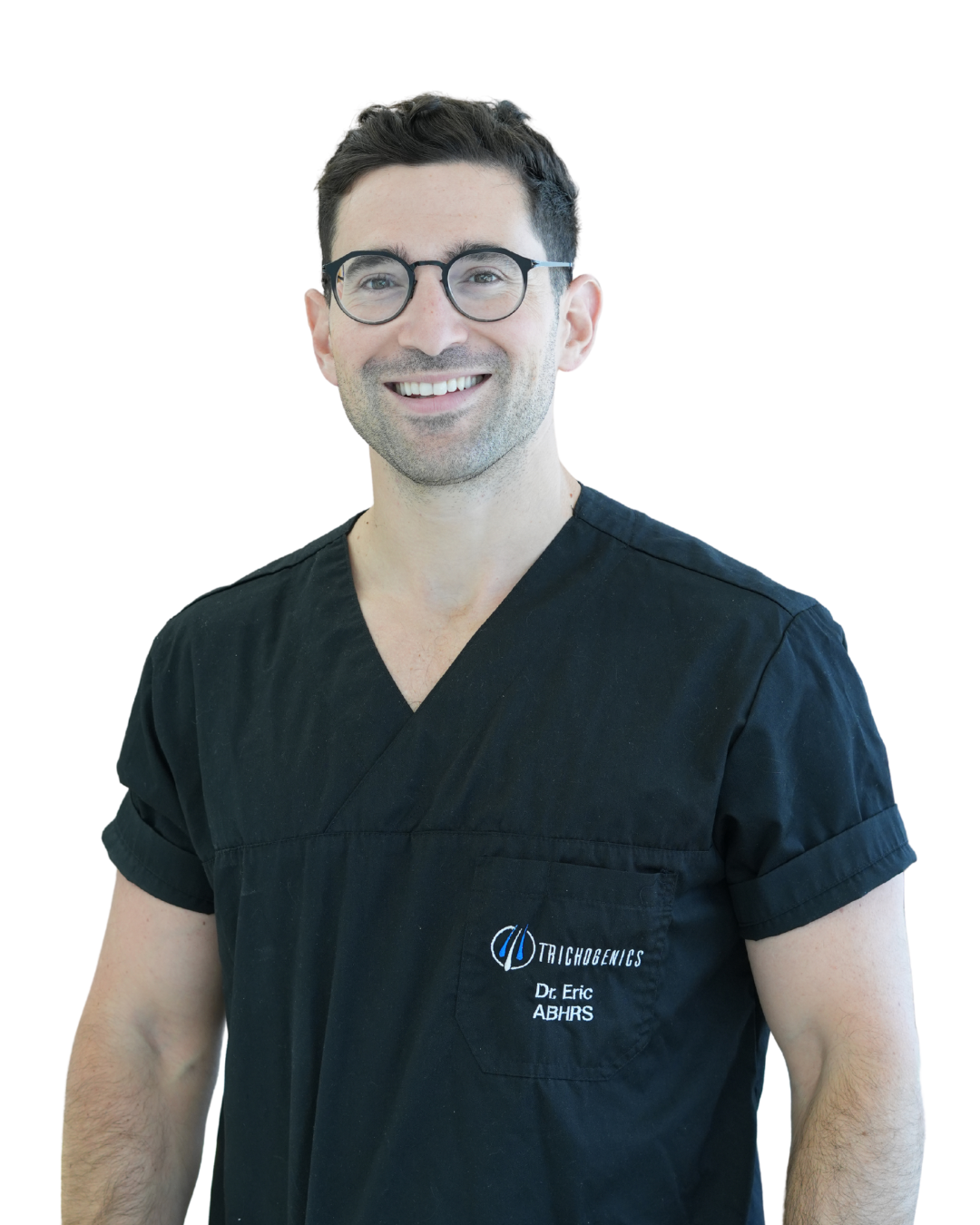
All procedures are performed only by doctors
The uniqueness of Trichogenics lies in its strict medical process—only certified doctors perform every transplant. No technicians or unqualified assistants are involved. Choosing a clinic with proven experience in hair transplants can make all the difference.
Meet Dr. Asi and Dr. Eric Peretz
The two doctors leading Trichogenics—Dr. Asi Peretz and Dr. Eric Peretz are recognized leaders in the field. Their extensive experience, attention to detail, and focus on natural results make Trichogenics the best choice.
Contact Trichogenics today to schedule a personal consultation and get a clear, doctor-led plan for your hair restoration.