
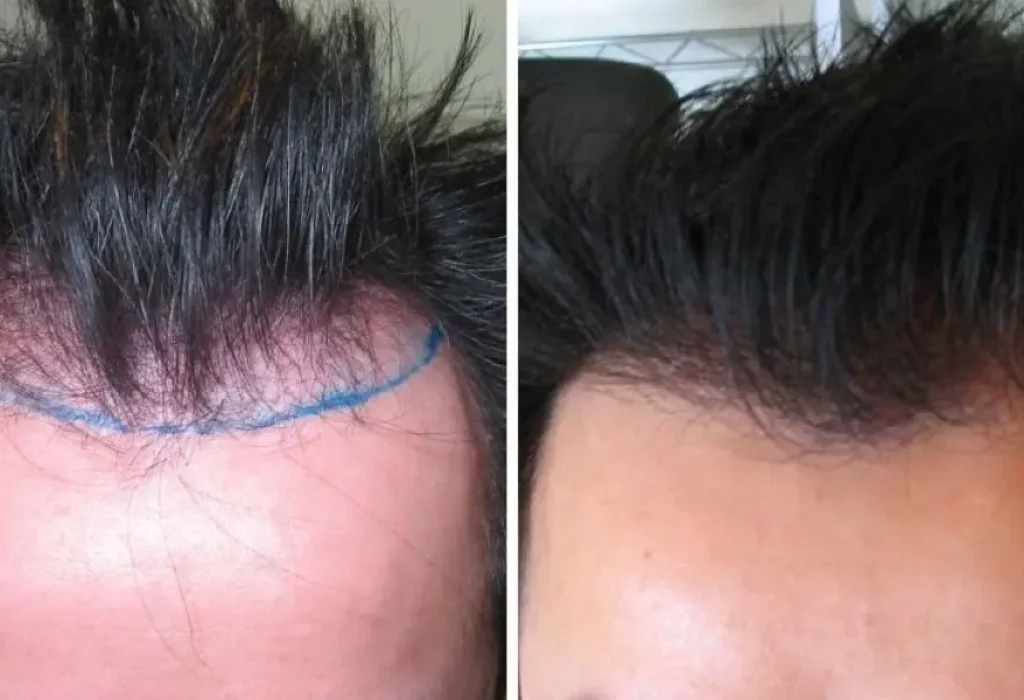
A hair transplant using around 1,000 grafts focuses on improving limited areas of thinning rather than providing full coverage. A 1000-graft hair transplant is often used for a receding hairline or a small crown area. The results depend on hair density and donor hair quality.
Results depend on hair density, donor quality, and long-term hair loss patterns. Understanding how this graft count fits into the broader hair transplant recovery timeline helps patients set realistic expectations for both healing and growth.
Trichogenics was founded by Drs. Asi and Eric Peretz. All procedures are performed in Greece and Israel under regulated medical systems with structured follow-up. This overview explains what patients can expect, how planning decisions are made, and where limitations exist.
Key Takeaways
- A 1000-graft hair transplant is typically suited for small areas such as a receding hairline or limited crown thinning, and results depend on hair density, donor quality, and the extent of hair loss.
- Visible improvement develops gradually, with initial shedding expected and meaningful hair growth appearing over several months, while results are usually assessed around 12 months.
- A graft count of 1,000 may not be sufficient for moderate or advanced thinning, and some patients require higher numbers, such as 2,500 grafts, to achieve balanced coverage.
- Procedure quality and safety depend on physician involvement, proper technique, and structured follow-up, making regulated medical environments a critical consideration when choosing where to undergo treatment.
Is 1000 Grafts Enough?
Hairline coverage
For patients with early frontal recession, 1,000 grafts can improve the facial frame. The goal is to soften a receding hairline rather than recreate dense coverage. Hair follicles are placed to match the natural direction, angle, and spacing of existing hair.
Planning also considers future hair loss to protect the donor supply. In many cases, surgeons refer to broader guidelines on hair transplant density to determine whether a conservative graft count will yield a natural result.
Situations where 1,000 grafts may be appropriate include:
- Early-stage frontal recession
- Minor temple thinning
- Stable hair loss patterns
These cases benefit from conservative design and careful placement.
@trichogenics 32 year old male 3200 grafts Average: 2.35 hairs/graft FUE 24 months after surgery #trichogenics #hairtransplant #hairtransplantturkey #hairloss #hairlosssolutions
♬ original sound - Trichogenics
Crown coverage limits
A 1000-graft hair transplant crown plan offers limited visual change due to the crown’s size and swirl pattern. The crown requires more grafts to appear full compared to the hairline.
With only 1,000 grafts, treatment often blends thinning rather than filling. Patients with wider crown loss may require a higher graft count, as explained in detail in this guide on crown hair transplants.
Coverage is influenced by:
- Surface area of thinning
- Hair shaft thickness
- Existing miniaturized hair
Understanding these limits helps align expectations.
What Does 1000 Grafts Look Like?
Expected density
The visual result of 1,000 grafts depends on how grafts are distributed and how many hairs each contains. Density gains are modest but noticeable in focused areas. Hair growth occurs gradually and does not appear immediately.
Patients with darker or thicker hair often perceive stronger coverage.
Density appearance is affected by:
- Hair diameter
- Curl or wave pattern
- Contrast between hair and scalp
These factors explain why results vary between individuals.
@trichogenics Hair Transplant Dense packing. What is it? And should you get it done? My microphone dies half way but it’s worth a listen even with the bad sound! #trichogenics #hairtransplant #hairtransplantturkey #hairtransplantgreece #hairloss #densepacking #fyp #hairfall #hairtok #hairlosssolutions #hairfallsolution
♬ original sound - Trichogenics
Natural-looking results
Natural-looking results depend on precise placement and angle control. Modern approaches like follicular unit extraction (FUE) allow careful placement of each graft.
Transplanting grafts to follow natural patterns reduces the risk of an artificial look. Designs are created to remain consistent as hair ages.
1000 Grafts Hair Transplant Before and After
Visible changes over time
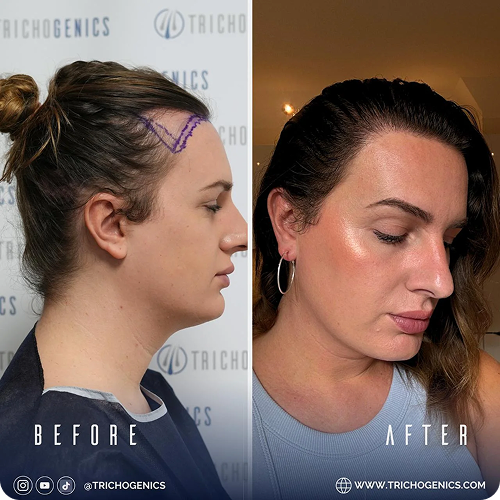
Before-and-after comparisons often show minimal visible change during the first months. Transplanted hairs typically shed before new growth begins. Early regrowth appears thin and gradually thickens.
By 12 months, results are stable enough for evaluation. This progression follows the usual pattern described in the ugly duckling phase hair transplant, where patience is essential.
Typical timelines show:
- Initial shedding phase
- Gradual regrowth after several months
- Progressive thickening over time
Photos help explain why patience is essential.
How Many Hair Grafts Do I Need?
Factors that affect graft count
The answer depends on anatomy, goals, and long-term planning. Hair density, donor capacity, and scalp characteristics all play a role. Surgeons also consider future loss patterns to avoid under- or over-treatment.
This planning approach aligns with guidance on the best age for a hair transplant, which emphasizes timing and sustainability.
Common planning factors include:
- Current thinning pattern
- Family history of hair loss
- Donor area capacity
These guide safe graft estimates.
When 1,000 grafts fall short
Patients with moderate thinning often require more than 1,000 grafts to restore hair balance. In many cases, 2,500 grafts or more may be needed for visible density.
Limited graft counts may only reduce contrast rather than rebuild coverage. This is common in the crown and mid-scalp regions.
Procedure and Duration
Doctor-performed FUE
FUE hair transplants involve removing individual follicular units from the donor area. The fue procedure avoids linear scars and allows selective extraction.
Doctor-led procedures support accuracy during harvesting and placement. Physician training and certification play an essential role in surgical safety.
Recognized clinical methods may include:
- Manual or motorized extraction
- Choi pen implantation
- DHI and FUE placement approaches
These are widely accepted in modern hair restoration.
How long does 1000 grafts take
A session involving 1,000 grafts typically lasts several hours. Most procedures are completed in a single day. Time may vary depending on technique and patient factors. Precision and consistency matter more than speed.
@trichogenics How do hair transplants actually work ? Dr Asi Peretz explains! #trichogenics #hairtransplant #hairtransplantturkey #hairloss #hairlosssolutions #hairfall #fypage
♬ swish_whoosh (large)(794558) - satak
Results Timeline
First two weeks
Redness, scabbing, and mild swelling are common during the first two weeks. Transplanted hairs may shed as part of the normal cycle. These changes do not indicate graft loss.
Proper care during this stage aligns with recommendations found in the hair transplant aftercare guide.
3 to 12 months growth
New hair growth usually begins around three to four months. Hair continues to mature and thicken over time. By 12 months, most patients can assess final results. Some refinement may continue beyond this point.
1000 Grafts Hair Transplant Cost
What affects pricing
The 1000-graft hair transplant cost varies based on location, medical oversight, and technique. The cost of a hair transplant is influenced by physician involvement and follow-up care.
Prices vary depending on regulation and healthcare standards. Cost should be weighed alongside safety and continuity of care.
Some patients consider treatment abroad due to pricing. In destinations like Turkey and other countries, regulation and medical oversight can be inconsistent, which may increase risk.
Many choose regulated environments such as Israel or Greece, where procedures are physician-led, and standards are enforced. Safety and structured care remain critical factors.
Recovery and Aftercare
Healing and shedding
Healing progresses over several weeks as the scalp returns to normal. Temporary shedding is expected and part of the hair growth cycle.
This phase does not signal failure of the hair transplant procedure. Education helps patients stay informed and calm.
Post-op care basics
Aftercare focuses on protecting grafts and supporting scalp health. Structured patient follow-up improves outcomes and detects issues early.
Hair transplant surgeons emphasize compliance with medical guidance. These steps support stable, long-term results.
Typical aftercare measures include:
- Gentle washing as instructed
- Avoiding the sun and friction
- Attending scheduled follow-ups
Proper care supports consistent recovery and hair growth.
Why Choose Trichogenics?
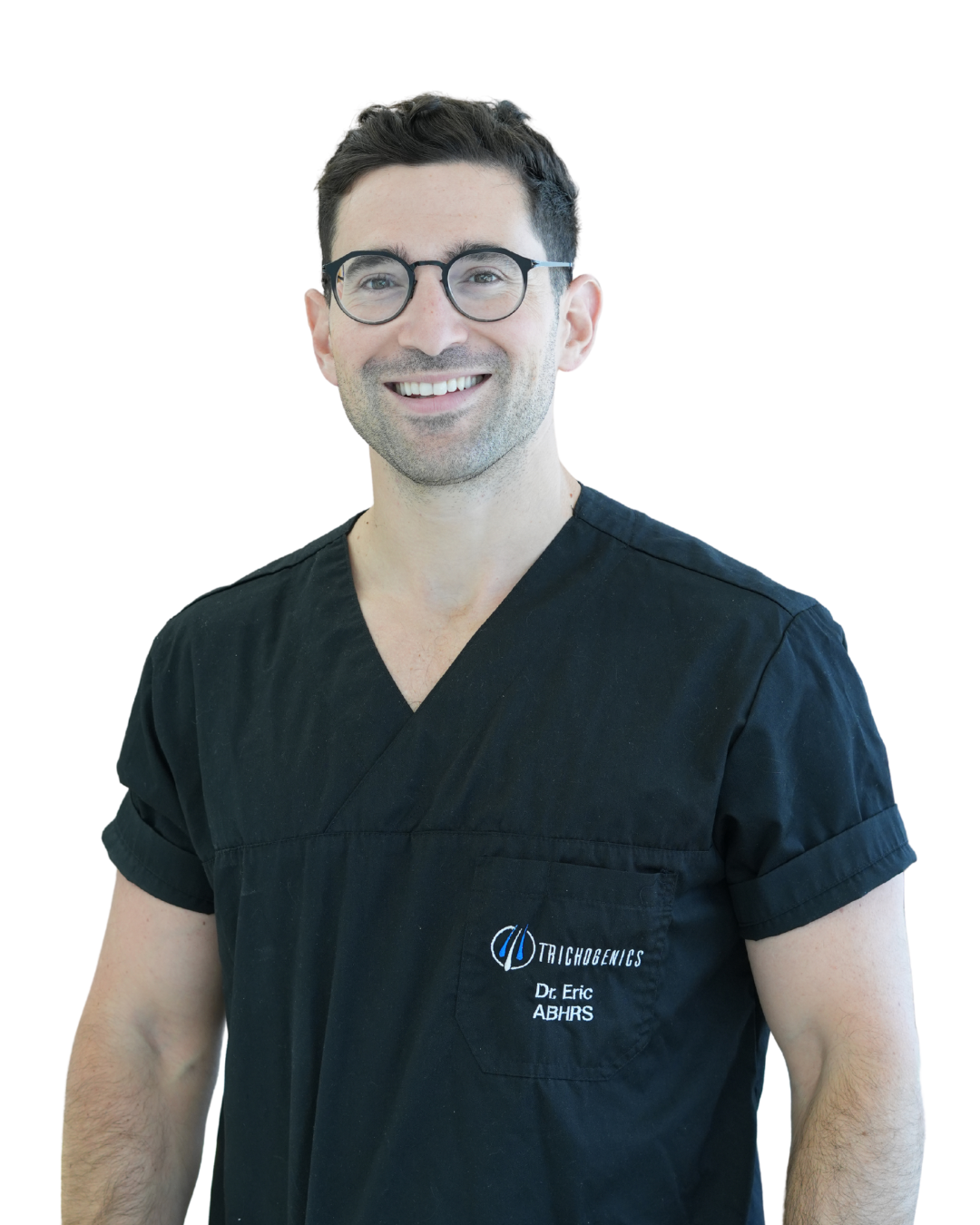
All procedures are performed only by doctors.
The uniqueness of Trichogenics lies in its strict medical process; only certified doctors perform every transplant. No technicians or unqualified assistants are involved. Choosing a clinic with proven experience in hair transplants can make all the difference.
Meet Dr. Asi and Dr. Eric Peretz
The two doctors leading Trichogenics, Drs. Asi and Eric Peretz are recognized leaders in the field. Their extensive experience, attention to detail, and focus on natural results make Trichogenics the best choice.
Celebrity Hair Transplants
Who has undergone the procedure at Trichogenics? The answer is clear: a safe, professional clinic that delivers results that look great even under camera lights.
Contact Trichogenics today to schedule a personal consultation and get a clear, doctor-led plan for your hair restoration.