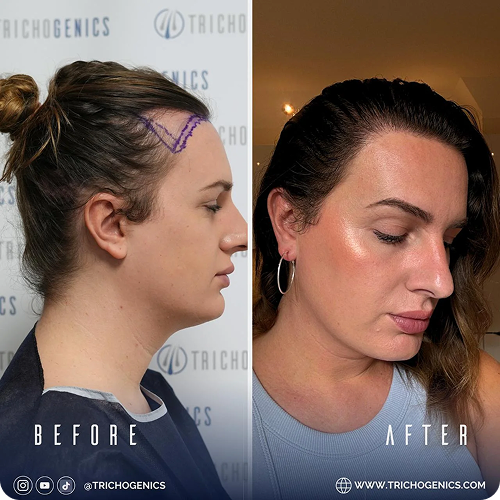

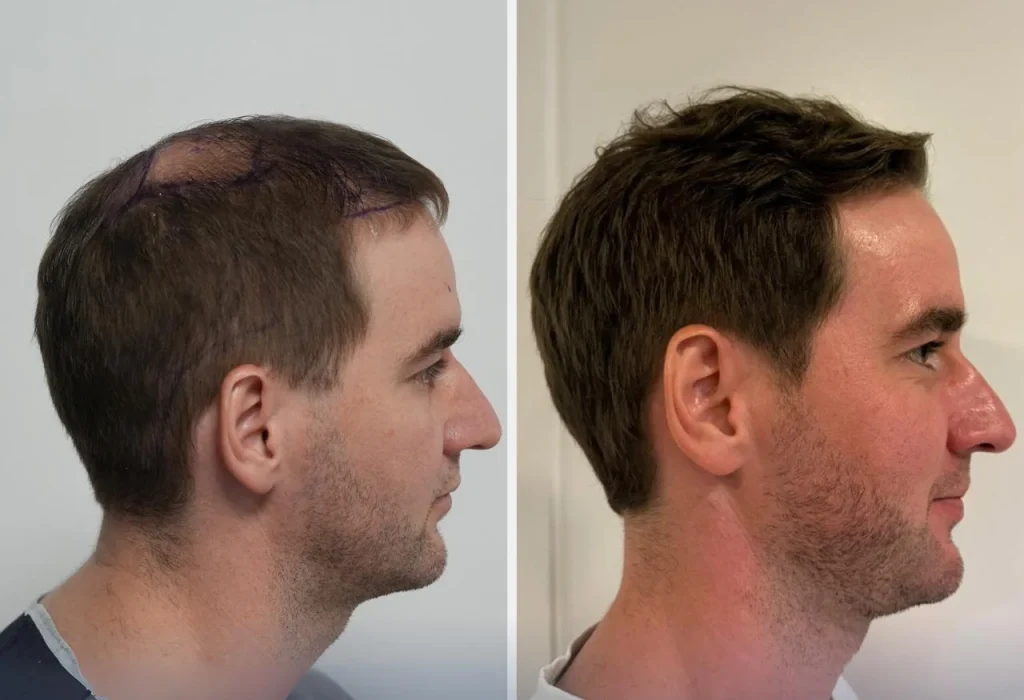
At 5 months after a hair transplant, most patients notice visible hair regrowth. However, the density and fullness are still improving and do not show the final result. New hairs are emerging from transplanted follicles, often appearing thin, uneven, or patchy as regular hair growth cycles continue.
Some areas, especially the crown, may show slower progress compared to the hairline. This stage reflects steady recovery rather than completion, with more noticeable changes typically occurring over the following months.
Understanding what is normal at this point helps set realistic expectations as growth continues.
Key Takeaways
- Hair transplant after 5 months usually shows early regrowth, but hair density and coverage remain incomplete as follicles are still maturing within regular hair growth cycles.
- A thin or uneven look at this stage is everyday. It does not show the final result. Many hair follicles start working at different times during recovery.
- Crown areas often develop more slowly than the hairline, with visible improvement typically occurring several months later in the hair transplant timeline.
- Most meaningful changes in thickness and overall appearance occur between months 6 and 12, making patience and proper follow-up essential to hair transplant recovery.
Hair Transplant Results at 5 Months
How Your Hair Should Look
At hair transplant month 5, most patients see early regrowth across transplanted areas, though coverage is still incomplete. The newly transplanted hair often appears thin, soft, and uneven in length.
This does not reflect the final result, as hair follicles are still adjusting to their new environment. Many people compare this stage to light stubble rather than full hair density.
From a clinical view, hair shafts that appear at this stage are often immature. They tend to thicken over time as hair growth cycles progress. This explains why hair grows, but does not yet provide strong visual coverage.
5 Months After Hair Transplant Pictures
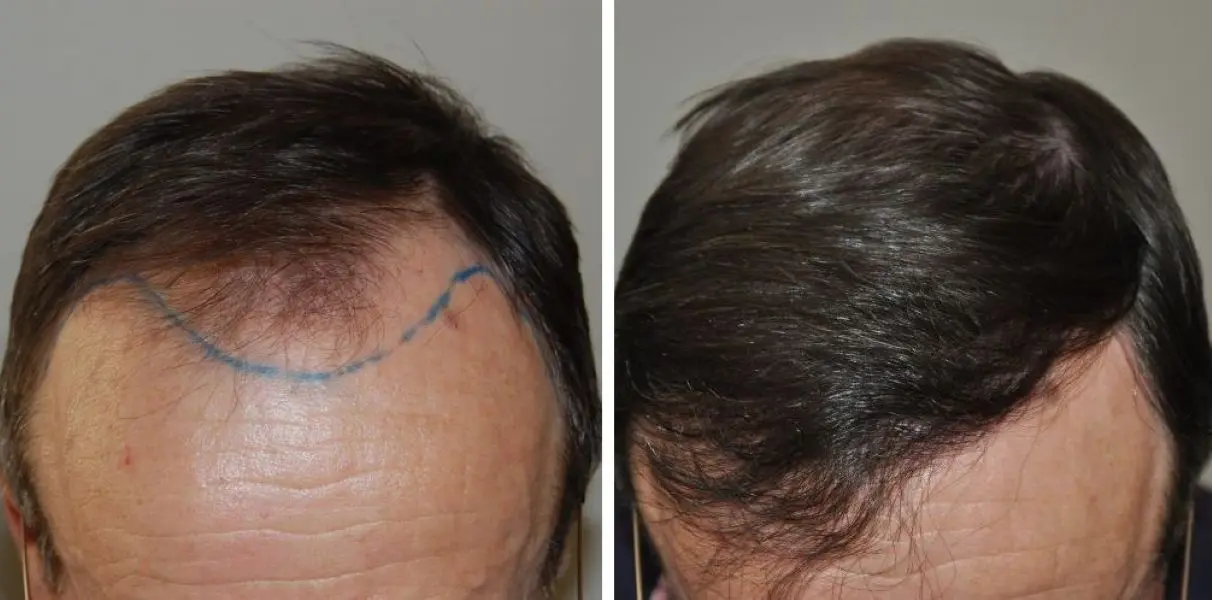
Photos taken 5 months after hair transplant surgery often create confusion when compared online. Images vary widely because patient age, hair-loss pattern, donor-area quality, and technique all affect results.
Pictures usually show uneven density, especially in larger recipient areas. This variation is expected and does not indicate failure of the hair transplant procedure.
Comparing this stage with 4 months after hair transplant often shows subtle but meaningful progress in coverage and hair strength.
How Month 5 Fits the Overall Timeline
Month five sits in the middle of the hair transplant results month-by-month progression.
Early shedding and shock loss typically occur during months one to three. Visible growth usually begins around months three to four. Month five reflects early stabilization, not completion.
Month five represents stabilization. Greater cosmetic changes are expected after this point. Reviewing a structured hair transplant recovery timeline helps explain why results continue evolving well beyond this stage.
@trichogenics Everyone is different when it comes to rate of growth of newly transplanted hair. This patient of ours did exceptionally well in a really short time. We expect to see further improvement in the coming months. #trichogenics #hairtransplantturkey #hairtransplant #hairloss
♬ original sound - Trichogenics
Why Hair Looks Thin at Month 5
5 Months After Hair Transplant No Density
Low density at five months is one of the most common concerns reported by patients. Hair follicles do not grow at the same speed or cycle stage.
Some remain dormant while others begin producing hair shafts. This staggered growth leads to a patchy appearance across transplanted areas.
Hair density also depends on how many follicles survive and how they mature. At this stage, it is normal for coverage to look lighter than expected.
Normal Growth vs Slow Progress
Not all patients experience identical growth rates. Factors that influence progress include:
- Extent of prior hair loss
- Donor area quality
- Individual healing process
- Surgical technique and placement
Slow progress does not mean a poor outcome. In most cases, follicles that appear inactive at month five will begin producing hair in later cycles.
Hair Growth at 5 Months Post Surgery
How Long Does Hair Grow in 5 Months
By five months, hair usually reaches a few centimeters in length. Growth speed varies, but most patients notice gradual lengthening rather than immediate volume increase. Hair grows in cycles, so length and thickness do not improve at the same pace.
It is common for hair to grow unevenly across recipient areas. This reflects normal biological variation rather than surgical issues.
What’s Happening Under the Scalp
Beneath the scalp, hair follicles are completing early growth cycles and entering more stable phases. The healing process continues at a microscopic level even when the surface appears calm.
Blood supply strengthens around transplanted areas, supporting long-term follicle health.
At this stage, the donor area is usually fully healed. Sensitivity or tightness may still occur, but typically fades with time.
Crown Results at 5 Months
Why Crown Growth Is Slower
The crown often shows slower improvement than the hairline. Blood flow patterns and hair direction make crown restoration more complex. As a result, hair transplant surgeons usually explain that crown areas take longer to show density.
This behavior is common in crown hair transplant procedures and does not suggest poor graft survival.
What Improvement Usually Comes Next
After month five, crown hair often begins to thicken gradually. Visual improvement usually becomes clearer between months six and nine. In many cases, crown results continue evolving close to the 12-month mark.
Patience is especially important for crown-focused procedures. Early judgment at month five often leads to unnecessary concern.
What to Do After Month 5
Hair Care and Daily Habits
At this stage, patients can usually return to everyday grooming routines. Gentle washing and standard hair products are acceptable unless advised otherwise. Protecting the scalp from sun exposure remains essential.
Helpful habits include:
- Avoid aggressive scratching
- Maintain consistent scalp hygiene
- Follow medical advice for any ongoing treatments
These steps support long-term hair transplant recovery.
@trichogenics You got a hair transplant… now what? Here are some recommendations for your hair transplant recovery and aftercare. #hairtransplant #hairtransplantturkey #balding #malepatternbaldness #finasteride #minoxidil #hairtransplantresult #hairloss #trichogenics #hairtransplantmexico
♬ original sound - Trichogenics
When to Follow Up With Your Surgeon
Structured follow-up is part of responsible surgical care. A review around this stage allows hair transplant surgeons to assess progress and set expectations. Follow-ups also help identify any issues early, even though complications are uncommon at this point.
Clinics that emphasize physician-led care and consistent monitoring often provide more explicit guidance during recovery.
This is one reason many patients prefer regulated medical environments, such as those in Greece and Israel, where standards and oversight are well defined.
Some countries abroad, including Turkey, operate with limited regulation, which can increase variability in care and follow-up.
Key Clinical Context and Techniques
Modern hair restoration relies on established methods such as FUE, DHI, and Choi pen implantation. These techniques focus on precise follicle placement and controlled depth.
Understanding how FUE hair transplant methods work helps explain why early results look incomplete and improve gradually over time.
These approaches focus on precise follicle placement and controlled depth within recipient areas. Doctor-led procedures ensure medical accountability throughout the hair transplant timeline.
Key elements often discussed in clinical settings include:
- Physician training and certification
- Proper handling of hair follicles
- Planned implantation angles
- Structured patient follow-up
These factors influence long-term outcomes more than short-term appearance.
What to Expect Moving Forward
At five months, results are intentionally incomplete. Hair density, texture, and coverage continue improving well beyond this stage.
Many patients ask whether results will last long-term. Reviewing whether hair transplants are permanent helps clarify expectations as follicles mature.
Why Choose Trichogenics?
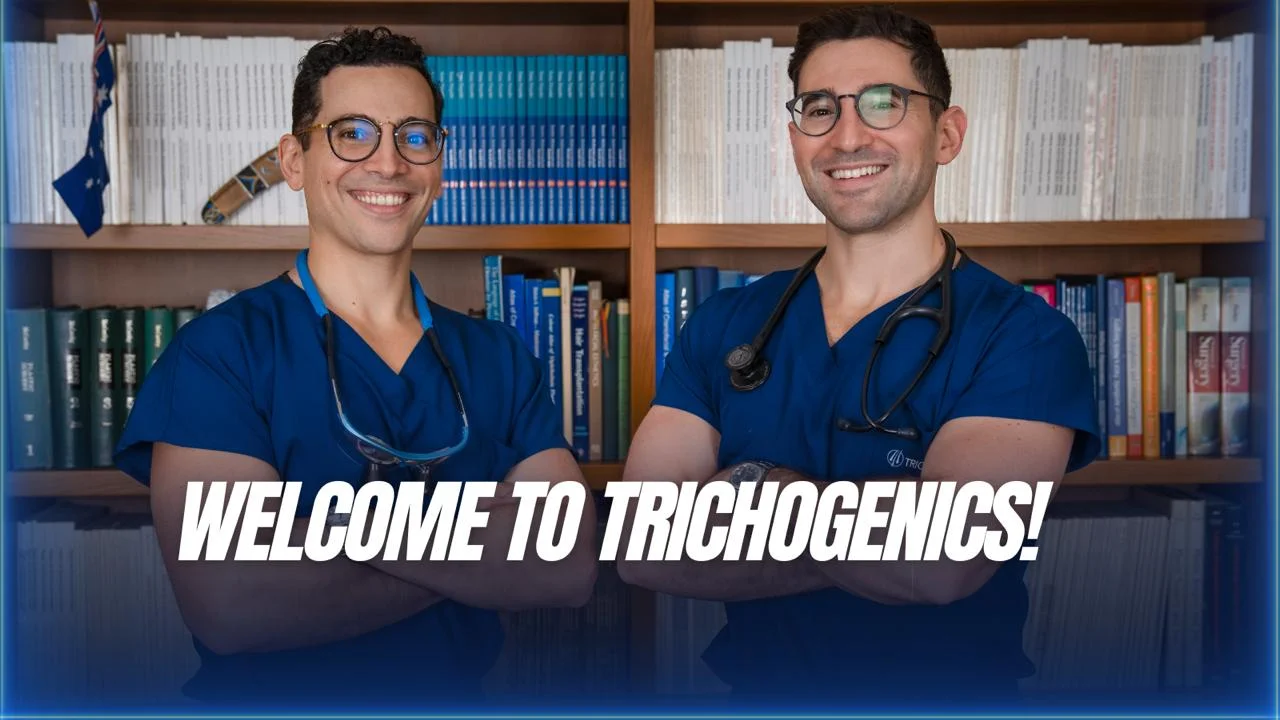
All procedures are performed only by doctors
The uniqueness of Trichogenics lies in its strict medical process; only certified doctors perform every transplant. No technicians or unqualified assistants are involved. Choosing a clinic with proven experience in hair transplants can make all the difference.
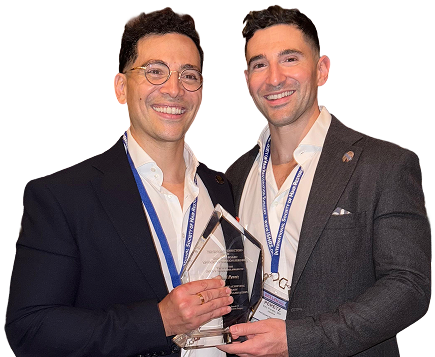
Meet Dr. Asi and Dr. Eric Peretz
The two doctors leading Trichogenics, Dr. Asi Peretz and Dr. Eric Peretz, are recognized leaders in the field. Their extensive experience, attention to detail, and focus on natural results make Trichogenics the best choice.
Celebrity Hair Transplants
Who has undergone the procedure at Trichogenics? The answer is clear: a safe, professional clinic that delivers results that look great even under camera lights.
Contact Trichogenics today to schedule a personal consultation and get a clear, doctor-led plan for your hair restoration.