
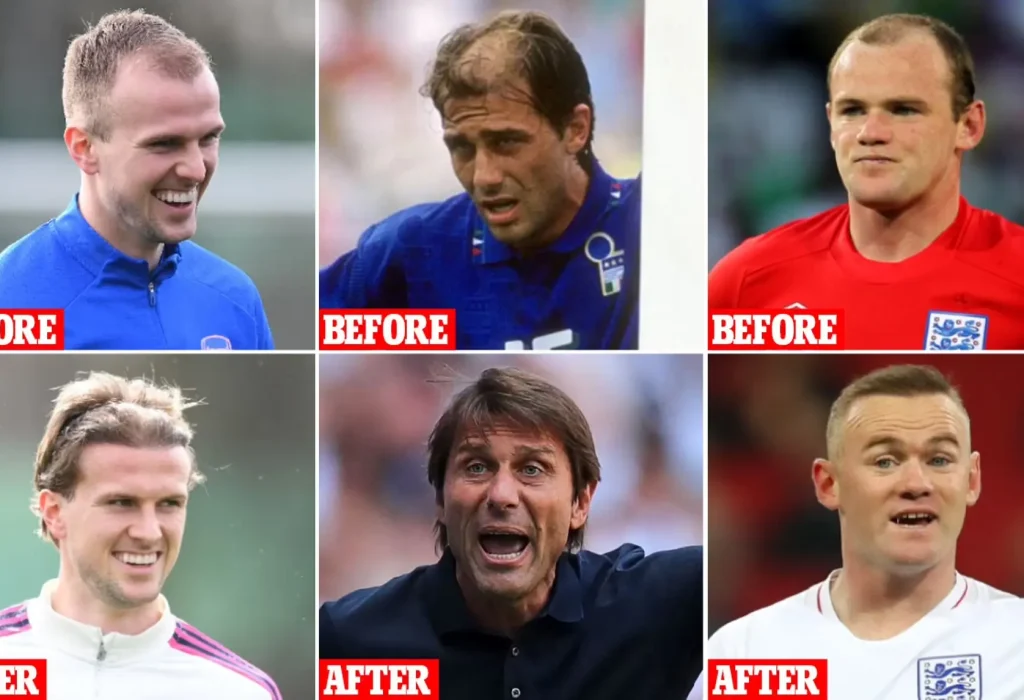
Footballers with hair transplants are professional players who choose surgery to restore their hair while still playing.
This is common because genetics, not fitness, often causes thinning or a receding hairline at a young age, similar to the patterns described in the article on the best age for a hair transplant.
Many footballers with hair transplants use modern methods that achieve a natural look with minimal time away from training.
The choice depends on personal preference, timing within a playing career, and medical guidance. The details below explain who chooses treatment, why it happens, and what results usually look like.
Key Takeaways
- Footballers with hair transplants often choose treatment during their playing careers, and many well-known players have openly shared that they have undergone hair transplants without it affecting their performance.
- Hair loss in professional football is usually caused by genetics, not lifestyle, and balding players may notice changes even while continuing to play at a high level.
- Modern methods like FUE focus on natural results and short recovery times, similar to the FUE hair transplant approach.
- Outcomes vary between patients, and poor planning or weak medical oversight can lead to visible problems, which is why doctor-led care and proper follow-up matter.
What Footballers Have Had Hair Transplants?
Several football players with hair transplants have been widely reported. Wayne Rooney confirmed that he underwent a hair transplant during his Premier League career.
Rob Holding and Andros Townsend are also commonly mentioned due to visible changes over time.
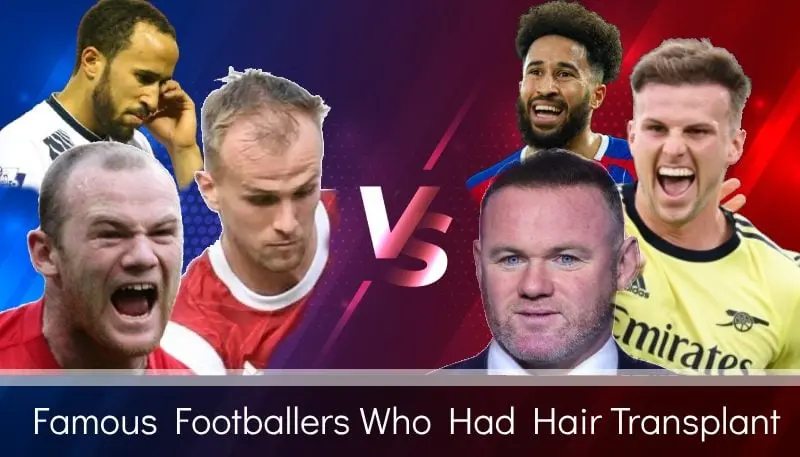
David Silva and Antonio Conte are often cited because their hair density changed across different seasons. Similar public discussions occur in cases like those of celebrities with hair transplants, where visibility and speculation play a role.
These cases help explain why hair restoration is often linked to professional football.
Commonly cited cases include:
- Wayne Rooney
- Rob Holding
- Andros Townsend
- Antonio Conte
- David Silva
These cases show that hair restoration is a common choice in professional football and is often planned around the demands of a playing career.
Why Footballers Lose Hair and Who Gets Treatment
Hair loss in football players often comes from male pattern baldness. Genetics plays a major role, even among athletes with high fitness levels.
Many balding football players notice thinning or a receding hairline early in their careers, following patterns similar to those seen in diffuse thinning hair transplant cases.
Not all players choose treatment. Some accept hair loss, while others wait until later in life. The decision depends on comfort level, public exposure, and timing within professional football.
Factors that affect treatment choices include:
- Family history of hair loss
- Media attention
- Career stage
Each player’s decision depends on genetics, visibility, and how they feel about treating hair loss at that stage of life.
Did David Beckham or Cristiano Ronaldo Have Hair Transplants?
David Beckham is often linked to hair restoration because his hair density changed over time. There is no public proof that he underwent a hair transplant. Photos alone cannot confirm surgery and can be misleading.
Cristiano Ronaldo has not shown clear signs of hair restoration. His hairline has remained stable across many seasons. These cases show that visual changes do not always indicate that surgery took place.
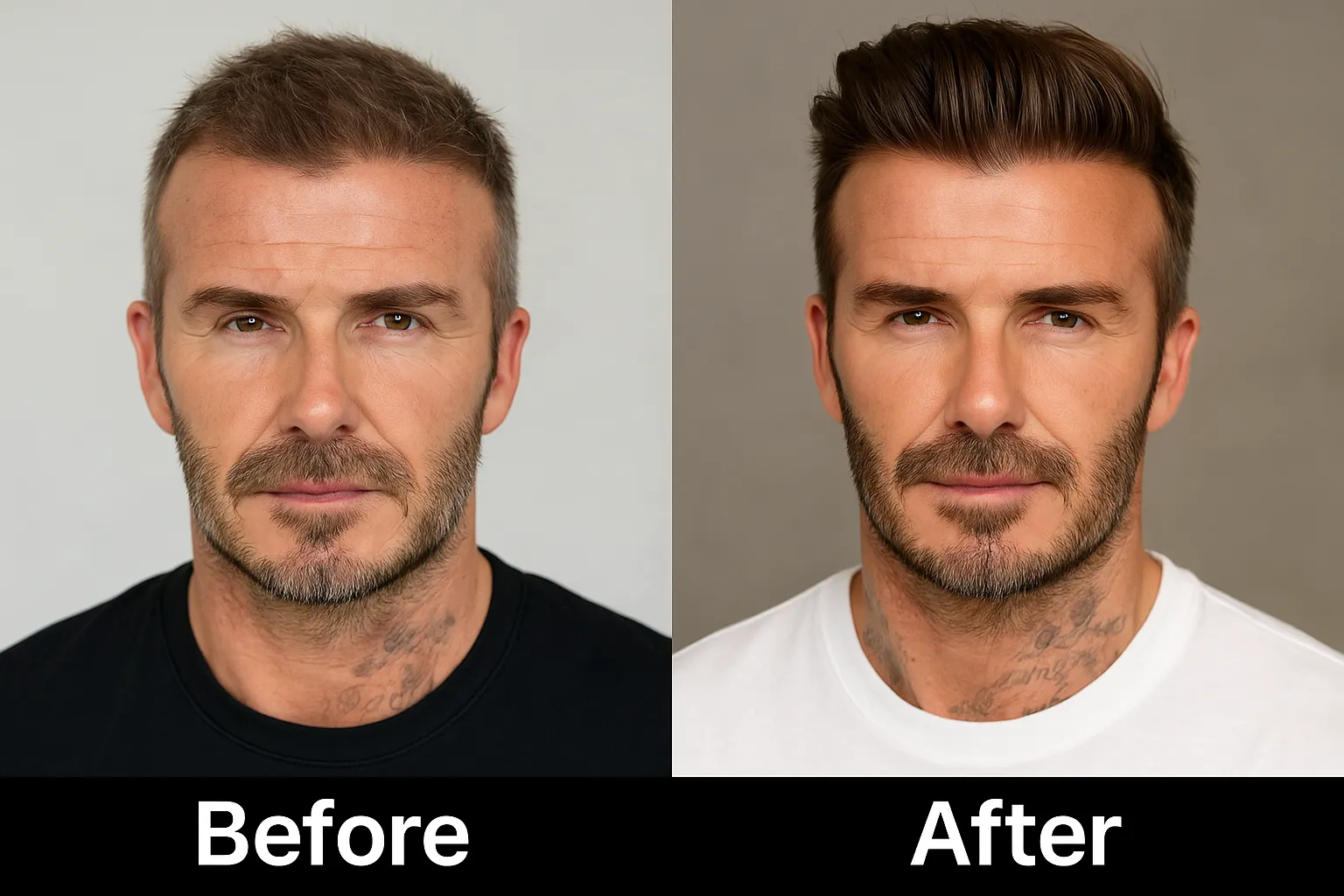
Footballers’ Hair Transplant Before and After
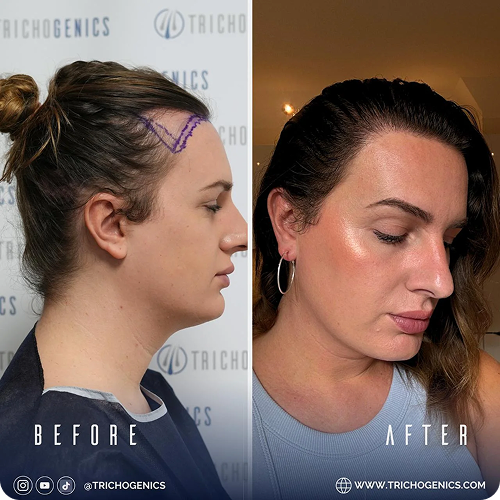
Before-and-after photos are often used to evaluate footballers who have undergone hair transplants. These images focus on hairline shape, density, and overall balance. Natural results depend on planning and careful graft placement.
Results differ between patients. Hair texture, color, and thickness affect the final look. Follow-up care also matters, as transplanted hair changes over time.
Common visible changes include:
- Stronger frontal hairline
- Better coverage in thin areas
- More even hair distribution
These changes usually develop over time and depend on careful planning, technique, and individual hair traits.
When Hair Transplants Go Wrong
A celebrity hair transplant gone wrong usually happens due to poor planning. Common problems include unnatural hairlines or weak donor areas. These issues can be hard to fix later.
Some patients travel abroad to save money. In destinations with limited regulation, procedures may not be doctor-led. Similar risks are described in botched hair transplant cases.
Greece and Israel follow stricter medical rules, which support patient safety and proper follow-up.
Hair Transplant Methods Footballers Choose
Most footballers prefer a minimally invasive option with shorter recovery. The FUE hair transplant is widely used because it leaves no linear scar. FUE follicular unit extraction removes and places grafts one by one.
DHI and Choi pen implantation are also used in hair restoration. These methods allow controlled placement and angle control. Doctor-led care and follow-up help reduce risk and support long-term results.
Common methods include:
- FUE follicular unit extraction
- DHI with Choi pen implantation
- Structured medical follow-up
The method selected is based on recovery needs, hair characteristics, and medical advice rather than appearance alone.
Choosing Safe and Regulated Hair Restoration Care
Choosing where and how to receive hair restoration matters as much as the method itself. Hair transplant procedures require proper medical training, clear regulations, and structured follow-up to reduce risk and improve safety.
@trichogenics What to look out for when choosing a hair transplant clinic! Dr Asi Peretz explains. #hairtransplant #hairtransplantsurgery #hairtransplantturkey #hairtransplantgreece #hairtransformation #hairloss #hairlosssolutions #trichogenics #fyp
♬ original sound - Trichogenics
Some patients travel abroad for lower prices, but countries with weak oversight, including Turkey and other destinations, may lack consistent medical standards.
Regulated settings such as Greece and Israel offer greater accountability, helping patients make more informed, safer treatment decisions.
Why Choose Trichogenics?
All procedures are performed only by doctors
The uniqueness of Trichogenics lies in its strict medical process; only certified doctors perform every transplant. No technicians or unqualified assistants are involved. Choosing a clinic with proven experience in hair transplants can make all the difference.
Meet Dr. Asi and Dr. Eric Peretz
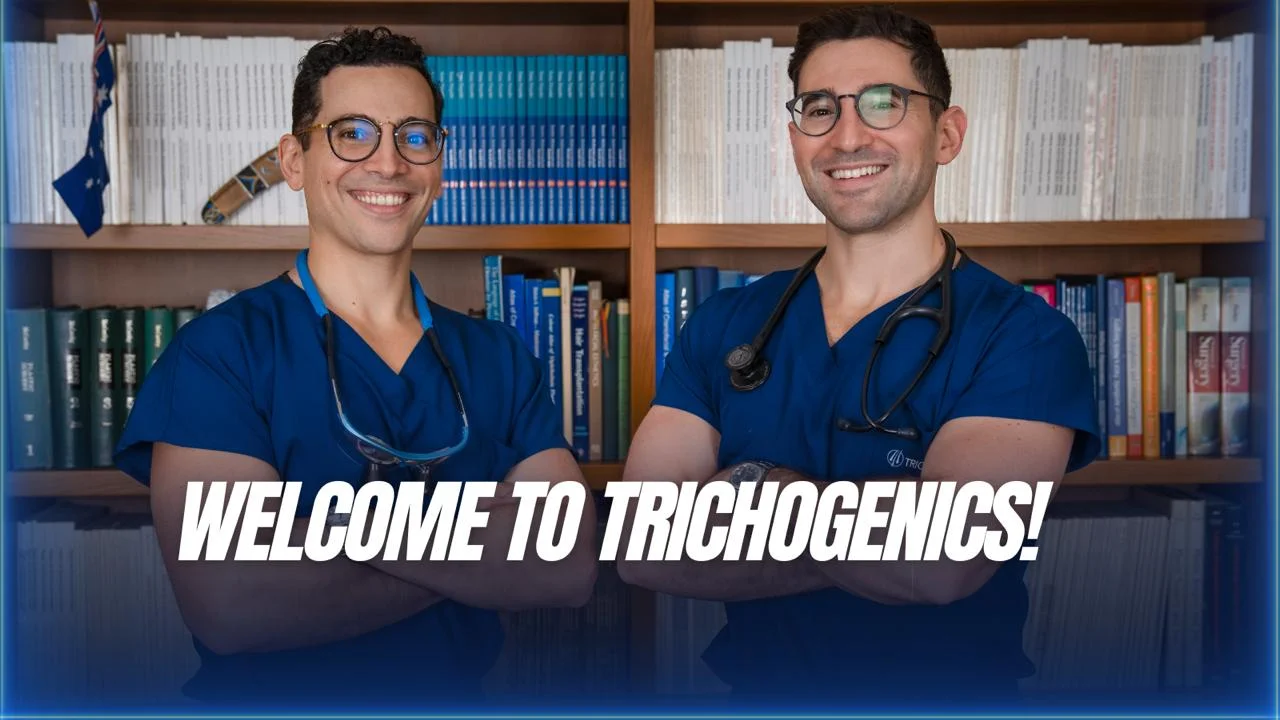
The two doctors leading Trichogenics, Dr. Asi Peretz and Dr. Eric Peretz, are recognized leaders in the field. Their extensive experience, attention to detail, and focus on natural results make Trichogenics the best choice.
Contact Trichogenics today to schedule a personal consultation and get a clear, doctor-led plan for your hair restoration.