

The change is gradual. Shedding slows first, then thickening shows up over the following months. Results depend on your age, the stage of androgenetic alopecia, and how consistently you take the medication. A full evaluation at one year gives you the clearest answer on whether it is working. After twelve months, most men want two answers. Has the shedding stopped? Has the density improved?In a 24-week randomized trial of 917 men, dutasteride 0.5 mg increased hair count and width more than finasteride 1 mg or placebo. The response varies with genetics, age, and how early you start.Men at an early stage, such as Norwood 2 hair patterns, often see more visible results than men with advanced thinning.The goal is control and stabilization, not full reversal. Dutasteride lowers dihydrotestosterone (DHT), the hormone that binds to receptors in follicles and shrinks them over time. With less DHT, miniaturized follicles can grow thicker shafts. That improves texture and scalp coverage.After one year, you may notice:

Key Takeaways
- 1-year dutasteride results typically show slower shedding, a higher hair count, and thicker strands in men with androgenetic alopecia, especially when treatment starts early.
- Most men notice less shedding by month three and clearer density gains between months six and twelve.
- Dutasteride and finasteride both lower DHT. Dutasteride blocks two enzyme types instead of one, and it outperformed finasteride in a 24-week trial.
- Reliable before-and-after comparisons need the same lighting, hair length, and camera angle.
- Dutasteride is used off-label for hair loss in the US, so a physician should review the benefits and side effects with you.
What Do 1 Year Dutasteride Results Show?
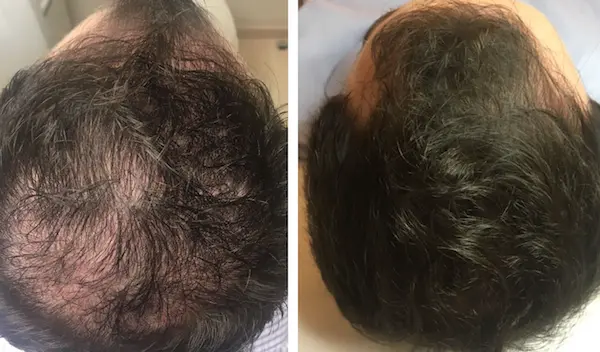 After twelve months, most men want two answers. Has the shedding stopped? Has the density improved?In a 24-week randomized trial of 917 men, dutasteride 0.5 mg increased hair count and width more than finasteride 1 mg or placebo. The response varies with genetics, age, and how early you start.Men at an early stage, such as Norwood 2 hair patterns, often see more visible results than men with advanced thinning.The goal is control and stabilization, not full reversal. Dutasteride lowers dihydrotestosterone (DHT), the hormone that binds to receptors in follicles and shrinks them over time. With less DHT, miniaturized follicles can grow thicker shafts. That improves texture and scalp coverage.After one year, you may notice:
- More strands in thinning areas
- Thicker shafts in previously fine follicles
- Less shedding than your baseline
- Slower progression of androgenetic alopecia
- Better scalp coverage under consistent lighting
Does Dutasteride Regrow Hair?
Partly. Follicles that are still alive but shrunken can produce thicker, longer strands, and that looks like regrowth.Follicles that have stopped producing hair do not come back. Dutasteride holds what you have and thickens what is thinning. It does not rebuild a lost hairline.Hair Density and Hair Count Changes
Density is the number of hairs growing in a set area, usually per square centimeter. Count is the total number of visible shafts in the measured zone. Together, they show doctors whether treatment is working in measurable terms.Does dutasteride thicken hair? Yes. In most cases, existing miniaturized follicles grow thicker and stay in the growth phase longer. That creates fuller coverage and a less visible scalp, especially under bright light. It rarely creates new follicles.After twelve months, you may see:- A higher count in thinning areas
- Thicker individual shafts
- Less visible scalp at the crown
- More even density across affected zones
1 Year Dutasteride Results Before and After
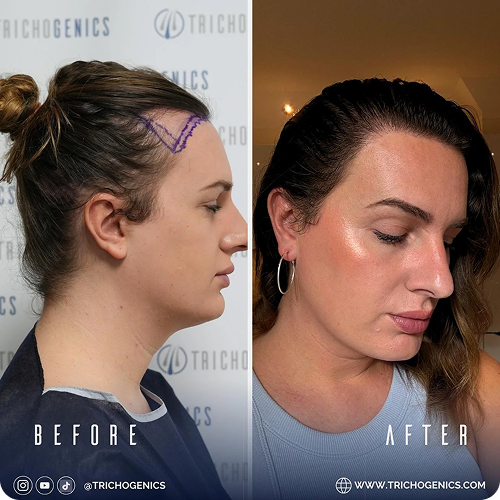
Before-and-after comparisons are one of the most searched parts of 1 year dutasteride results. After twelve months, the most common difference is thicker strands in areas that were thinning, especially at the crown and mid-scalp.Dutasteride hairline before and after photos rarely show a lower hairline. They usually show denser strands and less visible scalp at the front.This happens because miniaturized follicles produce thicker shafts when DHT drops.Online photos can look convincing, but they rarely follow medical standards. A proper comparison uses the same lighting, hair length, and camera angle.When you review 1-year dutasteride results before and after, look for:@trichogenics Finasteride or Dutasteride what do these medications do? And should you be using them for hairloss? Dr Asi Peretz, American Board of Hair Restoration Surgeons winner of the James E Arnold award, explains. #finasteride #dutasteride #minoxidil #trichogenics #hairtransplant #hairtransplantgreece #hairtransplantturkey #hairloss #hairfall #fyp #hairlosssolutions #hairtransplantation
♬ original sound - Trichogenics
- A higher count in the same measured area
- Thicker shafts where strands were fine
- Less contrast between scalp and hair
- Less visible scalp under bright light
How to Evaluate Before-and-After Photos
Small changes in lighting or styling can create the illusion of density. A bright overhead light can hide the scalp. Wet strands can make thinning look worse.Clinics use fixed camera positions and consistent background lighting. That lets doctors compare coverage under the same conditions at every visit.When you review dutasteride before-and-after results, focus on objective details. Look at the same scalp area in both images. Check that the hair length matches.Use this checklist:- Same camera angle and distance
- Same lighting conditions
- Same hair length and styling
- No fibers, sprays, or concealers
- Clear scalp visibility in both images
Dutasteride Results Timeline
Most men see less shedding by month three and visible thickening between months six and twelve. A full year gives the clearest view.Hair grows in cycles, which is why results take time. In the first months, shedding may increase. That does not mean treatment failed. It often signals a shift into a new growth phase, similar to what happens during the hair transplant shedding phase.How Long Does Dutasteride Take to Work for Hair Loss?
Dutasteride starts lowering DHT within the first weeks. Your scalp lags behind because strands grow in cycles. The drug also has a half-life of up to five weeks, so levels build gradually.If you want to know how long to see dutasteride results you can trust, plan on twelve months. Stopping early limits progress.Dutasteride Results Month by Month
These are typical patterns, not guarantees.- Months 1 to 3: Shedding may rise at first, then ease by month three.
- Months 4 to 6: Shedding slows and texture begins to improve. The trial measured higher counts by week 24, but the change can be hard to spot without controlled photos.
- Months 7 to 9: Thickening gets easier to see, mostly at the crown and mid-scalp.
- Month 12: Most gains are visible and density levels off.
When Results Stabilize by 12 Months
By twelve months, most gains are visible. Density often reaches a stable level.Continued use maintains DHT control. Stopping treatment can restart shedding, usually over several months because the drug clears slowly.How to Know If Dutasteride Is Working
Look for these signs:- Less shedding in the shower or on your pillow
- Strands that feel thicker
- Less scalp showing in photos taken under the same lighting
- Steady or better density at the six- and twelve-month photos
Dutasteride vs Finasteride After 12 Months
Both drugs lower DHT. Dutasteride blocks type 1 and type 2 5-alpha reductase enzymes. Finasteride blocks mainly type 2.Because of this, dutasteride lowers DHT more. In the 24-week trial, dutasteride 0.5 mg beat finasteride 1 mg on hair count and width.DHT Suppression Differences
DHT attaches to receptors in follicles and causes shrinkage in men with genetic risk. Lower DHT protects follicles from further miniaturization.Oral Finasteride vs Dutasteride 0.5 mg
In the US, oral finasteride is FDA-approved for male pattern hair loss. Dutasteride is used off-label, although it is approved for this use in South Korea, Japan, and Taiwan.Dutasteride is the active ingredient in Avodart, which the FDA approved for enlarged prostate. Avodart before-and-after photos online show the same drug, usually at 0.5 mg.The right choice depends on:- Stage of hair loss
- Response to past therapy
- Side effect tolerance
Topical Dutasteride vs Oral Dutasteride
Topical dutasteride is a solution applied to the scalp. The idea is to treat the scalp while limiting exposure in the rest of the body.The evidence is still limited. Small trials, including a randomized trial combining microneedling with 0.01% dutasteride, report hair growth. No topical dutasteride product is FDA-approved. The approved options are topical minoxidil and oral finasteride.How long does topical dutasteride take to work? No trial has set a reliable timeline. Judge it like any hair loss treatment, with photos at three and six months.Treat topical dutasteride before-and-after photos with caution. Many come from compounded formulas, and strengths vary.Dutasteride and Minoxidil Results
Many men combine dutasteride and minoxidil for stronger outcomes. The two drugs work in different ways.Topical minoxidil helps push follicles into the growth phase. Dutasteride lowers DHT.Dutasteride and minoxidil before and after photos reflect both effects, which is why the combination can look stronger than either drug alone.@trichogenics Hair transplant vs hair restoration medication like finasteride, minoxidil and Dutasteride. What is best? And which one should you do? Dr Asi Peretz explains. #hairtransplant #trichogenics #hairtransplantturkey #hairtransplantsurgery #hairtransplantgreece #finasteride #minoxidil #dutasteride #fyp #hairloss #hairfall #hairlossremedy #hairlosssolutions
♬ original sound - Trichogenics
Topical Minoxidil Combination Strategy
When you add topical minoxidil, improvement may appear faster. The combination can help with diffuse thinning.This approach often suits:- Early androgenetic alopecia
- Men with active shedding
- Patients who want non-surgical control
Who Benefits Most From Dual Therapy
Men with living but miniaturized follicles benefit most. If follicles are gone, medicine cannot restore them. A licensed physician should review dual therapy.Safety and Long-Term Monitoring
All systemic hair loss treatment needs medical follow-up. Most men tolerate dutasteride well, but side effects can occur.Common Dutasteride Side Effects After One Year
Dutasteride side effects include erectile dysfunction, reduced libido, and ejaculation changes. Some men also report mood changes.In a randomized study of men treated for hair loss, sexual side effects affected 16% of men on dutasteride and 8% on placebo during the double-blind period.For most men, these effects ease over time or after stopping. In some cases, they can persist. Dutasteride can also lower sperm count and motility, and its effect on fertility is unknown. Talk to your doctor if you plan to have children.Long-term follow-up studies exist, but most large trials are short. Regular check-ups matter. Doctors may review:- Symptoms
- Hormone levels, if needed
- Response to therapy
When to Adjust Treatment
If you see no improvement after one year, your doctor may adjust the plan. Some men consider surgery. FUE and DHI are the main techniques in modern practice.Surgical cost depends on graft count, the surgeon, and the clinic. Physician-led care in Israel or Greece typically runs €4,000 to €15,000 (about $5,000 to $18,000).In some high-volume centers, technicians perform much of the surgery and several patients are treated per day. A lower price often reflects shorter case time and limited post-operative supervision.At doctor-led clinics, licensed physicians perform the full procedure in certified operating rooms with structured follow-up. Doctor-led planning reduces risks such as overharvesting and poor graft angle control.Medical therapy such as dutasteride controls hormone-driven loss. Surgery redistributes permanent follicles. A full plan should address both, in a safe and regulated setting.Dutasteride After a Hair Transplant
A transplant moves follicles from the donor area, which resists DHT. The native hair around those grafts can keep thinning.Dutasteride helps protect that native hair, so the result stays balanced over the years. Without medical therapy, transplanted strands can stand out against thinning surroundings.Your surgeon decides when to start and which medication fits you best.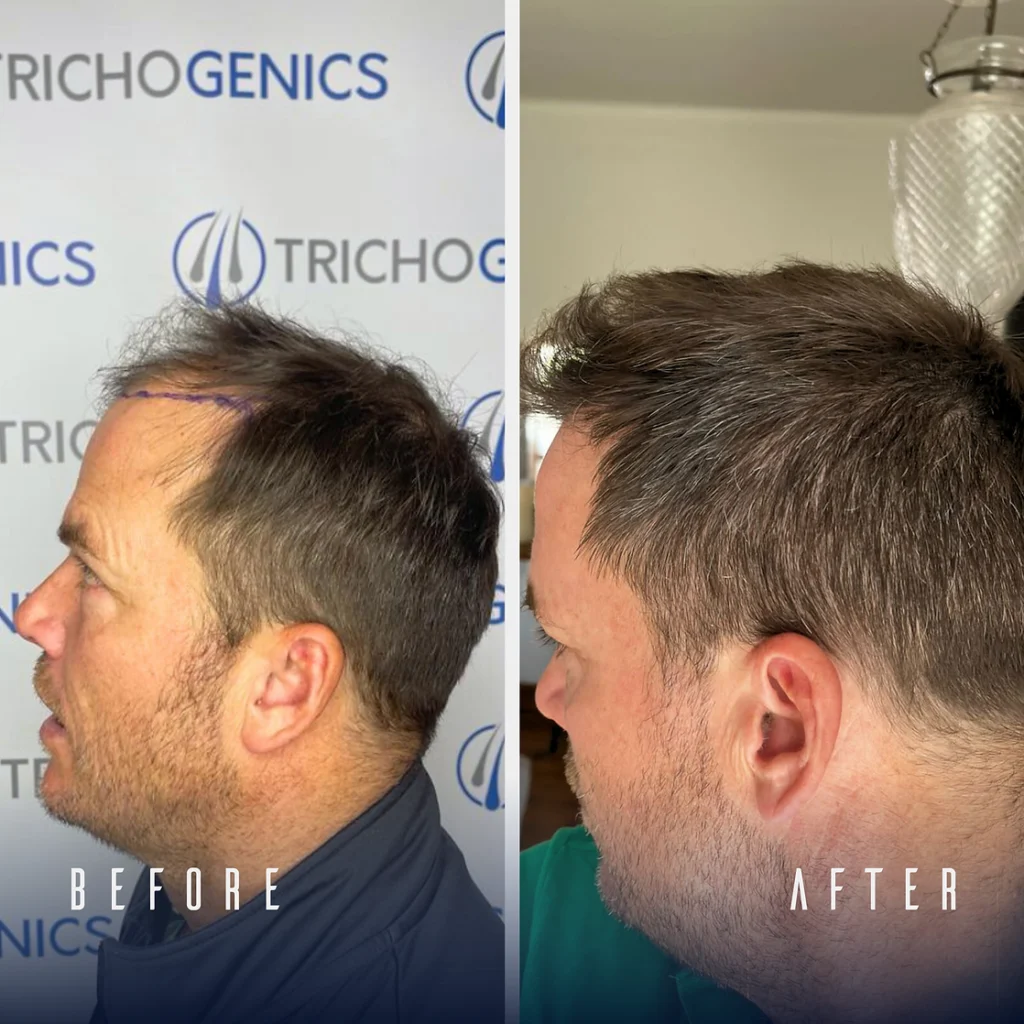
Why Choose Trichogenics?
All procedures are performed only by doctors
Trichogenics follows a strict medical process. Only certified doctors perform every transplant. No technicians or unqualified assistants are involved. A clinic with proven experience makes all the difference.What sets the clinic apart:- American board-certified doctors
- Doctor-led procedures
- Choi pen implantation
- Only DHI and FUE, the gold standard in restoration
- No FUT
- Close patient follow-up